Andrea Gaudenzi says tennis can grow from $4 billion to $10 billion if it finally sells itself as one sport
The ATP chair’s big pitch is simple, and maddeningly hard: tennis has the audience of a giant and the sales machinery of a group project.
Listen on YouTube
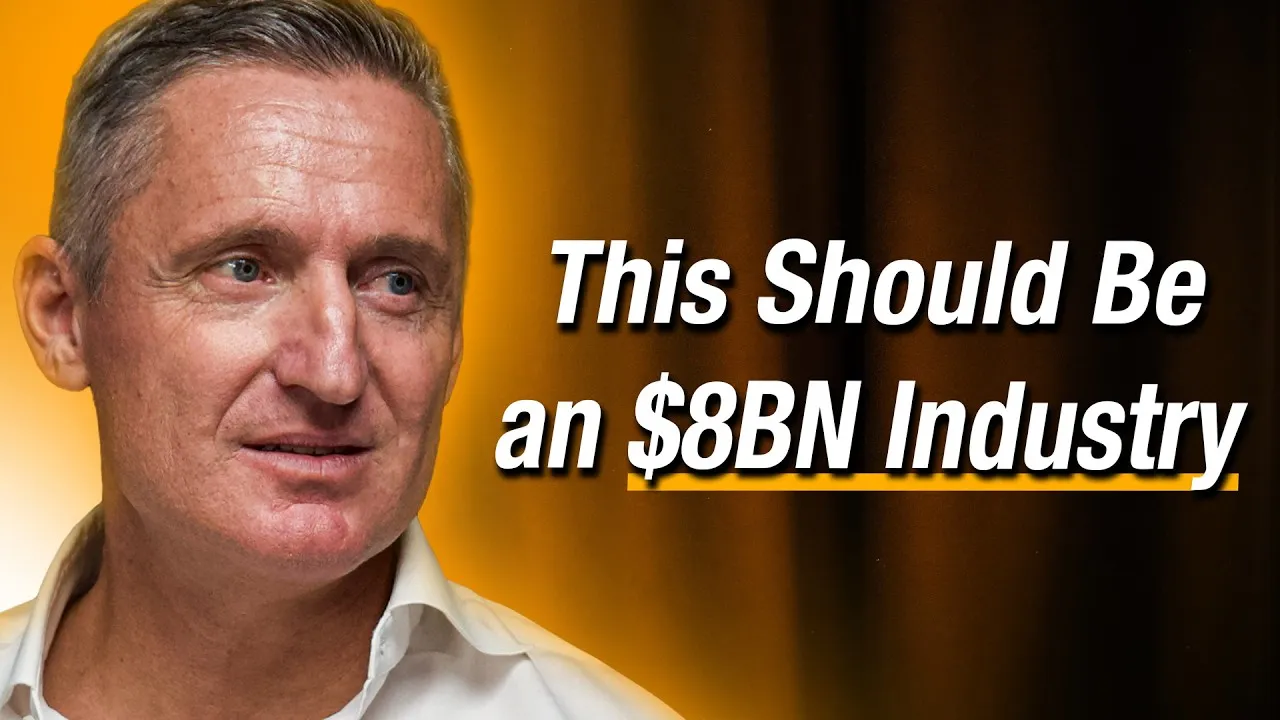 WATCH NOW↓
Andrea Gaudenzi said on The Twenty Minute VC that professional tennis can grow from about $4 billion to $10 billion if the ATP, WTA, and Grand Slams stop selling the sport like seven cousins fighting over a beach house. The ATP chair’s claim is that tennis already has buyers, fans, and stars, but is too fragmented to package itself properly.
This is the rare sports-executive complaint that is both self-serving and probably true. Gaudenzi, a former top-20 player turned ATP chair, is basically saying tennis doesn’t have a demand problem. It has a committee problem. The sport has Carlos Alcaraz, Jannik Sinner, Coco Gauff, Aryna Sabalenka, Wimbledon, the US Open, late-night chaos, clay-court aristocracy, and enough global inventory to make a streamer salivate. What it lacks is one shop window.
we’ve got the demand side wanting to buy our product and we struggle selling it because obviously we’re fragmented
That is the whole thesis, stripped of boardroom perfume. Netflix, Apple, Amazon, broadcasters, sponsors, everyone can see the sport. They just can’t buy the clean version. The Grand Slams are independent. The ATP runs the men’s tour outside the majors. The WTA runs the women’s tour. The International Tennis Federation sits elsewhere. Tournaments own local bits. Central bodies own other bits. Someone apparently owns the net. Nobody can fully explain why.
The audience is huge. The business is weirdly small.
Gaudenzi’s most damning number is not the $4 billion. It’s the mismatch between attention and income. Tennis, he says, is a top-five global fan sport with more than a billion fans, but it captures a sliver of the media market. That is not a product failure. People watch. People attend. People care. The machine just leaks value at every joint.
We have less than 2% of the media, over 60 billion media industry, but we have over a billion fans, which is top five.
His solution is blunt: one governance structure, one commercial entity, one place that can sell media rights, data rights, and the premium calendar together. In other words, make tennis behave more like the NBA or NFL, and less like a WhatsApp group where every uncle has veto power.
The catch, obviously, is that the current system works well enough for the people who already control it. The Grand Slams are rich and culturally untouchable. Top players enjoy freedom. Agents can cut appearance deals. Federations have national missions. Tournament owners protect their local economics. Everyone says they want the pie to grow. Then the knife comes out.
That is why Gaudenzi’s claim should be read as both diagnosis and lobbying. He is not a neutral professor in a cardigan. He runs the ATP. A unified commercial structure would give the tour a cleaner path to more money, more influence, and better bargaining power. Still, the numbers make the argument hard to dismiss. A sport with over a billion fans should not be explaining its rights structure like a tax attorney on espresso.
The WTA pause is the proof and the problem
The episode gets more interesting when Gaudenzi talks about the stalled ATP and WTA commercial merger. He is emphatic that men’s and women’s tennis are stronger together, which is not some sentimental Billie Jean King poster line. It’s the actual consumer product. The Grand Slams already sell fans a combined show. The tours, commercially, still do not.
I think it’s on pause at the moment. They’ve been lasting for 3 years. We were very very close that we’re shifting focus now to ATP ventures which is the same thing but without WTA.
That line is a quiet thud. The ATP is now building ATP Ventures, essentially the commercial roll-up it wanted, just without the WTA. This is Gaudenzi’s grand tennis-unity pitch immediately colliding with tennis reality. Everyone agrees the combined product is better. Everyone agrees fans like choice. Everyone agrees fragmentation is costly. Then the merger goes on pause.
To his credit, Gaudenzi does not hide behind fake chivalry on women’s tennis. He says the women’s product is one of the strongest properties in world sport, and he even floats a future revenue system where engagement determines distribution. In that world, some WTA stars would not be subsidized by the men. They would out-earn them.
I could argue some of the women’s players in the WTA probably deserve more than some of the players on the ATP and and they drive more value.
That is the most modern thing he says. Not equality as branding. Equality as measurement. If the future of sports media is digital, and platforms can actually see who drives viewing, follows, clips, subscriptions, and attention, tennis might become the rare sport where the women’s side is not treated as an obligation stapled to the men’s business.
The $10 billion dream has a doubles problem, a documentary problem, and a courage problem
Gaudenzi’s vision also runs straight into the parts of tennis people prefer to romanticize. Doubles, he says, is expensive to produce, broadcasters often do not show it, and fan engagement is weak compared with singles. Player access is a headache because stars are independent contractors, which helps explain why Break Point never became Drive to Survive with rackets. The calendar is bloated for some players and necessary for others. Top players complain about overplaying while lower-ranked players need matches to make a living.
His proposed money fix is substantial. By 2028, Gaudenzi says the ATP plan would push men’s player compensation to around $350 million, up from about $190 million when he started, with a target for the top 100 to earn at least $1 million and players ranked 100 to 250 to earn $250,000 to $300,000. That’s not charity. It’s supply-chain management. If the middle of the sport can’t survive, the product thins out.
The most persuasive version of Gaudenzi is the one who sounds impatient. He came from tech and startups, and he clearly finds tennis governance allergic to speed. His comparison to music after Napster is useful because it shows the scary part: industries often modernize only after pain forces them to. Tennis, he argues, should change while it is strong, not after a broadcaster, streamer, rival format, or Saudi-sized pile of money makes the choice for it.
I’m going to ask them, guys, this is the vision. This is the strategy. We want to take tennis from 4 billion to 10 billion
So the claim is not that tennis needs saving. That would be too easy, and also false. The claim is harsher: tennis is thriving while still underperforming. If Gaudenzi is right, the next great tennis rivalry is not Alcaraz versus Sinner. It is the sport versus its own meeting agenda.
- What did Andrea Gaudenzi say about tennis revenue?
- Andrea Gaudenzi said on The Twenty Minute VC that professional tennis is roughly a $4 billion business and could become a $10 billion business if the sport unified its governance and commercial sales. His argument is that the demand already exists from broadcasters and streamers, but tennis makes itself harder to buy because the ATP, WTA, and Grand Slams sell too many pieces separately.
- Why does Andrea Gaudenzi think tennis is leaving money on the table?
- Gaudenzi thinks tennis has the audience of a top global sport but not the commercial structure to match. He points to fragmented rights, separate boards, local sponsorship deals, and inconsistent player access as the bottlenecks. In his view, the product is not the problem. The org chart is.
- What did Andrea Gaudenzi say about an ATP and WTA merger?
- Gaudenzi said a commercial merger between the ATP and WTA is currently on pause after years of talks, even though he still believes the combined men’s and women’s product is stronger. He framed the obstacle as the classic tennis problem: control, valuation, governance, and who gets what when two good assets become a better one.
Ahmad Nassar says future tennis pay could give Federer $10 million and another Australian Open champion $5 million
The PTPA chief is arguing for “fair share” over revenue share, which sounds reasonable until the popularity contest walks on court.
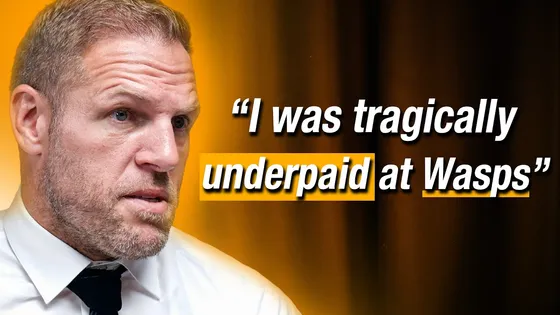
James Haskell says Wasps offered him £120,000 while he was playing for England
The former England flanker makes the grim rugby money case, players deserve more, but the business model can’t pay them.
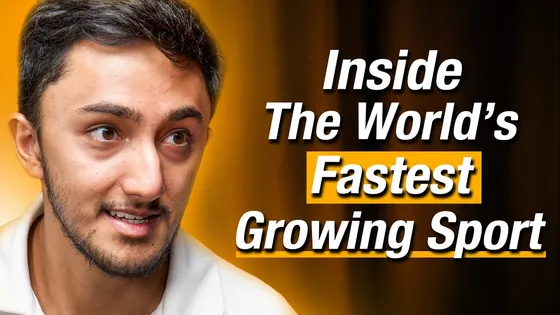
Nikhil Mohindra says padel participation will overtake tennis in 10 years
The Team GB padel player makes the bullish case for the sport, then accidentally explains why the boom could also eat itself.
The Twenty Minute VC hosts say Britain’s £300 million elite tennis pipeline has produced almost no champions
The episode’s best point is not that Jannik Sinner is ruthless, it’s that Italy’s club-heavy tennis system makes Britain’s expensive elite pipeline look weirdly barren.
The circuit, read weekly. No noise.