Andy Stumpf says the Green Beret community has lost more people to suicide than combat since 2001
The retired Navy SEAL turned Huberman guest offered the bleakest metric in an episode stocked with discipline advice, then made the case that the real danger is often the quiet man who won’t say he’s in trouble.
Listen on YouTube · Spotify · Apple Podcasts
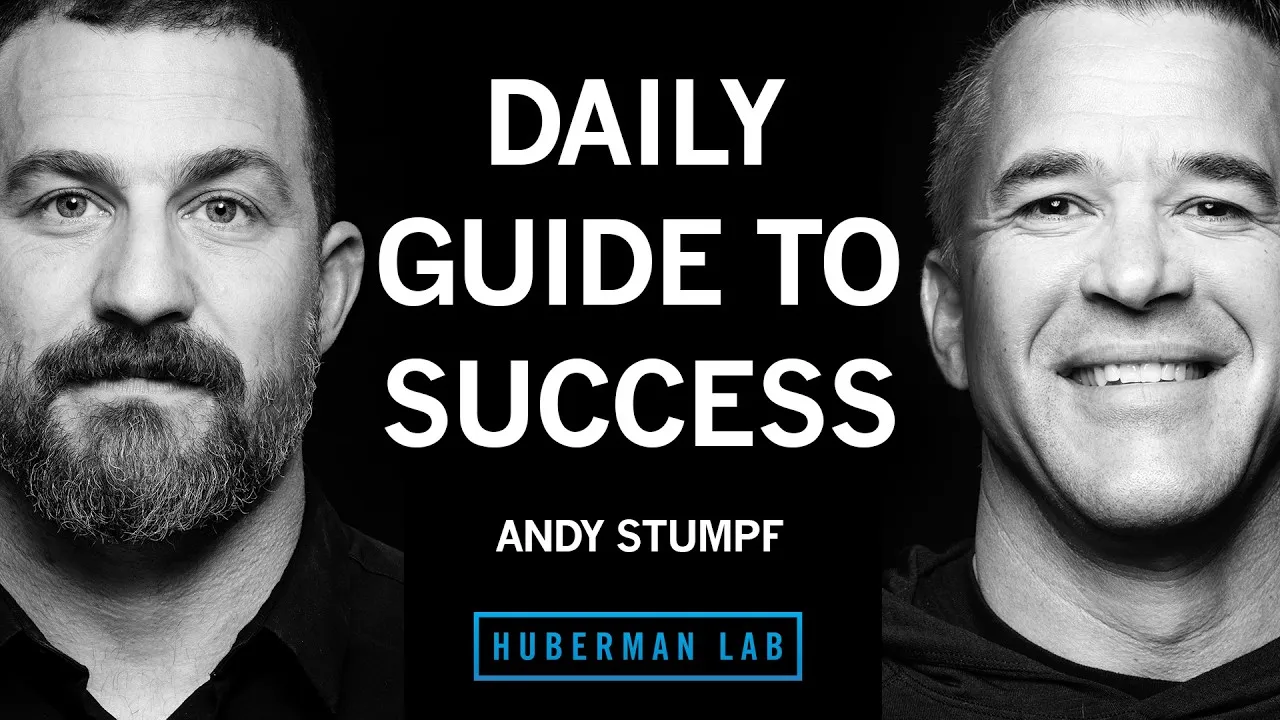 WATCH NOW↓
 Andy Stumpf says the Green Beret community has lost more people to suicide than combat operations since 2001. That is the line from this Huberman Lab episode that should stop the ice bath chatter cold.
This is not a small claim, and it shouldn’t be treated like one of those podcast bro koans you embroider on a kettlebell. Stumpf, a retired Navy SEAL and former wing suit athlete, is speaking from inside the culture of special operations, or at least adjacent enough to know what the funerals feel like. The exact number needs outside sourcing before anyone should carve it into a policy memo. The broader pattern, though, is painfully credible. Veteran suicide, especially among elite military communities, has been a national emergency hiding in plain sight for years.
The Green Beret community has now lost more people to suicide than combat operations since 2001.
The grim power of the episode is that it begins in the land of tactical self-help, paper columns labeled concern and influence, a toilet paper roll as moral training device, social media as a thumb-powered slot machine, and then suddenly the floor gives way. Stumpf isn’t selling toughness as a cure. If anything, he’s arguing that toughness can become camouflage.
The man everyone admired was still alone
The story that gives Stumpf’s statistic its weight is his friend Dave, whom he describes as the standard for a team guy. Not a tragic underachiever. Not someone obviously discarded by the institution. A top performer, a hard judge of others, and, according to Stumpf, an even harder judge of himself. That is where the episode becomes more useful than a slogan about checking on your buddies.
There was a huge delta, I think, between how he thought of himself and how other people thought of him.
That gap is the nightmare. Public competence, private contempt. The guy everyone would ask for the blueprint is quietly writing journals that, Stumpf says, were almost impossible to read without crying. It’s the inverse of influencer culture, where the feed looks perfect and the life is a mess. Here the résumé looks heroic, the reputation is real, and the internal monologue is still trying to kill the person.
Andrew Huberman, to his credit, doesn’t try to turn this into a neat neuroscience explainer. He floats the idea that people can get trapped in a tunnel where the feeling of the moment seems permanent. Stumpf answers with the humility of someone who knows a lot of programs, a lot of money, and a lot of good intentions still have not solved suicide.
The self-help answer breaks here
Earlier, Andy Stumpf gives the kind of advice that sounds almost parodically simple until you notice it’s true: choose the slightly harder thing more often. Make the bed. Put the cup in the dishwasher. Replace the toilet paper roll before your bathroom becomes a paper goods ziggurat. This is good advice. It is also not a suicide prevention strategy on its own, and Stumpf does not insult the listener by pretending otherwise.
I will describe the choice of ending your own life as an irrational decision. That’s I can’t make any sense of it other than to say like you said it goes against every evolutionary everything that we can understand. So somehow people are arriving at an irrational decision and considering it to be the only rational solution.
The verdict on Stumpf’s central claim is this: as a statistic, it needs verification beyond the transcript. As a diagnosis of the crisis, it rings with ugly authority. His point is not that Green Berets or SEALs are uniquely broken. It’s that elite performance can delay the reckoning. You can be very good at compartmentalizing until the compartments become the whole house.
Stumpf also pushes against the lazy version of the trauma story. Not every operator arrives damaged. Not every deployment breaks people the same way. But he says that, in later conversations with men he served around, more than half seemed to have brought serious pain with them before the military ever added its own.
This is where the episode has something to offer people who have never worn a uniform and never will. The high performer in your office, your gym, your group chat, your family, might not need another compliment about how locked in they are. They might need someone to notice when they disappear. Less poster quote, more boring persistence. The 8 a.m. text. The second call. The refusal to confuse silence with strength.
A lot of times guys get out, they’ll move, uh, you know, back to where they came from. So away from their social circle, the uniform goes up in the closet. identity and purpose struggle that we all have when you go from that occupation, social isolation, maybe they bring with them some unhealthy social habits, alcohol, whatever else it may be with them with that isolation, with those struggles, with that baggage. It’s a lot.
- Did Andy Stumpf say Green Berets have lost more people to suicide than combat?
- Yes. Stumpf said the Green Beret community has lost more people to suicide than combat operations since 2001. The podcast does not provide an official source or methodology for that statistic, so treat it as a serious alarm from someone inside the broader special operations world, not as a footnoted government count.
- What did Stumpf think was behind those suicides?
- He resisted a single cause. He pointed to isolation, alcohol, identity loss after leaving the military, childhood trauma carried into service, and the brutal gap between how elite operators are seen by others and how they privately see themselves.
- What was Stumpf’s warning for people outside the military?
- His warning was that high performers can look fully intact from the outside while privately falling apart. The practical point is less glamorous than a resilience slogan: check on people, notice isolation, and do not assume competence means safety.
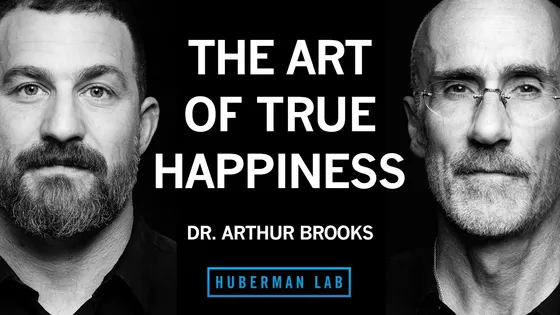
Arthur Brooks says trying to avoid unhappiness makes you miss happiness
On Huberman Lab, Brooks argues that happiness is built from enjoyment, satisfaction, and meaning, and none of the three comes pain-free.
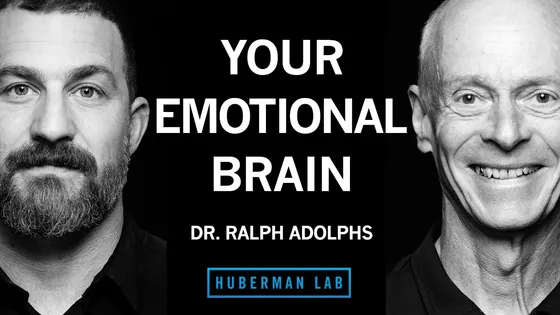
Ralph Adolphs says AI can diagnose your personality from one page of text
The Caltech neuroscientist argues that text may reveal more about your personality than your face does, which is bad news for anyone who thinks their punctuation is innocent.
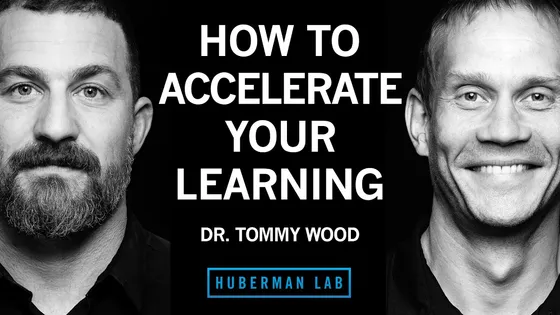
Dr. Tommy Wood says six months of Norwegian 4x4 intervals protected older adults' hippocampus for five years
The Huberman Lab guest made the anti-cortisol crowd sound like people afraid of rain because floods exist.
Marie-Pierre St-Onge says Doritos, Fritos, Cheetos, and Tostitos fried in corn oil had better lipid profiles than other snacks
The Columbia nutrition researcher also makes the less memeable, more useful point: sleep and food choices keep pushing each other into either a bad loop or a good one.
The circuit, read weekly. No noise.