Anthony Kaldellis says Diocletian ended Italy’s tax haven and made taxation the core of the Roman state
The Byzantine historian’s best line on Lex Fridman is not that Diocletian invented the deep state, but that he made the conquerors finally pick up the tab.
Listen on YouTube · Spotify · Apple Podcasts
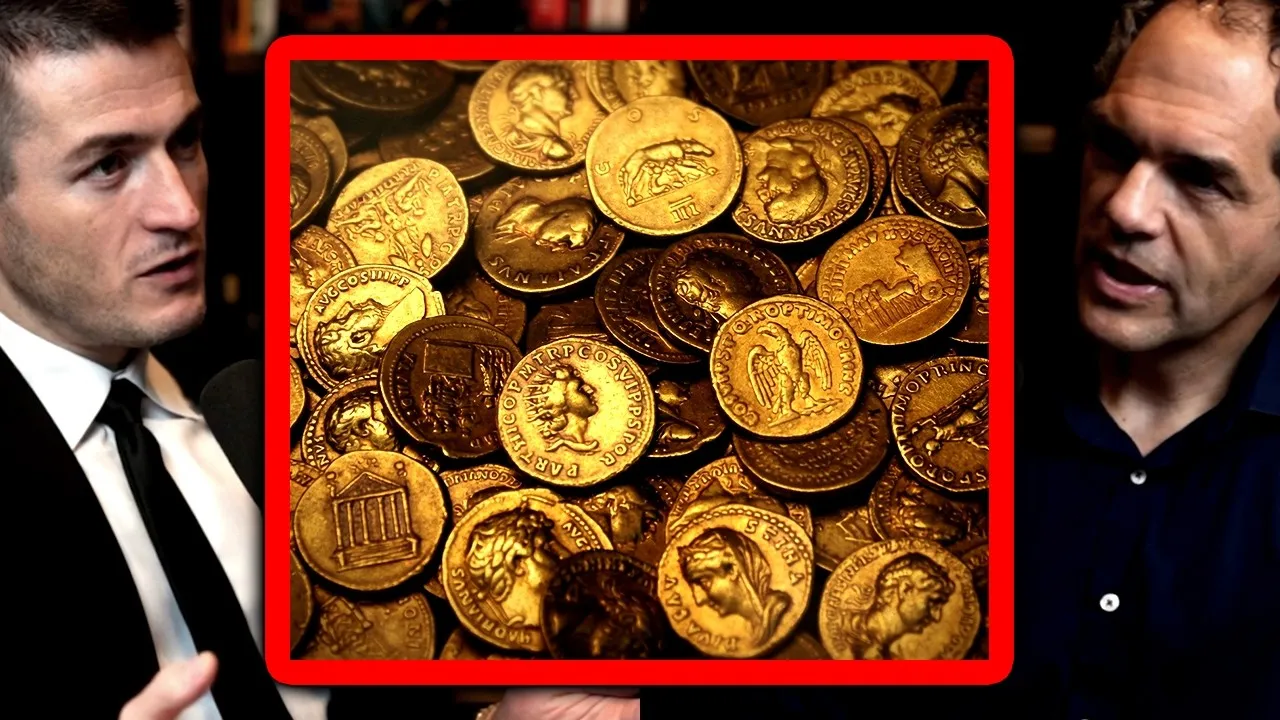 WATCH NOW↓
 Rome’s great late-imperial plot twist, according to Anthony Kaldellis, is that Italy used to be a tax haven. Not metaphorically. The heartland of the conquerors, the prestige address of the whole imperial project, had spent centuries not paying the kind of taxes imposed on everyone else, until Diocletian looked at the balance sheet and said, in effect, nice peninsula you’ve got there.
That is the useful claim hiding inside this clip from the Lex Fridman Podcast. Fridman tries out the very 2020s question, did Diocletian create the “deep state”? Kaldellis politely declines the bait. There was bureaucracy, yes. Big government, yes. But the sinister blob working against the ruler from within? He doesn’t see it in the evidence. The real machinery was less X-Files and more IRS.
I have not come across the idea of some sort of sinister elements, you know, who are working within the administrative apparatus to undermine the emperor.
The empire discovers that Italy has been freeloading
Kaldellis’s best point is wonderfully deflating. The Roman state did not become more serious because it acquired a shadowy managerial class with a group chat called SPQR Permanent Government. It became more serious because crisis made tax exemptions look stupid. Armies cost money. Civil wars cost money. Putting down usurpers costs money. Diocletian’s genius, or menace, depending on your relationship to forms, was to make the tax base legible.
Up until then Italy was exempt from taxes. Italy was the land of the conquerors. The conquerors don’t pay taxes to themselves. The conquerors live off the taxes that others pay, right? So Italy was this big tax haven.
The phrase “Italy was this big tax haven” is the one you circle in red. It makes ancient fiscal history suddenly feel like a fight over Delaware incorporation law or a Monaco residency. Kaldellis says Diocletian, Galerius, and their fellow Illyrian power brokers saw wealthy Italy’s special status and asked the obvious question: why exactly is the richest, most symbolically loaded part of the empire getting a pass?
His answer is that Diocletian pushed the empire toward a more universal system. Citizenship, law, and taxes begin to align. Kaldellis even calls the arrangement “almost like a flat tax,” then immediately notes that this sounds regressive to modern ears. His twist is that, by ancient standards, it could look progressive because elites were no longer simply outside the structure.
So now like not only do all Romans have the same citizenship and the same law they all have the same tax system.
The deep state frame is the wrong conspiracy
Fridman’s “deep state” framing is revealing, because it shows how hard it is now to talk about bureaucracy without imagining an invisible hand making the elected guy sad. Kaldellis keeps dragging the subject back to boring power, which is usually the more durable kind. Diocletian created structures that could count, assess, assign, and collect. If there’s a villain here, it’s not a cabal. It’s a spreadsheet with sandals.
Taxation is at the heart of it.
That line is blunt enough to sound like a grad seminar carved into stone. Kaldellis says if he had to put his finger on one factor explaining the functioning of the later Roman Empire, it would be taxation. Not virtue. Not decadence. Not vibes. Taxation.
The claim is persuasive, with one caution. Kaldellis is pushing against the old picture of late Rome as a frozen, caste-like society where everyone was chained to their father’s job. That corrective is useful, but the transcript also contains the reason people keep reaching for the darker version: some farmers really were fiscally bound to land. The state wanted predictable revenue, and predictable revenue is just coercion wearing a clean tunic.
What Diocletian does is a universal census. And this is continued by his successors. So every taxable asset in the empire is censused.
Kaldellis’s verdict is not that Diocletian liberated everyone with fair taxation. It’s stranger than that. He argues the reforms were centralizing and intrusive, but also successful. They funded armies, stabilized revenue, and helped create the administrative frame for the eastern empire, the world later called Byzantium.
Rome gets modern by getting taxable
The fun of this claim is that it reverses the usual Roman nostalgia. People like to imagine Rome as marble, legions, roads, aqueducts, emperors glaring on coins. Kaldellis’s Rome is an assessment regime. The empire survives because someone can identify assets, assign obligations, and make the most privileged region stop acting like a luxury loophole.
So no, Diocletian did not create the deep state, at least not in Kaldellis’s telling. He created something less sexy and more consequential: a state that knew what it could tax.
- Did Diocletian create a Roman deep state?
- Kaldellis rejects that framing. He says Diocletian built bigger bureaucratic machinery, but not a hidden administrative faction trying to undermine the emperor. The better comparison is a more capable fiscal state, not a sinister permanent government.
- Was Italy really tax-free before Diocletian?
- Kaldellis says Italy had been exempt because it was treated as the land of the conquerors, the place that lived off taxes paid elsewhere. Diocletian and his Balkan circle looked at wealthy Italy and decided that arrangement no longer made sense.
- Did Diocletian’s tax system trap people in hereditary jobs?
- Kaldellis says some obligations were hereditary and some farmers were fiscally tied to land, but he pushes back on the idea of a rigid caste system. His version is messier: coercive in places, bureaucratic everywhere, but still a society with lots of mobility.
Anthony Kaldellis says the Plague of Justinian probably did not kill half the Roman Empire
The historian's case is brutally practical: if half the empire died, why did Justinian's wars, taxes, and courts keep running?
Anthony Kaldellis says Rome’s three biggest disasters were the Arab conquests, the Seljuk conquest of Asia Minor, and the Fourth Crusade
The Byzantine historian’s Roman Empire is not a marble statue collapsing in 476, but a long-running state repeatedly injured by three fast, brutal shocks.
Anthony Kaldellis says Roman families voluntarily castrated their sons to place them at the emperor's court
The Byzantine historian explains how castration was sometimes a family's smartest power move, not just a cruelty imposed on slaves.
Anthony Kaldellis says Byzantine Greek fire came in hand grenade form
The historian’s best detail on Lex Fridman was not just that Greek fire burned on water, but that the Romans apparently bottled the stuff and threw it at siege engines.
The circuit, read weekly. No noise.