Anthony Kaldellis says Byzantine Greek fire came in hand grenade form
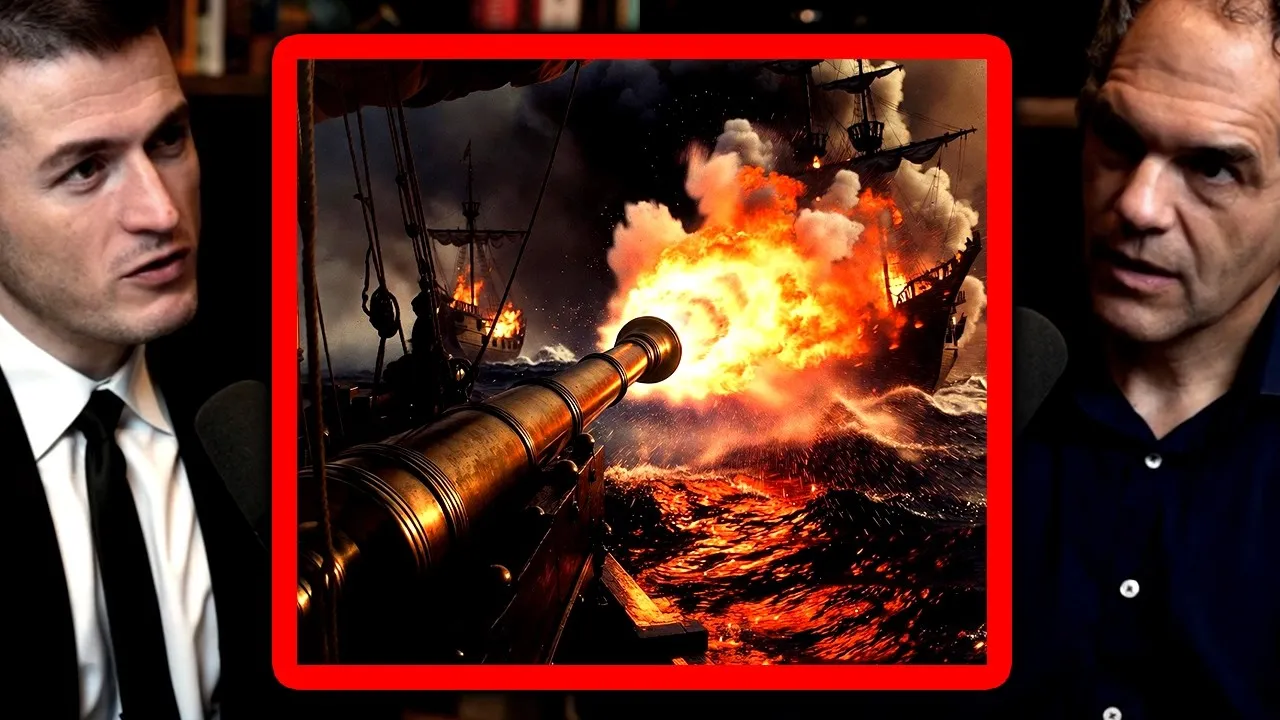
The historian’s best detail on Lex Fridman was not just that Greek fire burned on water, but that the Romans apparently bottled the stuff and threw it at siege engines.
Listen on YouTube · Spotify · Apple Podcasts
 WATCH NOW↓
 Forget boiling oil. Anthony Kaldellis says Byzantine Greek fire was not just a ship-mounted flamethrower, it also came in hand grenade form. That is the detail from this Lex Fridman Podcast clip that makes medieval warfare suddenly feel less like a monastery illumination and more like a defense contractor demo with worse dentistry.
The weapon already has the résumé of a military myth. It burns on water. Its formula was guarded as a state secret. It helped keep Constantinople alive when the Eastern Roman state was getting hammered by Arab armies in the seventh and eighth centuries. Then Kaldellis adds the kicker, the Romans apparently had a portable version. Clay container, incendiary compound, fuse, throw. A grenade. History, as usual, has been under-merchandised.
Well, it’s a state secret. They didn’t want this getting out. So, they kept it pretty well. The fact that we’re debating it will tell you that they were pretty good at keeping secrets.
That is the part that keeps Greek fire from becoming just another boys-with-maps anecdote. Kaldellis does not pretend we know the recipe, which is good, because any confident internet answer to “what was Greek fire made of?” usually has the energy of a guy explaining Roman concrete after two beers. The surviving point is stranger and better: the Eastern Roman state had a secret incendiary technology, built a specialist corps around it, and kept enough control over it that the details are still muddy more than a thousand years later.
Medieval napalm, but make it bureaucratic
Kaldellis’s version of Greek Fire is not magic. It is engineering plus secrecy plus imperial administration, which is somehow scarier. He describes a possible system involving a heated, pressurized container and a nozzle, the kind of phrase that makes you remember the Roman Empire did not stop being Roman just because modern textbooks started calling it Byzantine.
it unleashes this thing uh through a nozzle and it’s lit uh and basically spews flaming napalm
it will continue to burn even when it’s on the water.
Lex Fridman responds at one point with the exact correct human noise, a small gasp, because what else are you supposed to do when a historian calmly explains that the Romans were spraying floating fire at ships? This is where the “greatest military secret weapon” framing earns its caffeine. Greek fire was not decisive because it was cool, although it was extremely cool. It was decisive because it gave a battered empire a way to make attackers pay at sea, where panic spreads faster than flame.
Kaldellis is careful not to reduce the survival of the Byzantine Empire to one superweapon. He talks about pulling armies back into Asia Minor, building a harder militarized core, feeding soldiers, fortifying positions, and enduring a long administrative readjustment. Less sexy than flamethrowers. Also more Roman. Empires do not survive on vibes. They survive on logistics, taxes, walls, and the occasional terrifying tube of fire.
The grenade detail is the real little monster
Then comes the hand grenade claim, which lands because it changes the mental picture. Greek fire is usually imagined as a naval weapon, the prow of a ship coughing hell onto another ship. Kaldellis says there was also a smaller, throwable form, and he even gives the practical reason you would not waste it on one unlucky soldier.
Yes. So it’s a It’s like a clay container uh with the compound and it has like some sort of fuse that you light on the outside and you throw it.
Maybe you burn a person, whatever. You just wasted a hand grenade for, you know, one person. It’s most effective against things like um uh siege engines.
That “whatever” is doing exactly the right amount of dark comic violence. A person? Fine. A siege engine? Now you’re thinking like an emperor. The claim is not that Greek fire won every war or made Constantinople invincible. It is that the Romans had a secret incendiary toolkit, naval and portable, that helped them survive when survival looked absurd.
Kaldellis also gives Leo III his due during the early eighth-century Arab siege of Constantinople. Greek fire mattered, but so did planning, allies, containment, fleet management, and the city’s defenses. The fun version is “flamethrowers saved Rome.” The truer version is nastier and more impressive: a half-starved empire learned how to aim its last advantages at exactly the right targets.
- What did Anthony Kaldellis say Greek fire was?
- Kaldellis described it as a secret flammable compound deployed by specialized engineers, likely through a pressurized device that could spray fire from ships. He emphasized that it kept burning on water, which made it especially horrifying in naval combat.
- Why were Greek fire grenades useful?
- According to Kaldellis, throwing one at a single person would be a waste. The smarter target was a wooden siege engine, where a clay container of incendiary compound could turn expensive military hardware into a bonfire.
- Did Greek fire help Constantinople survive Arab attacks?
- Kaldellis credits Greek fire as one important part of the empire’s survival, especially in naval defense. He pairs it with competent leadership, walls, fleets, Bulgar allies, and the strategic planning of Leo III during the early eighth-century siege.

Anthony Kaldellis says Rome’s three biggest disasters were the Arab conquests, the Seljuk conquest of Asia Minor, and the Fourth Crusade
The Byzantine historian’s Roman Empire is not a marble statue collapsing in 476, but a long-running state repeatedly injured by three fast, brutal shocks.

Anthony Kaldellis says the Plague of Justinian probably did not kill half the Roman Empire
The historian's case is brutally practical: if half the empire died, why did Justinian's wars, taxes, and courts keep running?

Anthony Kaldellis says Roman families voluntarily castrated their sons to place them at the emperor's court
The Byzantine historian explains how castration was sometimes a family's smartest power move, not just a cruelty imposed on slaves.

Andrew Scull says Nazi gas chambers were developed first to kill mental patients
The historian of psychiatry connects asylum overcrowding, American eugenics, California sterilization laws, Rockefeller-funded genetics research, and the Nazi T4 program into one grim family tree.
The circuit, read weekly. No noise.