Anthony Kaldellis says Rome’s three biggest disasters were the Arab conquests, the Seljuk conquest of Asia Minor, and the Fourth Crusade
The Byzantine historian’s Roman Empire is not a marble statue collapsing in 476, but a long-running state repeatedly injured by three fast, brutal shocks.
Listen on YouTube · Spotify · Apple Podcasts
 WATCH NOW↓
 Anthony Kaldellis has a beautifully annoying answer for anyone who wants Rome to fall cleanly on a testable date: the Roman Empire’s real gut punches were the Arab conquests in the 630s, the Seljuk conquest of Asia Minor in the 1070s, and the Fourth Crusade in 1204. Not 476 as a movie poster. Not one decadent toga party too many. Three fast shocks, then centuries of repair work.
That answer matters because Anthony Kaldellis is not talking about Rome as a dead Latin brand. He is talking about the empire that modern people usually call the Byzantine Empire, but whose citizens understood themselves as Romans. On the Lex Fridman Podcast, that framing turns a familiar decline story into something less tidy and more irritating to every textbook timeline ever printed.
There’s the Arab conquests in the 630s. This is a decade. In a decade, that war was lost. It is the Seljuk Turk conquest of Asia Minor, modern Turkey, in the 1070s.
The surprise is not just the list. It is the rhythm of the list. Kaldellis is arguing that the empire’s worst wounds were sudden, while most of its life was not a catastrophe montage. The Roman Empire, in this telling, is less a collapsing building than a boxer who keeps getting clipped, badly, then somehow makes the next round.
476 gets demoted
This is where Kaldellis’s claim has some bite. Popular history loves the fall of the Western Roman Empire in 476 because dates are comforting. They sit still. They let a teacher put a clean line on the board. Kaldellis basically kicks that line over and calls it what it is: a historian’s convenience for a process that took decades.
Or 476, the fall of the Western Empire. This is the last date. It’s actually a very long process that took decades.
That is the useful correction here. If you are asking when the western imperial court stopped being the main event, 476 still has a job. If you are asking what nearly broke the continuing Roman state in the east, Kaldellis’s three disasters are a better map: the Arab conquests ripping away huge territories in the seventh century, the Seljuks transforming Asia Minor from imperial core to contested frontier, and the Crusades doing the unforgivable in 1204, when Christian armies sacked Constantinople.
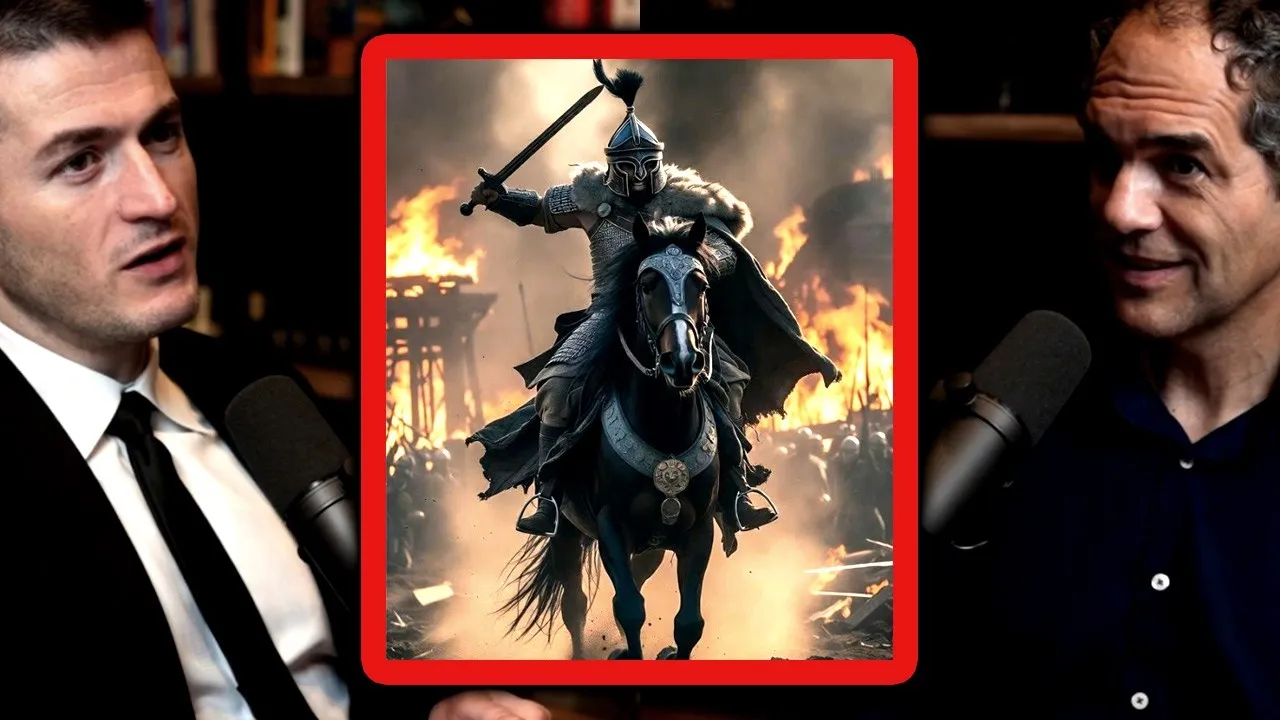
And then there’s the Fourth Crusade, 1204, when the armies from mostly France sack, conquer Constantinople and dismember the empire as much as they could.
The empire was not always falling
The funnier, sharper implication is that our default Rome story is too addicted to collapse. We want the empire to be a morality play about decadence, lead pipes, bad emperors, and men named something like Flavius Oopsius making one fatal decision. Kaldellis gives a less satisfying but more convincing shape: some decisions matter, some dates are placeholders, and most historical change is slow enough to bore anyone waiting for a season finale.
His claim is strong, with one caveat. It depends on using “Roman Empire” the way Kaldellis uses it, meaning the medieval empire centered on Constantinople is still Rome, not a sequel with worse branding. Accept that, and the three-crisis model is clarifying. Reject it, and you are back in the older habit of treating Byzantium like Rome’s ghost wearing Greek subtitles.
the defeats were swift and kind of, you know, terrible. Uh but the most of its history is one of slow growth.
- Why doesn’t Kaldellis treat 476 as the main fall of Rome?
- He frames 476 as a conventional date attached to a longer process, not a single knockout blow. For Kaldellis, the more useful way to think about Roman survival and decline is to separate slow institutional change from sudden military disasters.
- What made the Arab conquests so damaging to the Roman Empire?
- Kaldellis stresses speed. In his account, the war of the 630s was lost in a single decade, which makes it one of the rare moments when the empire’s territory and strategic position changed almost overnight.
- Why is the Fourth Crusade on the list?
- Because in 1204 western crusading armies captured and sacked Constantinople, then tried to break up the empire. Kaldellis says the Romans later regrouped and recovered, but the damage was severe enough to count as one of the three great crisis points.

Anthony Kaldellis says Byzantine Greek fire came in hand grenade form
The historian’s best detail on Lex Fridman was not just that Greek fire burned on water, but that the Romans apparently bottled the stuff and threw it at siege engines.

Anthony Kaldellis says the Plague of Justinian probably did not kill half the Roman Empire
The historian's case is brutally practical: if half the empire died, why did Justinian's wars, taxes, and courts keep running?

Anthony Kaldellis says Roman families voluntarily castrated their sons to place them at the emperor's court
The Byzantine historian explains how castration was sometimes a family's smartest power move, not just a cruelty imposed on slaves.

Andrew Scull says Nazi gas chambers were developed first to kill mental patients
The historian of psychiatry connects asylum overcrowding, American eugenics, California sterilization laws, Rockefeller-funded genetics research, and the Nazi T4 program into one grim family tree.
The circuit, read weekly. No noise.