Bruce Bryan says wrongful conviction cost him 29 years, but not his ability to become a thriver
The Nightmare Success episode sells Bryan’s story less as an innocence-case postmortem than as a startling argument about what a person can still build after the state takes three decades.
Listen on Nightmare Success · YouTube
 WATCH NOW↓
 The cleanest horror in this Nightmare Success episode is not the murder charge. It is the administrative blandness of the trap: a police lineup, a charge, a trial, then life in prison. Bruce Bryan’s claim, as introduced here, is that the state took 29 years from him for a murder he did not commit, and he still refuses to let that be the only story.
Can you imagine the nightmare of being pulled into a police lineup and then you find out that you’re being charged for a crime you didn’t commit and then you find out it’s murder.
That is a very specific kind of American dread. Not the cinematic kind with a smoking gun and a corrupt monologue. The fluorescent kind. The kind where your life is rearranged by paperwork, eyewitness procedure, courtroom language, and then a sentence so large it stops behaving like a number.
He went to trial and he got life in prison. He lost 29 years of his life
The case is the hook. The mindset is the sell.
The surprising part is not that Bruce Bryan says he was wrongfully convicted. America has an entire grim genre built around that sentence. The surprising part is how the episode packages him: not as a man consumed by bitterness, but as someone who turned prison into a place where he mentored other men and built a language for survival.
You think someone like this would be bitter, but not Bruce Bryan.
There is an obvious danger in this kind of framing. The inspirational-prison story can get a little too tidy, a little too eager to hand the audience a quote-card lesson before asking the uglier question: how did a man lose nearly three decades in the first place? Wrongful conviction stories should make people angry before they make them inspired. If the system can swallow 29 years, the first response shouldn’t be applause for resilience. It should be nausea.
Still, Bryan’s angle has weight because it does not deny the scale of the loss. The host says he received clemency, not that the clock magically rewound. Clemency is not a time machine. It opens a door. It does not return birthdays, funerals, ordinary Tuesdays, or the private version of yourself that might have existed outside.
He finally got clemency
Victim, survivor, thriver
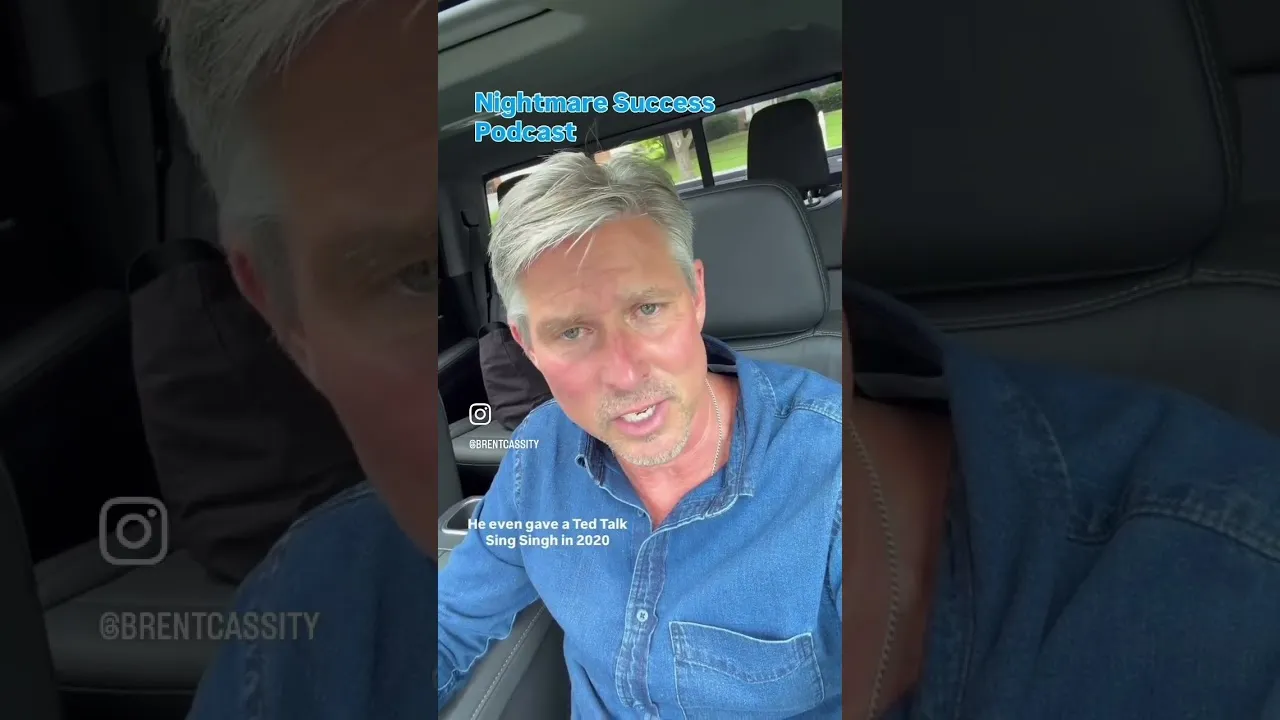
The phrase the episode wants you to remember is almost too polished: victim, survivor, thriver. It sounds like something that belongs on a conference stage, which, apparently, is part of the story. The host says Bryan gave a TED Talk at Sing Sing in 2020, a detail that makes the whole thing stranger and sharper. A man serving time for a murder he says he did not commit was also giving a public talk from one of America’s most famous prisons.
You’ve got a choice of being a victim and then you can become a survivor and then you become a thriver.
That line is powerful, and also a little dangerous if handled lazily. Not everyone gets to choose their way out of the damage done to them. Not everyone gets clemency. Not everyone gets a microphone. But Bryan’s story, at least from the material provided here, is not asking listeners to pretend the harm was useful. It is asking whether a person can refuse to let harm have the last word.
If that claim is true, the concrete stake is brutal and simple: the justice system can take a life apart, and the person inside that life may still have to decide what to build with whatever is left.
- What happened to Bruce Bryan?
- The episode presents Bryan as a man pulled into a police lineup, charged with murder, convicted, and sentenced to life in prison for a crime he says he did not commit. He ultimately received clemency after losing 29 years of his life to prison.
- Why is Bruce Bryan’s story framed as more than a wrongful conviction case?
- The hook is not just that Bryan survived prison. It is that the host says Bryan mentored other men while incarcerated, helped others, and now talks about moving from victim to survivor to thriver. That framing turns a legal nightmare into a moral and psychological argument.
- Did Bruce Bryan give a TED Talk in prison?
- According to the episode introduction, Bryan gave a TED Talk at Sing Sing in 2020. That detail is doing real work here because it suggests he was not simply waiting out a sentence, he was building a public voice from inside the prison system.
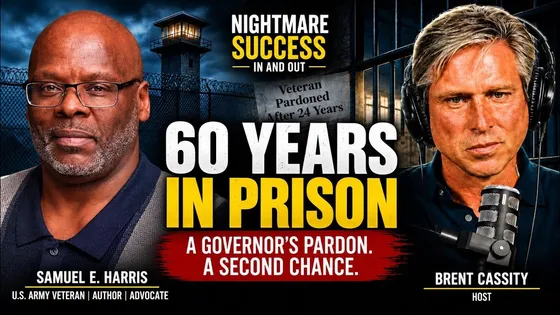
Samuel E. Harris says he wrote 1,084 prison letters before Governor Glenn Youngkin pardoned him
On Nightmare Success, Harris describes clemency less as a miracle than as a paperwork siege, after a 220-year sentence and 24 years behind bars.
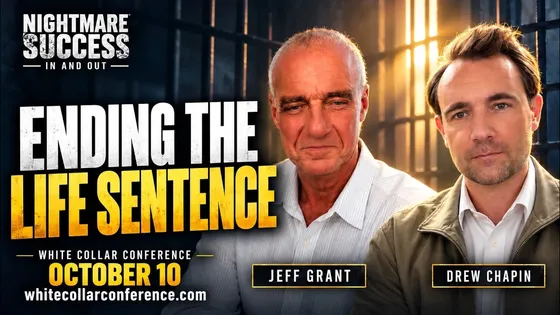
Jeff Grant says you're more likely to be struck by lightning than get a presidential pardon
On Nightmare Success, Grant turns the pardon fantasy into a brutal reentry math problem.
William Noguera says he stayed on death row to get a Joseph Naso confession in a Berkeley cold case
The former San Quentin death row prisoner says his strangest act of accountability was delaying his own transfer so he could finish work on an unsolved murder.
Ryan Moser says he published more than 250 pieces during a 10-year prison sentence
The Nightmare Success intro sells Moser’s prison-to-newsroom story with one unusually concrete number, and it is the rare redemption-podcast detail that actually deserves a second look.
The circuit, read weekly. No noise.