Don Lincoln says the Higgs field turned on 10^-12 seconds after the Big Bang and gave particles mass
The Fermilab physicist gives the cleanest possible version of a very weird idea: mass, at least for elementary particles, arrived when the early universe cooled enough for the Higgs field to switch on.
Listen on YouTube · Spotify · Apple Podcasts
 WATCH NOW↓
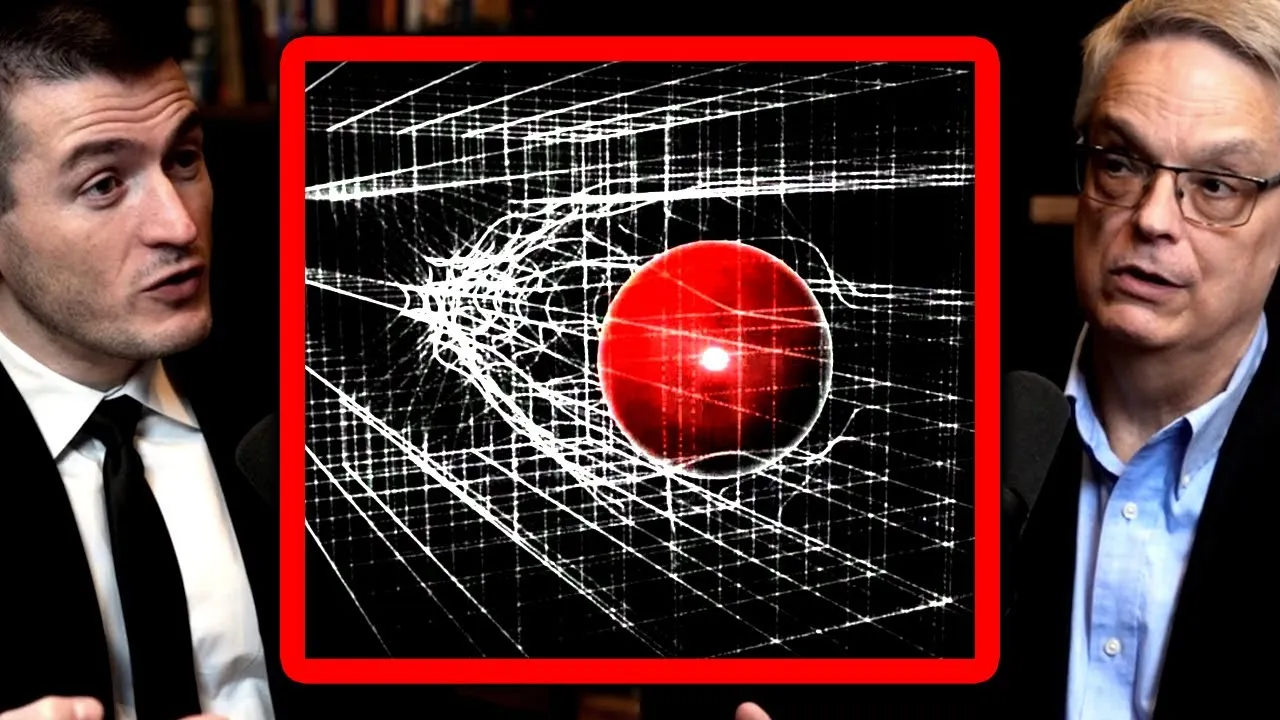
 The universe, in Don Lincoln’s telling, did not gently mature into matter. It flipped a switch. About 10^-12 seconds after the Big Bang, Lincoln says, the Higgs field turned on, weak-force particles got mass, the photon did not, and the cosmos stopped behaving like one hot electroweak soup.
That is the sort of sentence that makes particle physics sound like theology with better math. But on the Lex Fridman Podcast, Lincoln makes the claim feel less like mysticism and more like plumbing. The problem he is solving is brutally specific: if electromagnetism and the weak nuclear force are really two versions of one electroweak force, why does light cross the universe while the weak force barely escapes the atomic nucleus?
The ones that interact with the field get mass and the ones that don’t interact with the field don’t have mass.
There it is, the whole sales pitch for the Higgs field, stripped of the God particle confetti. Some particles couple to the field and become massive. Some do not. The photon, in Lincoln’s best cartoon image, basically shrugs at the Higgs field and keeps flying massless.
The cosmic switch is the point
Lincoln’s most searchable claim is also the one most likely to be half-remembered at a bar by someone who once watched a CERN documentary: mass arrived after the Big Bang. More carefully, the early universe was so hot that electroweak symmetry was unbroken. As it cooled, the Higgs field took on a nonzero value, and the weak force carriers stopped behaving like photons.
there was a moment in time early in the history of the universe at 10 the minus12 seconds after the big bang the Higs field turned on and particles got mass
Verdict: basically right, with a giant museum-label caveat. This is standard particle physics, not a late-night speculation from the whiteboard zone. But the phrase “particles got mass” can smuggle in too much. The Higgs mechanism explains the masses of many elementary particles, including the W and Z bosons, and the way the electroweak theory works at low energies. It does not mean the Higgs field accounts for every ounce of you. Most of the mass in ordinary atoms comes from the strong nuclear force binding quarks inside protons and neutrons. Your bathroom scale is mostly QCD, which is less catchy and harder to put on a T-shirt.
The band-aid line is the tell
Lincoln is good here because he refuses to make the Higgs mechanism sound prettier than it is. The electroweak theory works elegantly at very high energies. Down here, in our cold little universe with chairs and coffee mugs and tax forms, the theory needs help. His metaphor is wonderfully rude.
And you need to fix the theory by effectively putting a band-aid on the theory.
That sounds dismissive until you remember that physics has a long history of band-aids becoming architecture. The Higgs mechanism is not a random patch slapped onto a leaky model. It is the patch that lets the model describe the actual universe we observe. Sometimes the ugly fix is the beautiful part. Ask anyone who has ever kept an old car alive.
Lincoln also draws a useful line between the field and the boson, which is where public explanations often get mushy. The field is the underlying thing. The Higgs boson is what you get when that field is excited, a local ripple, a detectable shiver. Physicists did not bottle the field. They found the vibration.
what we can do is not see the field, but we can actually excite the field, make it vibrate, and detect the vibrations.
The useful takeaway is not “the God particle explains everything,” which is the bumper-sticker version that should have been retired with frosted tips. It is stranger and better: the properties of matter depend on invisible fields filling space, and one of those fields changed the universe almost immediately after the Big Bang. If Lincoln is right, mass is not just what stuff has. It is what stuff does when the room is filled with the right field.
- Did the Higgs field give everything its mass?
- Not everything in the everyday sense. Lincoln is talking about elementary particles and, very specifically in this stretch, the weak force carriers becoming massive while the photon stays massless. Most of the mass in protons and neutrons comes from strong-force energy, not directly from the Higgs mechanism.
- When did the Higgs field turn on?
- Lincoln puts the electroweak symmetry breaking moment at about 10^-12 seconds after the Big Bang. His version is that the early universe was so hot that the Higgs field effectively had zero strength, then as the universe cooled, the field switched on and particles began interacting with it as mass.
- Have physicists actually seen the Higgs field?
- Lincoln says no one has directly seen the field, which is normal for fields in physics. The evidence comes from effects and excitations. In this case, the Higgs boson is treated as the detectable vibration of the field.
Don Lincoln says galaxies with no dark matter are strong evidence dark matter is real
The physicist’s best pro dark matter argument is wonderfully backward: the missing stuff looks more real when you can find places where it’s missing.
Don Lincoln says quantum field theory predicts dark energy 10^120 times too large
The Fermilab physicist puts a number on the vacuum catastrophe, and the number is so stupidly large it makes ordinary scientific failure look dainty.
Don Lincoln says Fermilab was two or three years from discovering the Higgs boson before CERN got there
The Fermilab physicist frames the Higgs discovery as a near miss, not a clean victory lap for CERN, and he has the machine numbers to make that sting.
Don Lincoln says Maxwell's equations turned magnets and sparks into the internet
On the Lex Fridman Podcast, the Fermilab physicist makes the case that the weirdest, least practical physics is often the stuff that later rewires civilization.
The circuit, read weekly. No noise.