Don Lincoln says galaxies with no dark matter are strong evidence dark matter is real
The physicist’s best pro dark matter argument is wonderfully backward: the missing stuff looks more real when you can find places where it’s missing.
Listen on YouTube · Spotify · Apple Podcasts
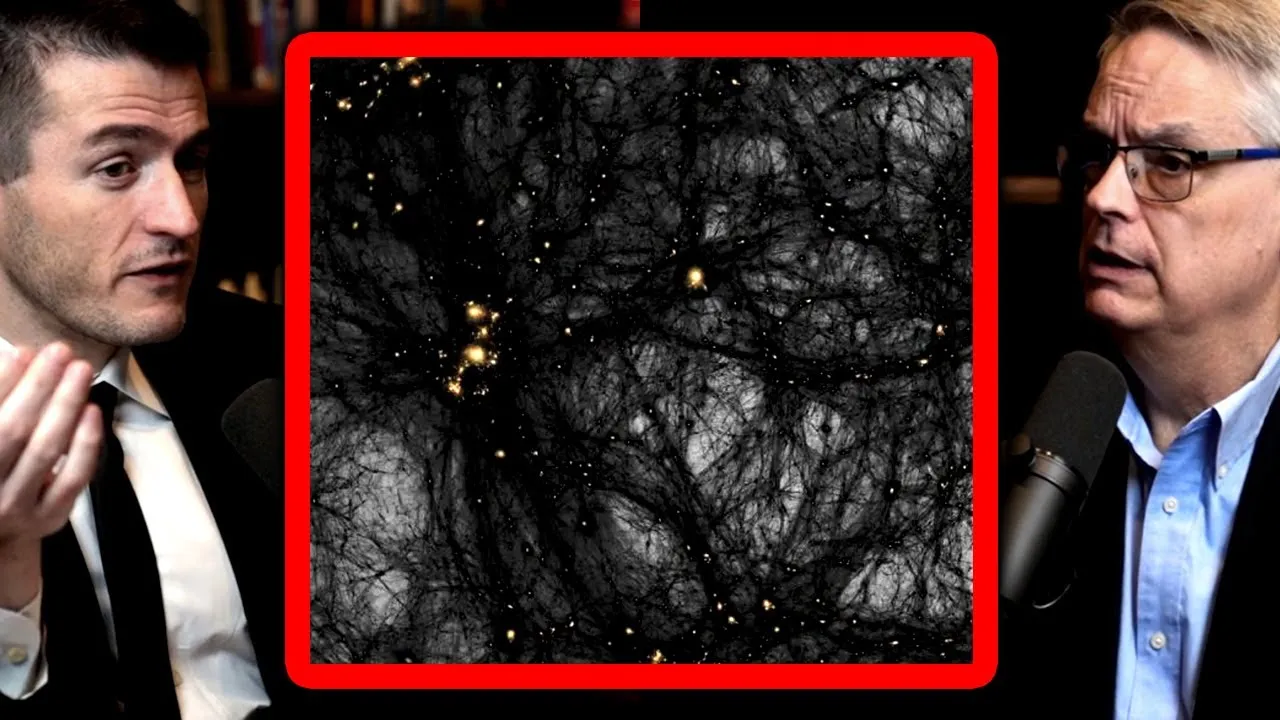 WATCH NOW↓
 A galaxy with no dark matter sounds like the prosecution’s star witness against dark matter. Don Lincoln says it’s almost the opposite: strong evidence that dark matter is a real thing you can take out of a galaxy, not just a fudge factor physicists slap on anything that spins too fast.
That is the neat little trapdoor in Lincoln’s appearance on the Lex Fridman Podcast. The familiar case for dark matter is already strange enough: galaxies rotate too quickly, galaxy clusters move too fast, and gravitational lensing bends light more than visible matter can explain. But the really delicious argument is negative evidence. The absence helps prove the presence. Physics, apparently, has a flair for noir.
The missing stuff can also be missing
Lincoln, an experimentalist by temperament and by job description, starts from a wonderfully plain premise. If galaxies are spinning faster than Newton or relativity predict, something in the equation is wrong. Maybe gravity is wrong. Maybe inertia is wrong. Maybe the equal sign itself is getting cute. Or maybe there is more mass than we can see.
He says he used to be more open to the modified gravity side. Then came the Bullet Cluster, the astrophysical equivalent of two cars crashing and leaving the invisible cargo to keep driving.
The bullet cluster is strong evidence that dark matter is a real thing.
In the Bullet Cluster, two galaxy clusters passed through each other. The hot gas, which makes up much of the ordinary matter, got stuck in the middle. The gravitational lensing signal did not. It stayed with the galaxies, as if a huge amount of unseen mass had sailed through the collision without caring about the gas. Modified gravity theories can try to answer that, and some do. But it’s not the friendly version of the homework.
Then Lincoln brings up NGC 1052-DF2 and NGC 1052-DF4, the so called Dragonfly galaxies that appear to have little or no dark matter and rotate roughly the way ordinary Newtonian expectations say they should. If you’ve ever watched an argument on the internet eat its own tail, you can feel the punchline coming.
this is one of those lovely ironies that the existence of a galaxy with no dark matter is very strong evidence that dark matter is real because you can take the dark matter out.
That is the claim worth clipping. If dark matter were just a symptom of matter behaving differently than we thought, then a galaxy made of matter should still show the symptom. If some galaxies don’t, the invisible ingredient starts to look separable. Not imaginary. Separable.
The strong case still has an embarrassing blank space
Lincoln is not selling a victory lap. This is why the claim works. He’s pro dark matter, but not in the obnoxious way where every failed search is rebranded as exciting progress. He says the community has looked for the usual suspects and come up empty. Hidden hydrogen gas does not do it. Rogue planets do not do it. Black holes do not do it in the needed numbers. The old candidate called a WIMP, a weakly interacting massive particle, has had decades of expensive auditions and still hasn’t gotten the part.
dark matter is likely a real thing. Now that’s great. I’ve taken you all the way to dark matter. So now you’re going to ask me. You’re going to say, “Don, what is dark matter?” I’m going to I don’t know, but I know what it isn’t.
That’s a good scientist’s answer and a terrible bumper sticker. Lincoln’s verdict is not, we found dark matter. It’s closer to, the alternatives keep limping, the gravitational evidence keeps pointing, and the actual particle is still hiding somewhere in a search space the size of a cosmic junk drawer.
the range of viable dark matter ranges from something like the mass of an asteroid to far lighter than an electron and everywhere in between.
That line is doing real damage to anyone who thought this was just a matter of building a bigger detector and waiting for the universe to cough. A dark matter particle, if it is a particle, could sit in wildly different mass ranges. An experiment tuned to one slice can be blind to another. Lincoln’s own field, particle physics, is powerful, but it is not a magic flashlight.
So the fair verdict is: Lincoln’s galaxy-without-dark-matter argument is persuasive, not final. The Bullet Cluster remains one of the cleanest public-facing reasons to take dark matter seriously. DF2 and DF4 are fascinating, though the measurements and interpretation have been debated. And the lack of direct detection is not a footnote. It is the giant blinking sign over the whole enterprise.
Still, the claim has teeth because it flips the usual skeptic’s line. The most annoying thing for dark matter doubters may not be galaxies that need unseen mass. It may be galaxies that don’t.
a black hole you can’t see it’s perfect it’s a perfect candidate for dark matter. And if there’s enough of them out there, remember there’s five times the number of stars, which means there’s a whole lot of freaking black holes out there. We should have seen them and we didn’t.
- Why would galaxies with no dark matter be evidence that dark matter is real?
- Lincoln’s point is that if every galaxy’s weird rotation came from a universal mistake in gravity or inertia, you’d expect the weirdness to show up everywhere. A galaxy that rotates normally suggests the extra gravitational ingredient can be present in some galaxies and absent in others. That makes dark matter look less like a mathematical patch and more like a removable component.
- Does Don Lincoln think dark matter has been directly detected?
- No. He says the case for dark matter is strong, but the direct searches have not found the particle. Underground detectors, annihilation searches, and collider experiments have ruled out pieces of the map, not the whole territory.
- What does Lincoln say dark matter is not?
- He says it is not black holes, rogue planets, or ordinary hidden gas in sufficient amounts. Those ideas were reasonable candidates, but observations have not found enough of them to account for the missing mass.
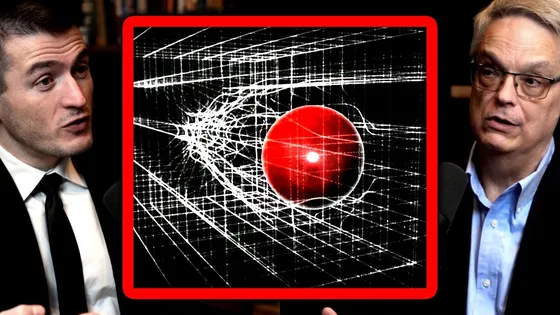
Don Lincoln says the Higgs field turned on 10^-12 seconds after the Big Bang and gave particles mass
The Fermilab physicist gives the cleanest possible version of a very weird idea: mass, at least for elementary particles, arrived when the early universe cooled enough for the Higgs field to switch on.
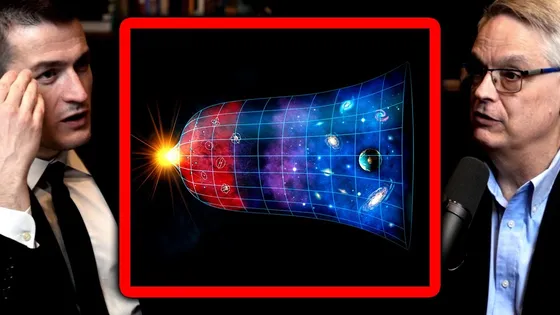
Don Lincoln says we exist because the early universe had one extra matter particle per billion antimatter particles
The Fermilab physicist framed existence as the leftover scrap from a cosmic matter-antimatter wipeout, then admitted nobody knows what caused the imbalance.
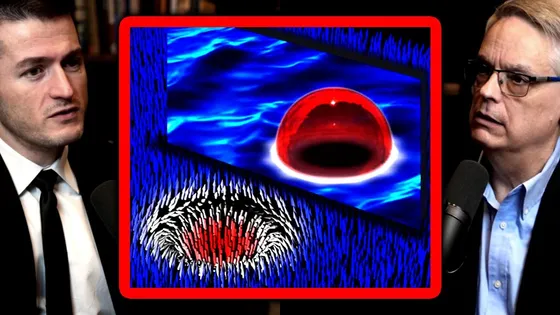
Don Lincoln says quantum field theory predicts dark energy 10^120 times too large
The Fermilab physicist puts a number on the vacuum catastrophe, and the number is so stupidly large it makes ordinary scientific failure look dainty.
Don Lincoln Has Spent 30 Years Looking for Dark Matter and Has Absolutely No Idea What It Is
The Fermilab physicist makes a compelling case for something he cannot find, cannot name, and cannot stop thinking about.
The circuit, read weekly. No noise.