Don Lincoln says we exist because the early universe had one extra matter particle per billion antimatter particles
The Fermilab physicist framed existence as the leftover scrap from a cosmic matter-antimatter wipeout, then admitted nobody knows what caused the imbalance.
Listen on YouTube · Spotify · Apple Podcasts
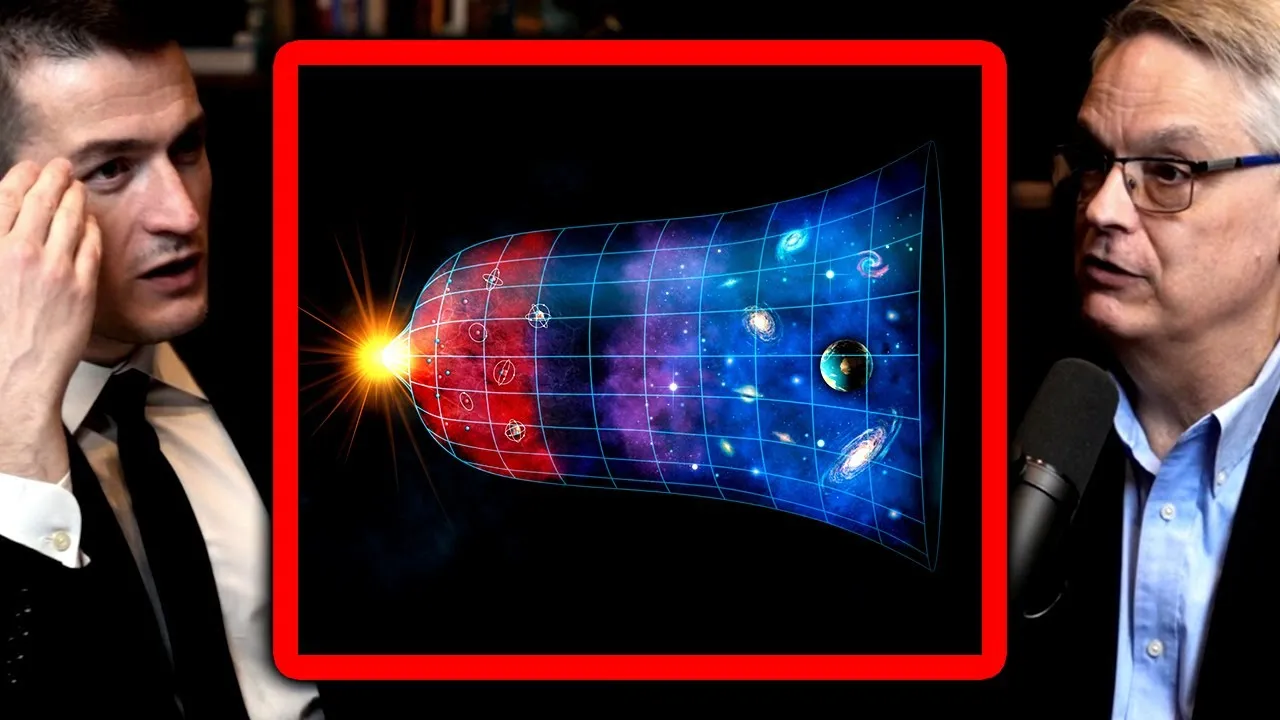 WATCH NOW↓
 Humanity, in Don Lincoln’s telling, is a rounding error with anxiety and Wi-Fi. On the Lex Fridman Podcast, the Fermilab physicist says everything we see exists because the early universe had roughly one extra matter particle for every billion particles of antimatter.
That is the kind of fact that sounds like it was designed by a stoned screenwriter trying to make physics feel spiritual. It is also the mainstream problem. The Big Bang should have produced matter and antimatter in equal amounts. Matter meets antimatter, both vanish into energy. Clean. Apocalyptic. Very efficient. And yet here we are, buying oat milk and arguing about parking.
somehow in the early universe, something made a very very tiny asymmetry.
Lincoln’s version is useful because he refuses to sand off the weirdness. This is not the usual science-podcast move where a mystery is introduced so the guest can heroically solve it 11 minutes later. The number is the hook, and the confession is the point. Physicists can measure the imbalance. They cannot yet explain why it happened.
for every billion billion with a B antimatter particles that existed in the universe, there were a billion and one matter particles.
The universe as leftovers
The cleanest way to say it is this: almost everything died. Matter and antimatter annihilated each other in the early universe, and the tiny extra smear of matter became the cosmic inventory. Stars. Galaxies. Your dentist. The irritating guy who says ‘actually’ before correcting the movie’s black hole physics. All of it.
Lincoln is talking about baryon asymmetry, the reason the observable universe is dominated by matter instead of being a sterile bath of photons. He mentions baryogenesis, the family of theories that try to explain how matter gained that tiny advantage, but he does not pretend the known evidence is enough. That is the sober part hiding inside the cosmic poetry. We know matter and antimatter behave slightly differently in some particle systems. We do not know whether those differences can account for the universe.
Neutrinos get the thankless assignment
The possible escape route, Lincoln says, may run through neutrinos, those ghostly particles that pass through matter like they have backstage passes to reality. Fermilab is testing whether neutrinos and antineutrinos oscillate, meaning change identities, at different rates. A group in Japan is chasing the same kind of measurement. Lincoln does not oversell it, which is refreshing. He practically puts a warning label on the hope.
it is possible. It is unlikely, but it is possible that the two of them will oscillate at slightly different rates.
That caveat matters. The internet loves a sentence like ‘neutrinos may explain why anything exists’ because it has the texture of revelation. Lincoln’s version is more annoying and more trustworthy: neutrinos might provide a clue, if several other improbable conditions line up, and even then the clue would not magically close the case. This is cosmology as actual work, not a planetarium voiceover.
So the claim is strong, but not new in the tabloid sense. Lincoln is not announcing that Fermilab solved existence. He is translating one of the deepest open problems in physics into a line you can remember after the episode ends: the universe is what survived the cancellation.
I wish I could tell you I knew what the answer is, but but literally nobody knows.
- Did Don Lincoln say physicists know why matter beat antimatter?
- No. Lincoln says the size of the imbalance can be estimated, but the mechanism behind it is still unknown. He points to baryogenesis and leptogenesis as possible explanations, then flatly says nobody has the answer yet.
- What does the one extra matter particle idea mean?
- It means that in the early universe, matter and antimatter almost perfectly canceled each other out. Lincoln describes a tiny excess of matter, roughly one extra matter particle for every billion antimatter particles, as the leftover that became galaxies, planets, and us.
- How could neutrinos help solve the antimatter mystery?
- Lincoln says experiments are comparing how neutrinos and antineutrinos change identity as they travel. If they oscillate at slightly different rates, that would be a major clue, though he is careful to call that outcome unlikely.
Don Lincoln says galaxies with no dark matter are strong evidence dark matter is real
The physicist’s best pro dark matter argument is wonderfully backward: the missing stuff looks more real when you can find places where it’s missing.
Don Lincoln Has Spent 30 Years Looking for Dark Matter and Has Absolutely No Idea What It Is
The Fermilab physicist makes a compelling case for something he cannot find, cannot name, and cannot stop thinking about.
Don Lincoln says Fermilab was two or three years from discovering the Higgs boson before CERN got there
The Fermilab physicist frames the Higgs discovery as a near miss, not a clean victory lap for CERN, and he has the machine numbers to make that sting.
Don Lincoln says Maxwell's equations turned magnets and sparks into the internet
On the Lex Fridman Podcast, the Fermilab physicist makes the case that the weirdest, least practical physics is often the stuff that later rewires civilization.
The circuit, read weekly. No noise.