Eckhart Tolle says the world is not here to make you happy, it is here to make you more conscious
On Huberman Lab, Tolle gave the self-help industry its least marketable slogan and, annoyingly, maybe its most useful one.
Listen on YouTube · Spotify · Apple Podcasts
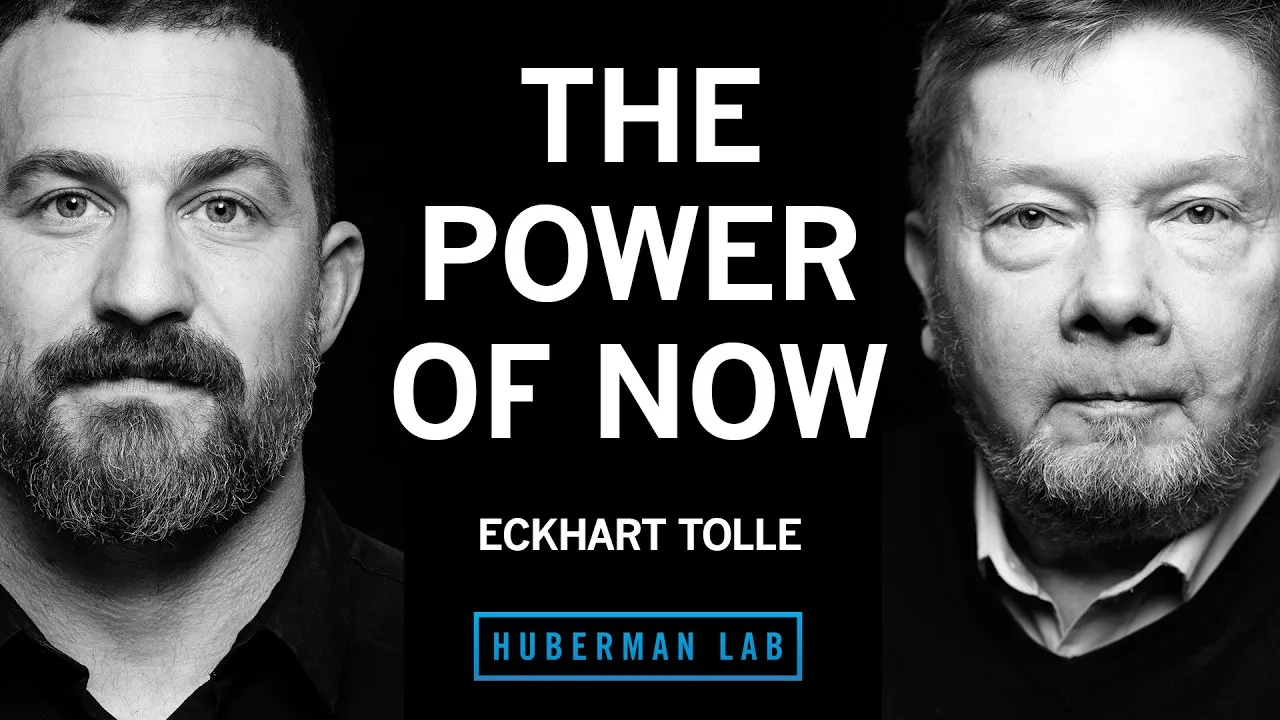 WATCH NOW↓
Eckhart Tolle said on Huberman Lab that the world is not here to make you happy, it is here to make you more conscious. He argued that life’s challenges are not proof something has gone wrong, but the basic curriculum by which consciousness develops.
This is a bleak little fortune cookie until you realize how much of modern wellness is built on the opposite promise. Better sleep. Cleaner water. Stronger glutes. Nicer relationship. Perfect bloodwork. A supplement stack with the confidence of a venture-backed cult. Tolle’s answer is basically, cute, enjoy the upgrades, but stop asking the universe to become your concierge.
The world is not here to make you happy. That’s a misconception
Eckhart Tolle, the author of The Power of Now, has been saying versions of this for decades. What makes it pop here is the venue. Andrew Huberman’s show usually wears the lab coat even when it’s selling yerba mate, and Tolle arrives speaking fluent anti-dashboard. Huberman wants tools, states, practices, mechanisms. Tolle keeps returning to the same unfashionable proposition: the tool is attention, the mechanism is presence, and the scoreboard is usually the trap.
A useful claim, not a lab result
The verdict: Tolle is persuasive when he’s diagnosing expectation, and much shakier when the claim expands into cosmic purpose. No one can prove that the world exists to make you more conscious. That’s theology wearing linen. But as a description of why people stay miserable after getting what they wanted, he’s painfully sharp. If you treat a job, a spouse, a house, a body, or a guru as the thing that must finally complete you, you’ve already put too much weight on the shelf.
It’s a relief to know that the world is not here to make you happy because then you don’t place unreasonable expectations not only on other people but also on situations and achievements and possessions.
That line is the real self-help grenade. Not because it tells you to stop wanting things. Tolle is not pretending rent is a hallucination. He explicitly allows for goals, work, health, money, relationships, and all the ordinary furniture of a life. His warning is about outsourcing your being to them. The car can be nice. The promotion can matter. The family photo can be precious. But the minute you demand, “Fulfill me,” even the good stuff starts sweating.
Huberman, to his credit, doesn’t just nod like a man being spiritually laminated. He keeps asking the practical version of the listener’s question: how do you live from presence without becoming the weirdest person at brunch? Tolle’s answer is refreshingly small. Don’t flee society. Wash your hands consciously. Listen to silence. Notice the room before your brain slaps labels on it. This is meditation stripped of scented branding.
Listen as if you were listening to the silence.
The ego wants credit
The funniest and most human part of Tolle’s argument is his suspicion of success. Huberman brings up artists, scientists, and musicians who do brilliant work, get rewarded, then somehow lose the signal. Tolle’s explanation is pure Tolle: the ego shows up after the miracle and demands a producer credit. It’s the spiritual version of a guy ruining the band after reading the reviews.
The more the ego claims credit the power that was able to to you flows through them get is the access is then cut off.
This is where the episode is most interesting as culture, not neuroscience. Tolle is describing the same pattern people recognize in bands, actors, founders, gurus, and Nobel-grade academics: the work comes from somewhere alive, then the identity hardens around it. The person stops being a conduit and becomes a brand manager for the conduit. The flow state becomes merch.
Tolle’s cure is not humility as performance, which is just ego doing a soft launch. It’s non-identification. He says teaching is a function, not an identity. He walks offstage and tries not to carry “spiritual teacher” around like a backstage pass. Believe that or don’t, but it’s a cleaner answer than the usual guru defense package, which tends to involve robes, distance, and a suspicious number of people explaining why normal rules don’t apply.
The curriculum nobody signed up for
The claim that challenges make us conscious can curdle fast if you’re not careful. Tell someone in real pain that their suffering is a lesson and you may deserve whatever happens next. Tolle avoids the worst version by not glamorizing disaster. He’s saying challenge is inevitable, and resistance to that fact multiplies suffering. That’s less mystical. Also more annoying, because it removes one of the ego’s favorite hobbies: filing complaints against reality.
without a challenge. Consciousness does not develop.
If Tolle is right, the listener doesn’t get to wait for life to become stable before practicing consciousness. The unstable part is the gym. The bad email, the needy relative, the body that won’t behave, the success that suddenly makes you insufferable, all of it becomes material. Not proof you’ve failed. Material.
That won’t make the world comforting. It might make it less personally insulting.
- What did Eckhart Tolle say about happiness?
- Eckhart Tolle said the world is not here to make you happy, it is here to make you more conscious. His point was that achievements, relationships, possessions, and comfort can be enjoyed, but they collapse under the demand to provide lasting fulfillment. The useful part of the claim is psychological. The cosmic part is a spiritual belief, not something Huberman can put in a scanner.
- What practice did Eckhart Tolle recommend on Huberman Lab?
- Tolle recommended paying close attention to sense perception, sound, sight, silence, and ordinary actions like washing your hands. The move is to interrupt the automatic habit of labeling everything and let awareness replace the running commentary in your head.
- Did Andrew Huberman challenge Eckhart Tolle?
- Huberman pushed Tolle to explain how presence fits inside ordinary life, work, ambition, social reality, and even neuroscience. He did not debunk Tolle so much as translate him, turning the language of being and stillness into questions about attention, interoception, and the cost of constant mental labeling.
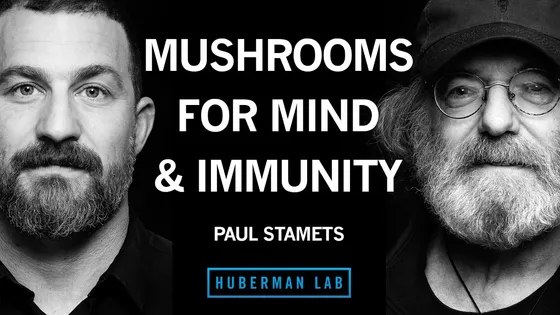
Paul Stamets says agarikon and turkey tail helped unvaccinated COVID patients reach 50 percent symptom reduction 5.1 days sooner
The mushroom evangelist came armed with small clinical studies, a giant H5N1 warning, and the unavoidable fact that he sells the stuff.
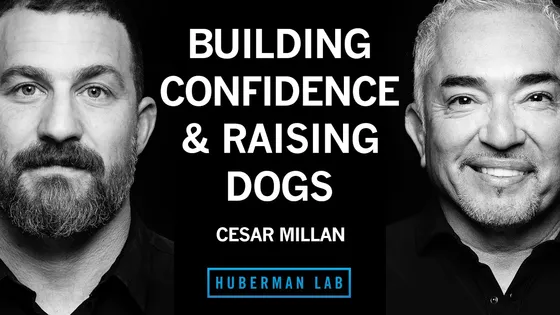
Cesar Millan says learning how to walk your dog eliminates 90 percent of behavior problems
On Huberman Lab, the Dog Whisperer reduced most canine chaos to one blunt prescription, walk the dog before you try to love the dog into sanity.
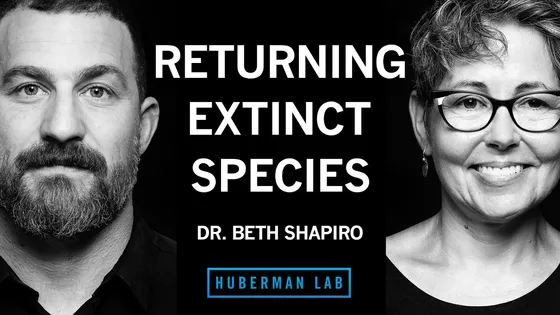
Beth Shapiro says her lab has already engineered and birthed living direwolves
The evolutionary biologist tells Andrew Huberman that de-extinction is no longer a hypothetical future, and her company has three massive engineered wolves to prove it.
Arthur Brooks says trying to avoid unhappiness makes you miss happiness
On Huberman Lab, Brooks argues that happiness is built from enjoyment, satisfaction, and meaning, and none of the three comes pain-free.
The circuit, read weekly. No noise.