Heather Lynn says archaeology was primarily used as a cover for spying operations
On Danny Jones Podcast, Lynn ties cabinets of curiosities, King Tut money, and Middle East mapmaking to archaeology's oldest dirty secret.
Listen on YouTube
 WATCH NOW↓
 If Indiana Jones had filled out more paperwork and sent a few memos to the Foreign Office, he might have looked less like a movie hero and more like Heather Lynn’s version of archaeology. On Danny Jones Podcast, Heather Lynn says the field’s history is not merely adjacent to espionage. It was, in her telling, one of espionage’s best costumes.
The history of archaeology is deeply entwined in spycraft, period.
That is the kind of sentence that makes a certain kind of museum donor stare very hard at a wall label. Lynn’s argument is simple and satisfyingly nasty: before archaeology became the thing with grant applications, lidar, ethics panels, and undergrads brushing dirt off pottery, it was antiquarianism. Translation: rich people with boats, land, titles, and a taste for other people’s dead stuff.
The hobby before the lab coat
Lynn is careful to call modern archaeology a social science, not fake science. That’s a fair distinction. Archaeologists use hard scientific tools, but interpretation still requires a human being to build the story. The problem, in her telling, is that the origin story of the discipline was not exactly clean-room scholarship. It was a private amusement for the landed class, dressed later in university tweed.
before that, it was called antiquarianism. And it was literally a hobby of wealthy landed gentry.
Her best visual is Highclere Castle, better known to television people as the real Downton Abbey. The actual Lord Carnarvon funded Howard Carter’s excavation of Tutankhamun’s tomb, and Highclere has long traded on that Egypt connection. Lynn uses it as the perfect haunted dollhouse for early archaeology: a castle basement, display cases, rich friends wandering through a cabinet of curiosities, drinks in hand, empire arranged under glass.
Hey, come over here, lovey, and taste one of these mummies. Cuz, you know, they ate the mummies.
This is where the episode earns its lurid title. Europeans really did consume mummy material for centuries, through the medicinal trade in ‘mumia’ and later through the broader carnival of Egyptomania and elite collecting. Lynn’s point is not just, ha ha, aristocrats were goth freaks with better tailoring. It’s that antiquities entered elite life as possession, spectacle, and status before they entered public life as heritage.
Her verdict on the museum era is similarly sour. World War I, economic pressure, and political agitation helped crack the old landed order. Private hoards moved into museums and universities, often under the polite language of loans and gifts. That gave the hobby a public face. It did not magically launder the origin story.
A shovel makes excellent cover
The more explosive claim is about espionage. Archaeology, Lynn argues, put Western researchers in exactly the places governments wanted eyes and ears: the Middle East, strategic routes, tribal politics, oil-adjacent territory, crumbling empires. A dig could justify language study, local contacts, mapping, long residence, and a lot of questions that would look suspicious coming from a uniformed officer.
Her examples are not random. She invokes Gertrude Bell and T. E. Lawrence, figures whose archaeological, political, and intelligence lives were famously tangled up with British power in the Middle East. She also brings up the Nazi Ahnenerbe, the SS research outfit that poured resources into archaeology and myth-hunting to flatter Nazi ideology. Lynn’s point is that not every scholar on the ground had to be part of a secret master plan. Institutions are very good at giving everyone just enough deniability to sleep.
it was used primarily as a cover for spying operations and in some cases still is
That ‘primarily’ is the load-bearing word. As a universal history of archaeology, it overreaches. There are too many digs, regions, methods, local archaeologists, and research traditions to flatten the whole field into Spy Kids With Trowels. But as a description of imperial archaeology around the turn of the 20th century, and of why some countries still eye foreign archaeological teams with suspicion, Lynn’s claim has teeth.
The useful takeaway is not that every archaeologist is a spook. It’s that the innocence of the discipline was always a story powerful people told after the crates were already packed.
- What did Heather Lynn say about archaeology and spying?
- Lynn argued that archaeology gave governments an unusually tidy cover story: researchers could travel, learn languages, live among local communities, map terrain, and ask nosy questions while claiming academic purpose. Her strongest version of the claim is that archaeology was used primarily as a cover for spying operations, especially around imperial projects in the Middle East.
- Did rich Europeans really eat mummies?
- Lynn brings up the old European habit of consuming mummy material as part of the grotesque culture around antiquities collecting. Her point isn't just that wealthy collectors were weird, though they absolutely were. It's that early archaeology grew out of elite private collecting, not a neutral scientific institution.
- Is Lynn's claim too strong?
- As a total statement about all archaeology, yes, 'primarily' is a very big swing. As a claim about imperial archaeology, museums, elite funding, and state interests around World War I, it has real force. The episode is strongest when it treats archaeology less like a fedora fantasy and more like a passport with a shovel attached.
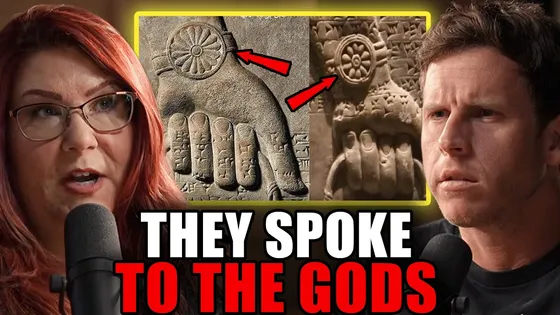
Heather Lynn says the Anunnaki wristwatches were poppy cuffs from Nimrud, not alien watches
On Danny Jones, Lynn gives the ancient aliens internet a delightfully terrestrial answer, then pushes it into a bigger claim about opium, mushrooms and Mesopotamian altered states.
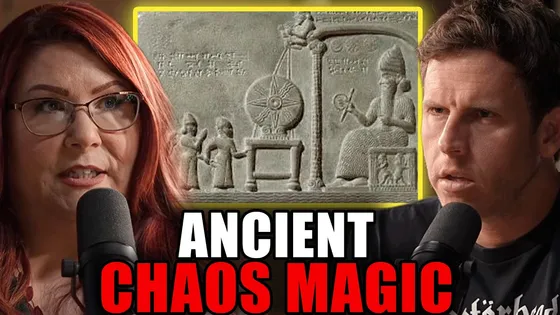
Heather Lynn says chaos magic sigils can be charged with orgasm, torture, and blood
On the Danny Jones Podcast, Lynn turns a New Age craft-table idea into something much darker, and not all of the leap is equally convincing.
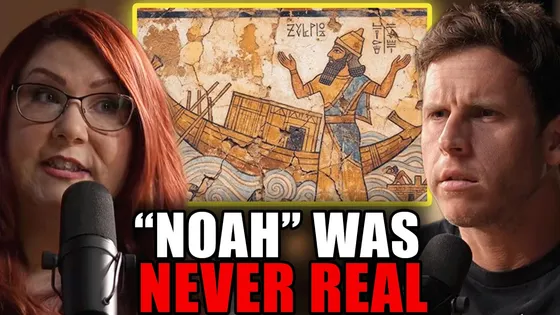
Heather Lynn says Noah didn't build an ark, he led a breakaway civilization of scientists
The fun part is that Lynn is not doing ancient aliens here, she is making Noah sound like the logistics director of a post-collapse research commune.
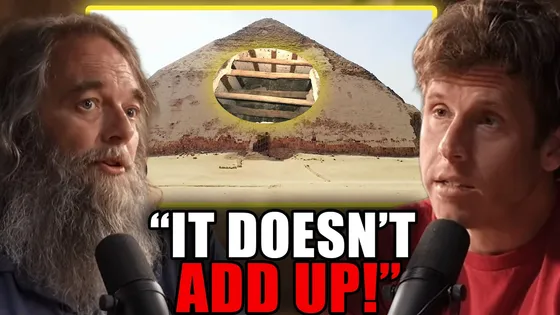
Dan Richards says Egyptologists used Bayesian modeling to delete carbon dates that contradicted the pyramids timeline
A self-described electrician-turned-researcher makes a specific, technical accusation against mainstream Egyptology, and the accusation is harder to dismiss than it sounds.
The circuit, read weekly. No noise.