Heather Lynn says the Anunnaki wristwatches were poppy cuffs from Nimrud, not alien watches
On Danny Jones, Lynn gives the ancient aliens internet a delightfully terrestrial answer, then pushes it into a bigger claim about opium, mushrooms and Mesopotamian altered states.
Listen on YouTube
 WATCH NOW↓
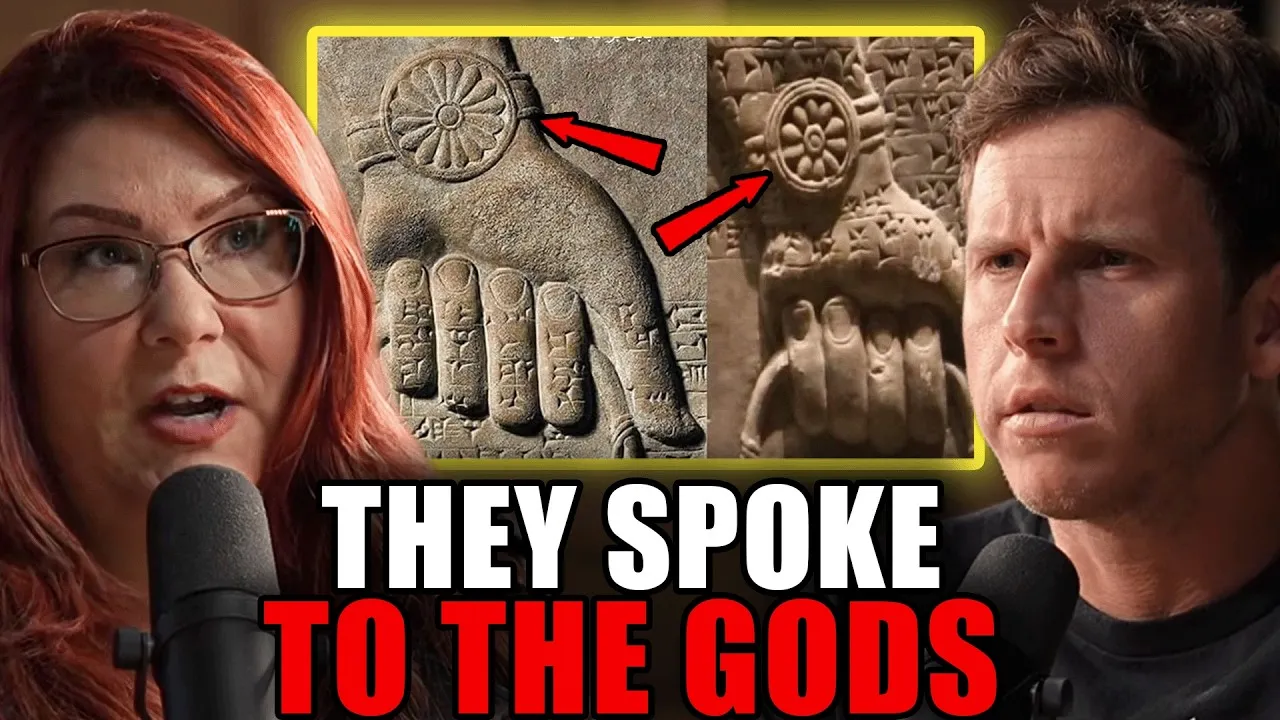
 The Ancient Aliens wristwatch meme got a very non-space-age downgrade on the Danny Jones Podcast: Heather Lynn says the famous Anunnaki “watches” were gold-and-lapis cuffs from Nimrud covered in poppy imagery. Her bigger swing is that those cuffs, along with mushroom-shaped cuneiform pieces, point to Ancient Mesopotamia treating altered states as religious technology.
This is the fun kind of fringe-adjacent podcast moment: one foot in real artifacts, one foot in the fog machine. Lynn is not saying the gods checked the time before boarding a spacecraft. She is saying the internet looked at ancient wrist ornamentation, yelled “watch,” and missed the more interesting possibility sitting right there in the goldwork: poppies, ritual anointing and drug-coded royal theater.
I’ve actually found the real wristwatches. I have them up on my Substack or somewhere. Um but they’re gold, they’re beautiful, and they’re not watches
The alien watch becomes a ritual cuff
The “Anunnaki wristwatch” is one of those internet fossils that refuses to die, like a History Channel chyron that escaped into Facebook. In carvings of Mesopotamian divine or semi-divine figures, people see a circular object at the wrist and decide the ancient world had either wearable tech or visitors with excellent accessories. Lynn’s correction is better than the meme: she says the real objects were decorative cuffs associated with royal ritual, not devices.
they had an important decorative motif on them that included these Apkallu doing what appeared to be something called the Hul Gil rite, which was the anointing of the king.
That answer has the rare advantage of being less sensational and more interesting. A watch is just a prop for a YouTube thumbnail. A cuff tied to anointing, kingship and priestly imagery is a doorway into how power sold itself in the ancient world. The king was not merely dressed. He was processed, marked, perfumed, possibly dosed, and staged inside a system where medicine, magic and politics all wore the same robe.
this indicated that they were using perhaps opium and other things to commune with these entities.
That “perhaps” is carrying a heavy little basket. Lynn’s case is strongest when she sticks to the material culture, cuffs, rosettes, poppy imagery, foundation deposits, medical texts, priestly healing. It gets shakier when the iconography starts acting like a pharmacy receipt. A flower motif can be a poppy without proving opium use in a specific rite, and a royal anointing scene can be pharmacological, symbolic or both. Ancient art loves compression. So do podcast claims.
The mushroom tablets are stranger than the wristwatches
Lynn’s second big clue is the so-called mushroom tablets, small clay cuneiform objects she says were molded into mushroom-like forms and inserted into temple foundations or walls. This is where the episode’s title, the Sumerians were always on drugs, starts to sound less like a dorm-room joke and more like an argument about ritual architecture.
there’s Sumerian cuneiform tablets called mushroom tablets and they’re literally shaped like mushrooms. And they have cuneiform going all the way around them.
She describes those objects as consecrated messages plugged into sacred buildings, a little like prayers tucked into a wall. Then she takes the shape seriously. In her telling, the mushroom is not just a cute clay silhouette. It is a mediator.
This that Sumerian um mushroom tablets that they had they were identifying the mushroom as a conduit as a mediator to the gods.
Here the verdict has to be split. Lynn is on solid ground saying ancient Mesopotamian medicine did not separate body, mind, spirit and law the way modern clinics do. Priests diagnosed, incantations treated, beer mattered, plants mattered, demons had names, and the healer could look a lot like an exorcist with a formulary. That world was not secular medicine plus superstition. It was one system.
But “they used plants in ritual medicine” is not the same as “the Sumerians were always on drugs.” The first claim fits what she lays out. The second is a podcast-title steroid injection. Lynn’s best material points to a civilization where altered states were woven into religion, healing and kingship, not a civilization hotboxing the ziggurat from breakfast to sunset.
Still, if she is even partly right, the museum case gets less sleepy. The cuff is not a broken smartwatch. The rosette is not filler. The clay cone is not just a labeled lump. For the listener, the useful correction is concrete: stop asking whether the Anunnaki had gadgets, and start asking what ancient power needed people to see, drink, inhale, swallow or believe before it looked divine.
- Were the Anunnaki wristwatches really watches?
- Lynn says no. Her claim is that the objects behind the meme are ornate gold cuffs, not timepieces, and that their imagery points to poppies, ritual anointing and royal power rather than alien gadgetry.
- Does Heather Lynn prove the Sumerians used opium and mushrooms?
- She makes a case, not a closed-file proof. The strongest material in the conversation is her linkage of poppy motifs, priestly medicine, incantations and mushroom-shaped cuneiform objects. The weaker leap is turning those clues into a confident claim about drug use as the operating system of Sumerian religion.
- What are the mushroom tablets Heather Lynn talks about?
- She describes them as small cuneiform objects shaped like mushrooms or cones, placed into temple foundations or walls with prayers and consecrating messages. Her interpretation is that the mushroom form mattered ritually, possibly as a mediator between humans and gods.
Heather Lynn says archaeology was primarily used as a cover for spying operations
On Danny Jones Podcast, Lynn ties cabinets of curiosities, King Tut money, and Middle East mapmaking to archaeology's oldest dirty secret.
Heather Lynn says chaos magic sigils can be charged with orgasm, torture, and blood
On the Danny Jones Podcast, Lynn turns a New Age craft-table idea into something much darker, and not all of the leap is equally convincing.
Heather Lynn says Noah didn't build an ark, he led a breakaway civilization of scientists
The fun part is that Lynn is not doing ancient aliens here, she is making Noah sound like the logistics director of a post-collapse research commune.
Dan Richards says Egyptologists used Bayesian modeling to delete carbon dates that contradicted the pyramids timeline
A self-described electrician-turned-researcher makes a specific, technical accusation against mainstream Egyptology, and the accusation is harder to dismiss than it sounds.
The circuit, read weekly. No noise.