Khabib Nurmagomedov says hatred of losing, not love of winning, drove his dominance
On the Lex Fridman Podcast, Khabib framed greatness less as inspirational hunger and more as productive paranoia.
Listen on YouTube · Spotify · Apple Podcasts
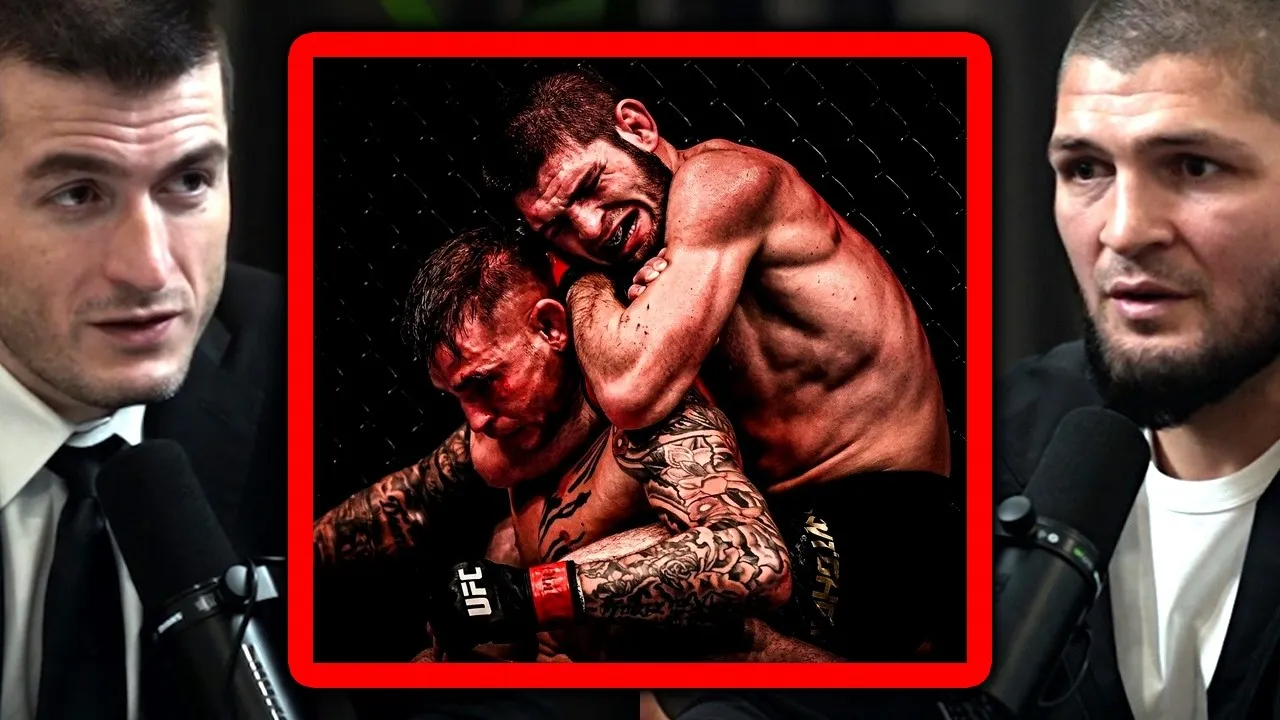 WATCH NOW↓
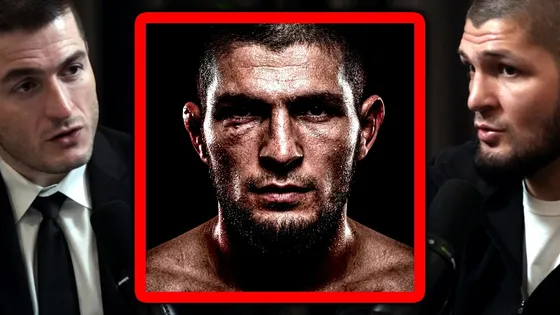
Khabib Nurmagomedov told the Lex Fridman Podcast that his dominance came from hatred of losing, not love of winning. He said he felt panicked about missing training, built travel around two-a-day sessions, and sometimes snuck out for a third workout at night.
This is not the Instagram version of discipline, where a man in tasteful compression gear tells you to wake up early and drink mineral water. Khabib Nurmagomedov makes elite MMA sound like a haunted house you voluntarily move into. The ghost is defeat. It follows you to Moscow. It checks your flight time. It asks whether you really needed that sauna session on a Wednesday.
I think it was the hatred of losing. Yes, definitely. I mean, you know, of course you want to win, but for me there was always this driver, like no way.
That line is the useful key to Khabib’s mythology because it cuts against the usual champion script. Winners usually talk like they were chasing glory. Khabib talks like he was being chased by embarrassment. He did not describe fight camp as confidence-building. He described it as a countdown with symptoms.
I was fixated, like when people have this addiction, but for me it was commitment that I absolutely had to prepare perfectly for the fight. I couldn’t miss any training sessions.
The important word there is “perfectly.” Not hard. Not seriously. Perfectly. Khabib says that if he had to fly to Moscow, he would pick a ticket that let him finish morning training first, then land and arrange the rest of his life around the evening session. Meetings could move. Planes could move. The workout could not.
Khabib’s version of greatness sounds more like fear management
There is a clean, believable version of this claim and a slightly dangerous one. The clean version is that Khabib’s career makes a lot more sense when you hear how intensely he organized his days. The retired UFC lightweight champion was not just technically superior. He was running a personal operating system that treated missed training like moral collapse.
The dangerous version is the implied universal law, that if you are not training like this, you do not really want it. Khabib does soften that a little by saying everyone does it differently. But only a little. His real standard is brutal: rest on Sunday, not in the middle of the week, not when a fight is 50 days away, not when someone else is still grinding.
What do you mean? You have to fight in 50 days. You have a huge fight ahead and you want to take a rest in the middle of the week?
That is both thrilling and faintly insane, which is exactly the point. Khabib says the top tier requires a little craziness, “in a good sense of the word.” He means obsession with a schedule, with pain, with repetition, with the dull daily humiliation of being thrown, choked, tested, and sent back to try again. This is sports psychology as furnace.
A person has to always be, you know, a little bit, let’s say, just a little bit crazy, but in a good sense of the word. You have to be addicted to it and to want this incredibly bad.
The villain in this story is comfort
Khabib’s best example is not even himself. It is the kind of room that produces champions and disposes of almost everyone else. He brings up John Danaher’s system, praising the way champions are made under one roof, while other talented people enter, last a year or two, and leave. He calls it a “black room,” an uncomfortable place. Very normal thing to say about your favorite educational environment.
This is where Khabib’s claim becomes more than macho folklore. His argument is that domination is not built by isolated effort. It is built by systems that make quitting available every day. Most people take the exit. A few stay long enough to become frightening.
Usually, most people give up. There are many who give up. But then, there are the ones who come in and stay there for a long time. Long, long time. And after some time, they achieve success.
As a personal explanation, Khabib’s hatred-of-losing theory is hard to beat. It fits the fighter: undefeated, smothering, allergic to chaos unless he was the one causing it. As life advice, it needs a warning label. Most people who treat every missed session like a spiritual emergency do not become Khabib. They become injured, divorced, or unbearable at brunch.
Still, there is something clarifying in hearing a champion refuse the cute language. He does not sell balance. He does not sell vibes. He sells the oldest and least marketable secret in fighting: if losing feels worse to you than training hurts, you might have a chance.
- What did Khabib Nurmagomedov say drove his dominance?
- Khabib said hatred of losing drove him more than love of winning. He described preparing for fights as a total fixation, where even travel plans had to bend around morning and evening training sessions.
- How much did Khabib say he trained before fights?
- He said he trained four to five hours every day, usually split between morning and evening sessions. He also described sneaking out at night for extra work at the sea when he felt two sessions were not enough.
- Does Khabib think champions have to be fanatical?
- Yes. Khabib said top-tier athletes need to be a little bit crazy in a good way and take a fanatical approach to training. His point was not that hard work is cute, but that the best people survive systems that break most others.
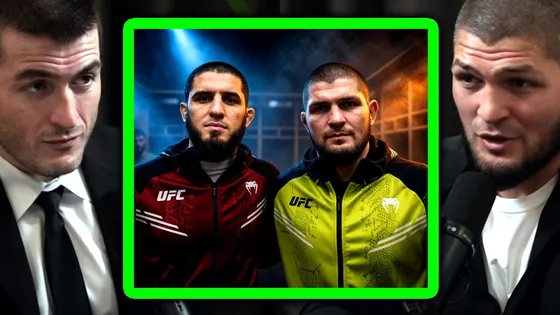
Khabib Nurmagomedov says he and Islam Makhachev don’t understand each other’s native languages
The former UFC champion used one tiny linguistic fact to explain why Dagestan is less a simple fight-factory stereotype than a mountain archive of peoples, faiths, food, and history.
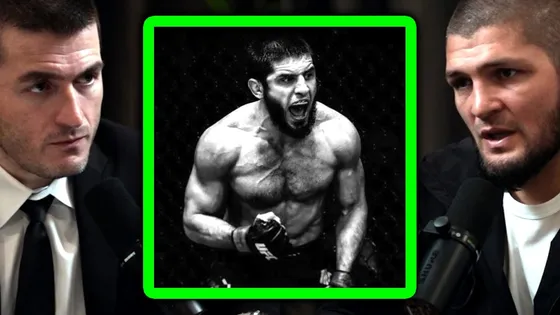
Khabib Nurmagomedov says Islam Makhachev can overtake Jon Jones, Demetrious Johnson, and Georges St-Pierre, but time is running out
Khabib’s praise for Makhachev comes with the most Dagestani compliment possible: you can become the greatest ever, now hurry up because your body is betraying you.
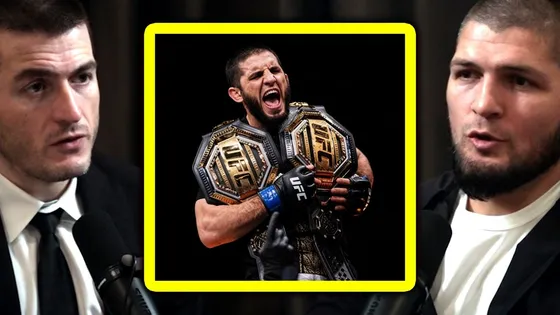
Khabib Nurmagomedov says Islam Makhachev can pass Jon Jones, but age is already closing the window
Khabib makes the case for Islam Makhachev as a future GOAT, then immediately points to the thing that could beat him before another fighter does: the calendar.
Khabib Nurmagomedov says his father prepared him for Conor McGregor by making him lose judo matches at 15
On Lex Fridman’s podcast, Khabib turns his invincibility myth into something more annoying and more useful: repetition, discomfort, and losing early where nobody was watching.
The circuit, read weekly. No noise.