Marc Brackett says teachers can grade the same essay one to two full grades differently depending on their mood
The Yale emotional intelligence researcher makes a useful, slightly terrifying case that your feelings are already making decisions before you think you are.
Listen on YouTube · Spotify · Apple Podcasts
 WATCH NOW↓
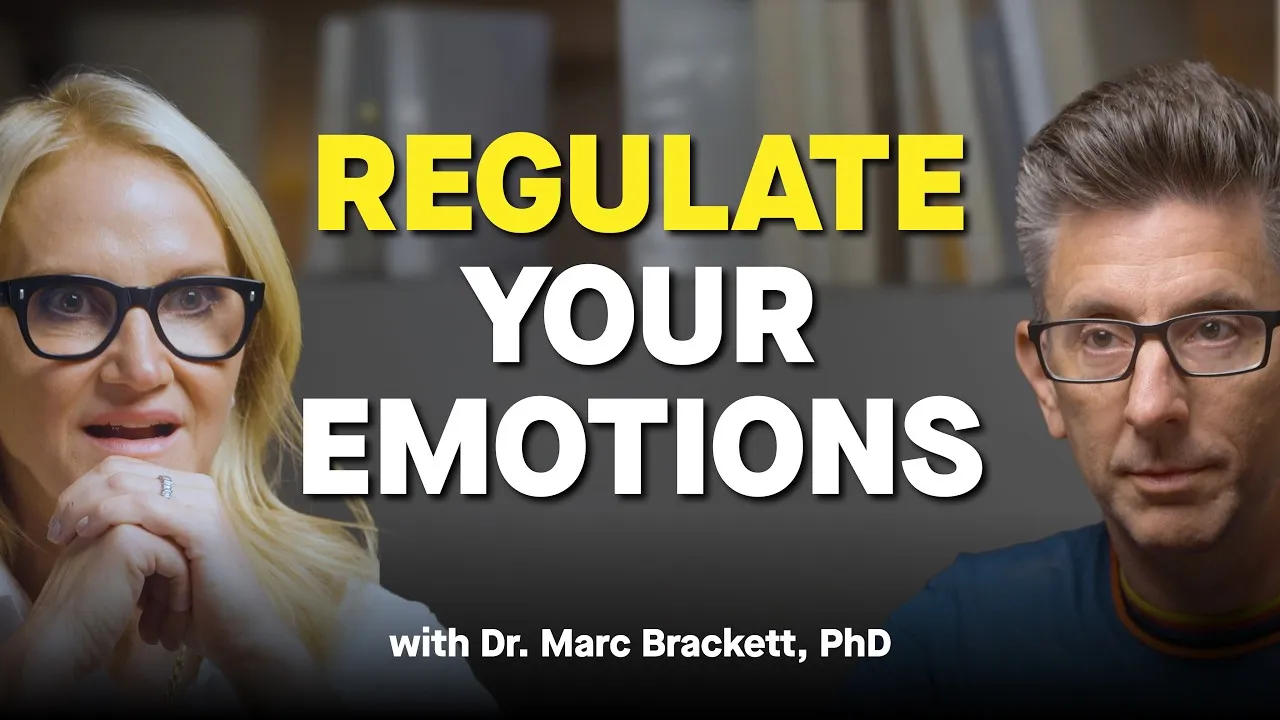
 Your kid’s B minus may not be a verdict on the comma splice. On The Mel Robbins Podcast, Yale emotional intelligence researcher Marc Brackett says teachers in his research graded the exact same essay one to two full grades differently depending on whether they had just been thinking about a good day or a bad day.
That is the sort of claim that makes every parent suddenly interested in whether Ms. Thompson had a parking ticket that morning. Brackett is not some vibes merchant selling a laminated feelings wheel from the trunk of a Subaru. He is the founding director of the Yale Center for Emotional Intelligence, and his RULER framework has been used in thousands of schools. Which is why this little grading anecdote has bite. It takes the cleanest institutionally approved act, the teacher grading the paper, and drags it into the mud with the rest of us.
Immediately thereafter, I gave the teachers the exact same essay to grade.
One to two full grade differences.
The scary part is not only the swing. It is the confidence. Brackett says that when he asked the teachers whether their feelings affected their judgment, they rejected the idea. Of course they did. Nobody wants to believe their mood has wandered into the gradebook wearing shoes.
Of course not. Like, I do all I do all day long is grade papers and make decisions. I said, “Well, here’s the data. One to two full grade differences.”
The gradebook has feelings
Brackett’s larger pitch is that emotions are not decorative. They drive attention, memory, relationships, health, performance, and, most inconveniently, judgment. This is the useful version of emotional intelligence, not the corporate retreat version where everyone gets a pastel worksheet and a muffin. He is saying your feelings are already in the room. The only question is whether you know their names.
Mel Robbins, to her credit, does not treat this like an abstract school problem. She immediately recognizes herself in it, describing how anger from one situation can leak into a totally different meeting. Anyone who has ever sent a spicy email after lunch knows the genre. You think you are responding to the agenda. Actually, you are responding to the contractor, the text, the traffic, the thing from yesterday, the whole emotional group chat in your nervous system.
When I can attribute my emotion to its actual cause it will no longer have that subconscious influence over the future judgment.
The fix is smaller than the damage
Brackett’s antidote is almost insultingly small: name the emotion, then connect it to the cause. Anger is about perceived injustice. Disappointment is about unmet expectations. Anxiety is about uncertainty. Stress is too many demands and not enough resources. These distinctions sound fussy until you realize they lead to totally different repairs. If you are stressed, a walk may calm your body, but it won’t magically hire an assistant. If you are anxious, a breathing exercise may buy you a minute, but uncertainty will still be sitting there, tapping its little fingers.
This is where Brackett is persuasive. He is not pretending emotions vanish when correctly labeled, like demons in a church basement. He is arguing that precision changes the next move. The wrong label sends you to the wrong tool. Treat envy like stress and you get yoga poses for a social comparison problem. Treat anxiety like laziness and you get shame with a planner.
The claim about grading deserves a raised eyebrow, mostly because Brackett gives the podcast version, not the journal club version. We do not get sample size, grading rubric, or all the boring machinery that turns a killer anecdote into a study you can really weigh. One to two full grades is enormous. It should make you ask follow-up questions, not simply forward the clip to the PTA with the subject line SEE???
Still, the direction of the claim is dead plausible. Teachers are human. Bosses are human. Parents are human. Judges, doctors, hiring managers, podcast hosts, all human, tragically. Brackett’s point is less anti-teacher than anti-delusion. The professional self is not a sealed chamber. Mood gets in.
So before the grade, the email, the text that begins with “just circling back,” the real question is embarrassingly practical: What am I carrying into this decision that does not belong to it?
- Did Marc Brackett really say a teacher's mood can change a grade?
- Yes. Brackett described research where teachers thought for a few minutes about either a good classroom day or a bad one, then graded the same essay. He says the difference came out to one to two full grades, which is a nasty little grenade to toss into the fantasy that grading is purely objective.
- What does Brackett say you should do before making a judgment?
- His answer is to name the emotion and connect it to its real cause. If you can say, for example, that you are irritated because of something that happened yesterday, you are less likely to make today's meeting, email, or grade absorb the blast.
- Is the claim proof that school grades are meaningless?
- No. Brackett's point is not that grades are fake or that teachers are villains with red pens. The better reading is that human judgment is vulnerable to mood, especially when the person making the judgment believes they are too professional to be affected.
Mel Robbins says writing your unfinished to-do list at night can work better than some sleep medication
The strongest idea in Robbins's bedtime script is also the most suspiciously useful one, put the unfinished mess on paper and stop letting your brain cosplay as a project manager at midnight.

Gary Vaynerchuk says live shopping is exactly where social media was in 2014
On Mel Robbins, Gary Vee turned a motivational sermon into a very Gary Vee market call: if you think TikTok Shop already passed you by, he says you're mistaking the starting gun for the finish line.
Benny Blanco says Ed Sheeran took a 7 and a half day boat to London because Blanco refused to fly
The producer’s best self-doubt story is not about conquering fear, it’s about dragging a pop superstar onto an ocean liner and watching Titanic on board.
Priya Parker says talk is sometimes bad for connection
The Art of Gathering author argues that families, teams, and friend groups often need a shared activity before they need another deep talk.
The circuit, read weekly. No noise.