Priya Parker says talk is sometimes bad for connection
The Art of Gathering author argues that families, teams, and friend groups often need a shared activity before they need another deep talk.
Listen on YouTube · Spotify · Apple Podcasts
 WATCH NOW↓
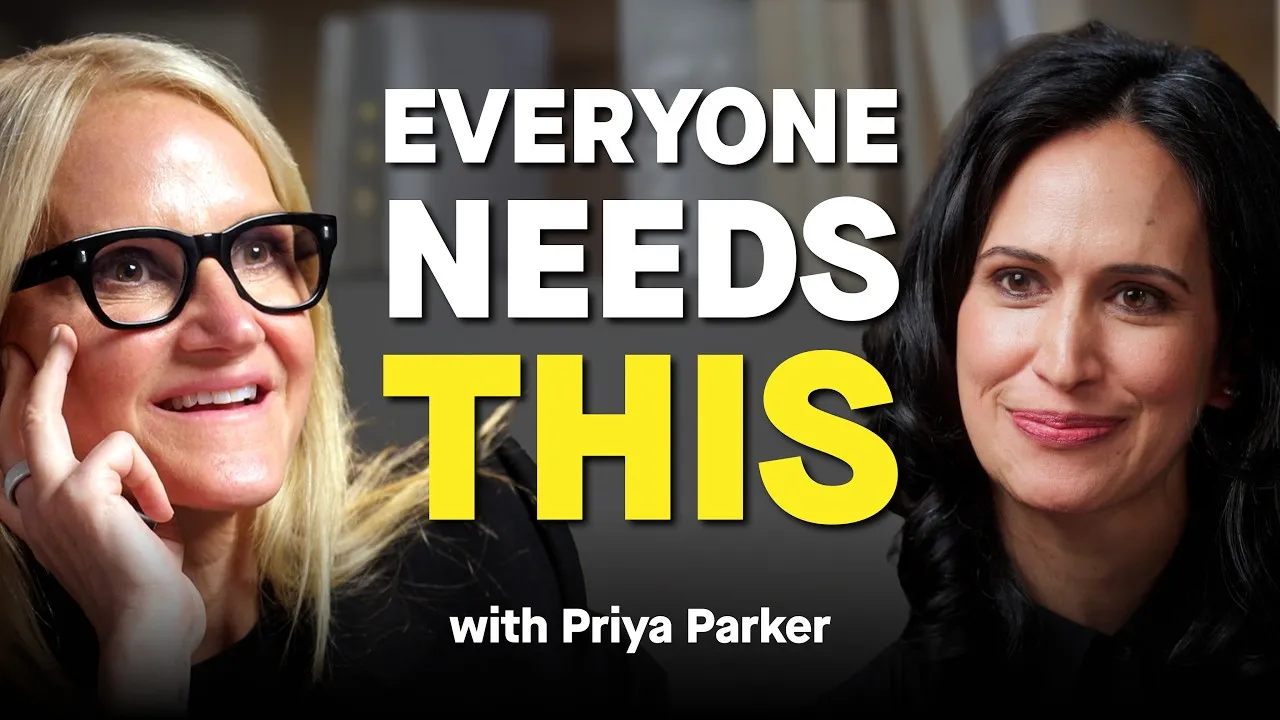
 Priya Parker thinks your family might need fewer heartfelt conversations and more soccer. On The Mel Robbins Podcast, Priya Parker makes the cleanest case against the self-help reflex to talk everything out: sometimes the couch is the problem.
talk is actually sometimes not good for connection.
That is a deliciously rude thing for Parker to say because she is, by trade, a person who helps groups communicate. She is a conflict resolution facilitator, the author of The Art of Gathering, and someone who has built a career around designing rooms where people say something real. So when she says talk can be a trap, she is not selling silence. She is diagnosing a particular modern sickness: the belief that if a gathering feels flat, tense, or lonely, the cure must be a deeper conversation.
Your couch has an agenda
Parker’s best example is the family visit that slowly turns into a hostage situation with snacks. Everyone goes to someone’s house, sits down, catches up, repeats the old lines, and within hours is irritated, bored, or scanning traffic like a prisoner studying the yard. Mel Robbins calls it a cauldron, which is exactly right. A living room can turn otherwise functional adults into their worst Thanksgiving selves.
Parker’s fix is not to demand that Uncle Whatever finally process his attachment wounds between the hummus and the Costco shrimp. It is to give the group a third thing: a walk, a museum, a soccer game, gardening, antiquing, a sound bath, anything that interrupts the usual script. Shared activity lets people be together without forcing them to perform closeness on command.
dialogue is not always the right tool. Sometimes people need to play a soccer game. Sometimes people need a dance party. Sometimes they need to go out and have an effing blast together.
This is the rare piece of relationship advice that gets more useful the less noble it sounds. Don’t heal the family system, go bowling. Don’t extract vulnerability from the cousin who visibly dies when feelings enter the room, put them on salsa duty. Parker even mentions a family that cooled down its recurring political fights by creating a cooking championship. Did it solve America? No. Did it stop three hours of drinking from turning into the cable-news Thunderdome? Apparently, yes.
Not talking is not the same as hiding
The catch, and Parker is smart about this, is that activity cannot become a prettier form of avoidance. She gives a name to the thing many families, marriages, and teams mistake for stability: unhealthy peace. That phrase is the episode’s other useful little grenade.
unhealthy peace is choosing to not touch something you care about because you’re afraid of loss and you’re afraid of what might happen.
Here is the verdict: Parker is right, with guardrails. If people are stuck in repetitive, low-stakes friction, changing the container can change the room. A hike may do more for human connection than one more forced debrief. But if someone is cruel, if a marriage is calcifying, if a workplace is pretending a bad idea is good because nobody wants to be difficult, a potato-themed icebreaker is not moral courage. Then you need what Parker calls healthy heat.
Her larger hosting philosophy is practical bordering on bossy, in the best way. Define the purpose before people arrive. Open the gathering like you mean it. Give guests little roles so you are not tap-dancing for three straight hours. Ask better questions than “How’s work?” Parker’s sample questions are charmingly deranged: What is your favorite way to eat a potato? What outfit should you have thrown away but still keep? What do you own that nobody else here owns? These are not profound questions. That is why they work. They sneak past everyone’s TED Talk voice.
Most gatherings don’t end. They stop.
If Parker’s claim is true, the next family visit does not need to become a summit. It needs a walk, a job for everyone, a real ending, and maybe one magical question about potatoes before the old ghosts find their seats.
- Did Priya Parker really say talking can be bad for connection?
- Yes. Parker’s point is not that conversation is useless, but that talking can become the wrong default when people are already trapped in roles, scripts, or old family patterns. In those cases, an activity gives the group a third thing to focus on, which can make connection easier.
- What should families do instead of sitting around and talking?
- Parker suggests adding structure and shared context: go for a walk, play a game, cook together, visit a museum, or organize a silly competition. The activity does not have to be profound. The point is to stop forcing intimacy through the same stale living-room conversation.
- Is Priya Parker saying people should avoid conflict?
- No. She draws a sharp line between taking a break from talk and hiding inside what she calls unhealthy peace. If something actually matters, Parker thinks groups need healthy heat, not endless avoidance dressed up as politeness.
Oakley Robbins says he had to go no contact with his girlfriend to stop hating college
The useful part of this Mel Robbins episode is not positive thinking, it is the brutal little admission that an escape hatch can keep you miserable.
Rahul Jandial says acting out your dreams can warn of Parkinson's 15 years early
The neurosurgeon’s strongest claim is not that dreams are mysterious, it is that some dream behavior belongs in a sleep clinic, not a dream dictionary.

Oprah Winfrey says agreeing to launch OWN was one of the biggest mistakes of her life because she ignored her instincts
On Mel Robbins, Oprah reframed OWN's painful early years not as a business misfire, but as a people-pleasing failure.

Gary Vaynerchuk says live shopping is exactly where social media was in 2014
On Mel Robbins, Gary Vee turned a motivational sermon into a very Gary Vee market call: if you think TikTok Shop already passed you by, he says you're mistaking the starting gun for the finish line.
The circuit, read weekly. No noise.