Oprah Winfrey says agreeing to launch OWN was one of the biggest mistakes of her life because she ignored her instincts
On Mel Robbins, Oprah reframed OWN's painful early years not as a business misfire, but as a people-pleasing failure.
Listen on YouTube · Spotify · Apple Podcasts
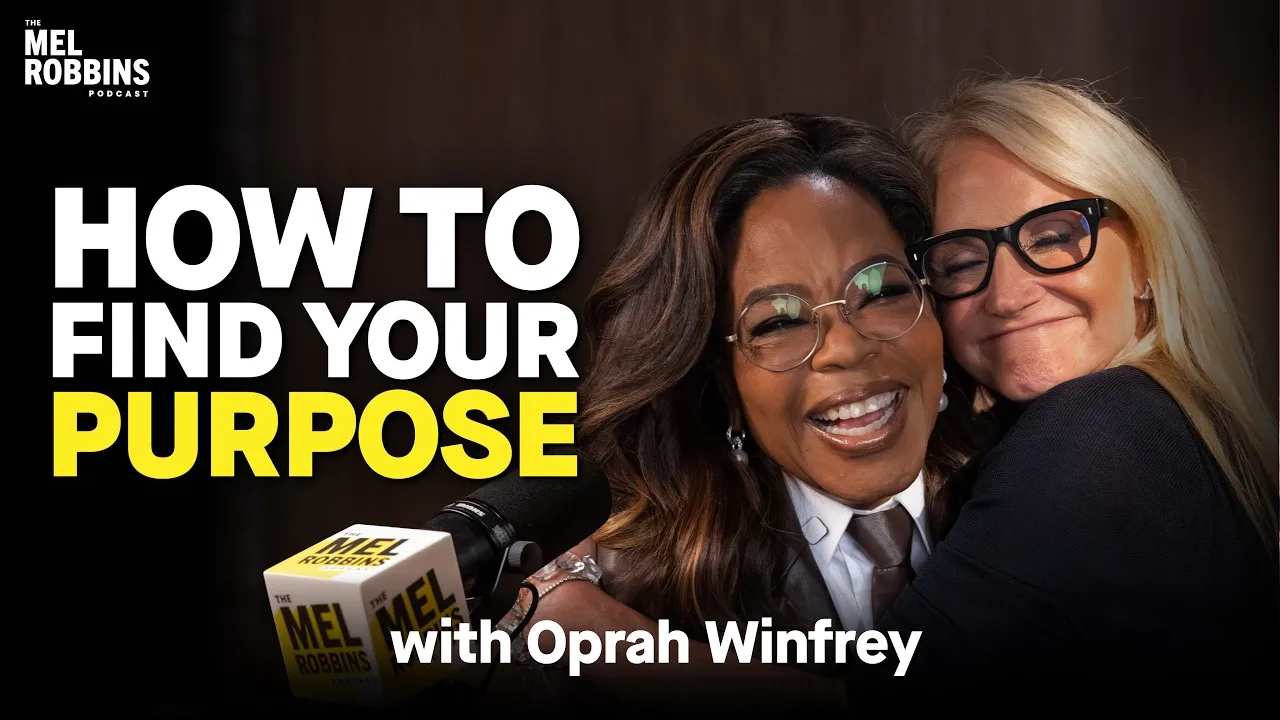 WATCH NOW↓
 Oprah Winfrey’s inner voice apparently has a brutal notification setting: waking her up in the middle of the night unable to breathe. On The Mel Robbins Podcast, Oprah Winfrey says agreeing to launch OWN after ending The Oprah Winfrey Show was one of the biggest mistakes of her life, because she knew in her body not to do it and did it anyway.
This is not a tiny footnote from the Oprah empire. OWN was supposed to be the cleanest possible succession plan in modern media: the queen of daytime television leaves the throne, then builds a whole network with her name on it. Instead, Oprah remembers 2012 as a public pummeling, the year the brand of certainty ran headfirst into cable economics, bad press, and the terrible realization that your gut may have been screaming the whole time.
2012 was one of the worst life the worst years of my life. Every single story headline about me was Oprah and the Struggling Own Network. Oprah and the Struggling Own Network.
The useful thing here is that Oprah doesn’t give the usual executive autopsy. No talk of programming strategy, carriage fees, or the harsh reality that not even Oprah can bend an entire distribution model by smiling directly at it. Her version is stranger and more intimate: she says the business mistake began as a spiritual disobedience problem.
But oh my god, when it came time to end the show, I made one of the biggest mistakes actually of my life and that is I didn’t listen to that GPS and I struggle.
The Oprah brand meets the Oprah panic attack
For most people, the phrase “inner GPS” sounds like something embroidered on a throw pillow at a spa that also sells $19 water. From Oprah, though, it has institutional weight. She has spent decades teaching a mass audience to treat intuition as data. That is why the OWN admission lands harder than the usual celebrity regret. She isn’t saying she lacked information. She is saying she ignored the information she has been telling everyone else to honor.
I did not listen to the voice inside myself was so strong telling me not to do it that I would wake up in the middle of the night [gasps] and couldn’t breathe. And I’d say don’t do it. Don’t do it. Don’t do it. Don’t do it. Don’t do it.
That is the part worth clipping, not because it is tidy, but because it is messy. Oprah, of all people, describes herself overriding the most cinematic warning system available short of a burning bush in a boardroom. The woman who built an empire on asking people what they know for sure is admitting that she knew. Then she signed anyway.
Robbins, to her credit, doesn’t let the moment float away into incense smoke. She presses on the crucial phrase: Oprah said she had to keep her word. To whom? The outside world, or the inside one? That question turns the anecdote from a rich-person career regret into something more portable. Plenty of listeners will never launch a cable network. Many have stayed in a job, wedding, deal, city, friendship, or family role because backing out felt rude.
This is the real truth. I’ve never said this before. I was keeping my word because I was trying to please the people on the other side.
A confession with a merch table
There is, naturally, a very Oprah-shaped wrinkle. This revelation arrives inside an episode that also promotes her Aha experience at Sphere in Las Vegas, a giant immersive event about calling, light, and purpose. So yes, the confession is sincere, and yes, it is also perfectly aligned with the product. Oprah has always understood that the shortest distance between trauma and ticket sales is meaning.
That doesn’t make the claim fake. It makes it Oprah. Her whole gift is turning the private flinch into a public lesson with excellent lighting. The self-serving part is baked in, but so is the value. When she says she was trying to please the people on the other side, she punctures the fantasy that success cures compliance. Apparently you can be Oprah Winfrey and still make a huge decision because you don’t want to disappoint someone in a meeting.
The episode keeps widening from there, into forgiveness, gratitude, and the idea that every person has a platform, even if that platform is just the dry cleaner, the roommate, the kid in the next room, or the exhausted stranger at 5:55 in the morning. But the OWN admission is the sharp object in the velvet bag. It gives the sermon teeth.
The stake for the listener is not whether to start a network. It is whether the body’s alarm bells count before the paperwork is signed, before the deposits are paid, before everybody is seated and waiting for you to walk down the aisle.
you always have the right to change your mind
- Did Oprah actually call OWN one of the biggest mistakes of her life?
- She said that when it came time to end her show, she made one of the biggest mistakes of her life by not listening to her inner guidance. In context, she was talking about the painful early years of OWN and the headlines about the struggling network.
- Why did Oprah say she went through with it anyway?
- Her explanation was blunt: she had already signed, she felt she had to keep her word, and she now believes she was trying to please the people on the other side of the deal. She even flagged that part as something she had not said before.
- What lesson did Oprah draw from the OWN mistake?
- Her lesson was that people always have the right to change their minds, even when the invitations have gone out or the public commitment has been made. For Oprah, the warning sign was not subtle anxiety, it was waking up unable to breathe while a voice inside her said not to do it.
Gary Vaynerchuk says live shopping is exactly where social media was in 2014
On Mel Robbins, Gary Vee turned a motivational sermon into a very Gary Vee market call: if you think TikTok Shop already passed you by, he says you're mistaking the starting gun for the finish line.
Benny Blanco says Ed Sheeran took a 7 and a half day boat to London because Blanco refused to fly
The producer’s best self-doubt story is not about conquering fear, it’s about dragging a pop superstar onto an ocean liner and watching Titanic on board.
Priya Parker says talk is sometimes bad for connection
The Art of Gathering author argues that families, teams, and friend groups often need a shared activity before they need another deep talk.
Kier Gaines says the world is designed for your productivity and attention, not your peace
The therapist's best point on The Mel Robbins Podcast is also his bleakest: your stress isn't just a personal failure, it's a business model.
The circuit, read weekly. No noise.