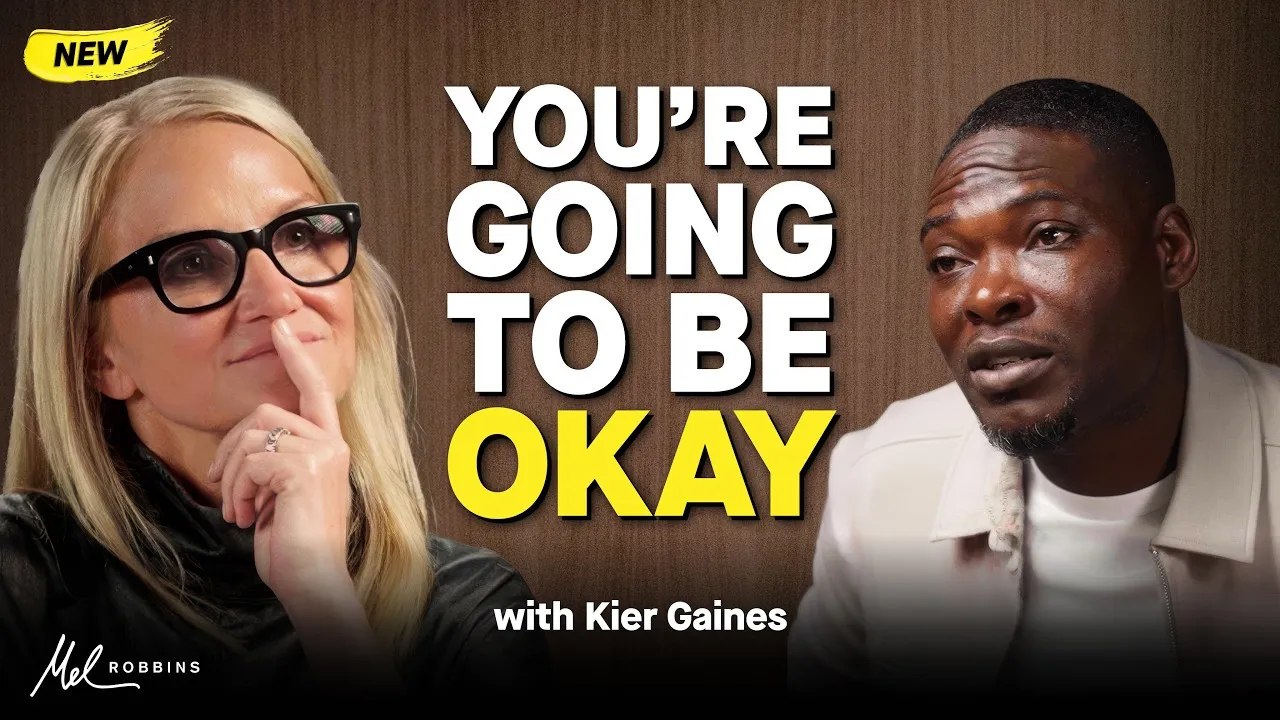
Kier Gaines says the world is designed for your productivity and attention, not your peace
The therapist's best point on The Mel Robbins Podcast is also his bleakest: your stress isn't just a personal failure, it's a business model.
Listen on YouTube · Spotify · Apple Podcasts
 WATCH NOW↓
 Kier Gaines has a bleak little operating manual for being alive in 2026: the world is not built to make you peaceful. It is built to keep you producing, scrolling, comparing, buying, and panicking, preferably before breakfast.
That is the claim worth pulling out of his appearance on The Mel Robbins Podcast, where Kier Gaines, a therapist and author of It All Starts When You Do, talks about overwhelm, depression, men, marriage, insecurity, and the deeply cursed modern habit of treating every human feeling like a task notification. His thesis is not exactly subtle. It is also not wrong.
The world is designed for your productivity and for your attention and that’s it. It’s meant to absorb your your attention and churn productivity out of you
There is a self-help version of this argument that can get a little too scented-candle, as if your inbox, your rent, your kid’s school portal, and the collapse of local news can all be defeated by journaling near a succulent. Gaines is better than that. He is not saying stress is imaginary. He is saying a lot of stress is structurally induced, then privately assigned to you as a character flaw. Cute trick.
The attention economy, with a co-pay
Gaines’s cleanest target is the attention economy, which he describes less like a neutral marketplace and more like a bar fight where your nervous system is the guy holding everyone’s coats.
Social media is designed to make you feel like you’re behind. Marketing is designed to make you feel like you’re being left out. The news is designed I don’t know what the news was was originally designed for, but now it’s designed to scare the hell out of you.
The verdict: true enough to be useful, a little too sweeping to be a theory of everything. Social media does not only make people feel behind. News does not only scare people. Marketing does not only manufacture FOMO. But as a daily diet, Gaines’s diagnosis is hard to shrug off. If your phone is a buffet, the house special is low-grade dread.
If you drink from a water fountain, it quenches your thirst. If you drink from a fire hose, it breaks your teeth.
That metaphor is the episode in miniature. The problem is not that information exists. The problem is pressure, volume, and the absence of a counter-strategy. Gaines calls that counter-strategy emotional fitness, which sounds like something a wellness app would charge $14.99 a month for, but his version is refreshingly plain: notice what is happening, tell the truth about it, stop blaming yourself for every leak in the ceiling, and get help when you need help.
His best advice is triage, not transformation
The smartest part of Gaines’s advice is that he keeps lowering the bar. Not in a depressing way. In a sane way. When he talks about depression, he does not promise that the right morning routine will shoot you from a negative five to radiant protagonist energy by lunch. Sometimes the win is not sliding further. Sometimes the win is taking your meds, calling the therapist, getting sunlight, eating food, or, in his excellent phrase, going to bed on purpose.
The same logic shows up in his instructions for overwhelm. Do not sprint toward the fantasy version of yourself who reorganizes the family calendar, heals your marriage, empties Gmail, and becomes hydrated in one heroic hour. Pause. Name the thing. Localize it. Admit, without theatrics, that you are overwhelmed right now.
You don’t always stop overwhelm when you’re already in it. You slow it down enough for you to catch your breath.
That is where Gaines is most convincing. Not as a guru selling an escape hatch from modern life, but as a therapist reminding you that panic loves fake urgency. The culture says optimize. Gaines says breathe first, then look at the mess. Less sexy. More likely to work.
If he’s right, the practical stake is annoyingly concrete: your peace will not arrive by default. You have to build friction around the things trying to eat it. Close the app, call the friend, book the appointment, go to bed on purpose.
- What does Kier Gaines mean when he says the world is not designed for peace?
- He means the default settings of modern life reward output and attention, not calm. Social media, marketing, and news all push a person toward comparison, fear, or urgency, which makes emotional steadiness something you have to actively protect.
- What is emotional fitness, according to Kier Gaines?
- Gaines uses emotional fitness as a less clinical, more muscular way to talk about mental health. It includes resilience, self-honesty, the ability to name what you're feeling, and the skill of pausing before you react.
- What does Kier Gaines tell overwhelmed people to do first?
- His first move is not productivity theater. Pause, name the feeling, localize it to the moment, and stop trying to solve the whole system in one breath. He wants people to slow overwhelm down before they try to fix it.

Kier Gaines says Xaden's protection in Fourth Wing is still manipulation
The licensed therapist gave BookTok's favorite brooding protector the clinical side-eye, and honestly, he earned it.
Rahul Jandial says acting out your dreams can warn of Parkinson's 15 years early
The neurosurgeon’s strongest claim is not that dreams are mysterious, it is that some dream behavior belongs in a sleep clinic, not a dream dictionary.
Oprah Winfrey says agreeing to launch OWN was one of the biggest mistakes of her life because she ignored her instincts
On Mel Robbins, Oprah reframed OWN's painful early years not as a business misfire, but as a people-pleasing failure.
Gary Vaynerchuk says live shopping is exactly where social media was in 2014
On Mel Robbins, Gary Vee turned a motivational sermon into a very Gary Vee market call: if you think TikTok Shop already passed you by, he says you're mistaking the starting gun for the finish line.
The circuit, read weekly. No noise.