Roman Ugarte says AI bots need their own cloud computers, not yours
The Cursor veteran's big bet is that the future of AI assistants looks less like a chat window and more like hiring a weirdly tireless coworker with a laptop.
Listen on YouTube
 WATCH NOW↓
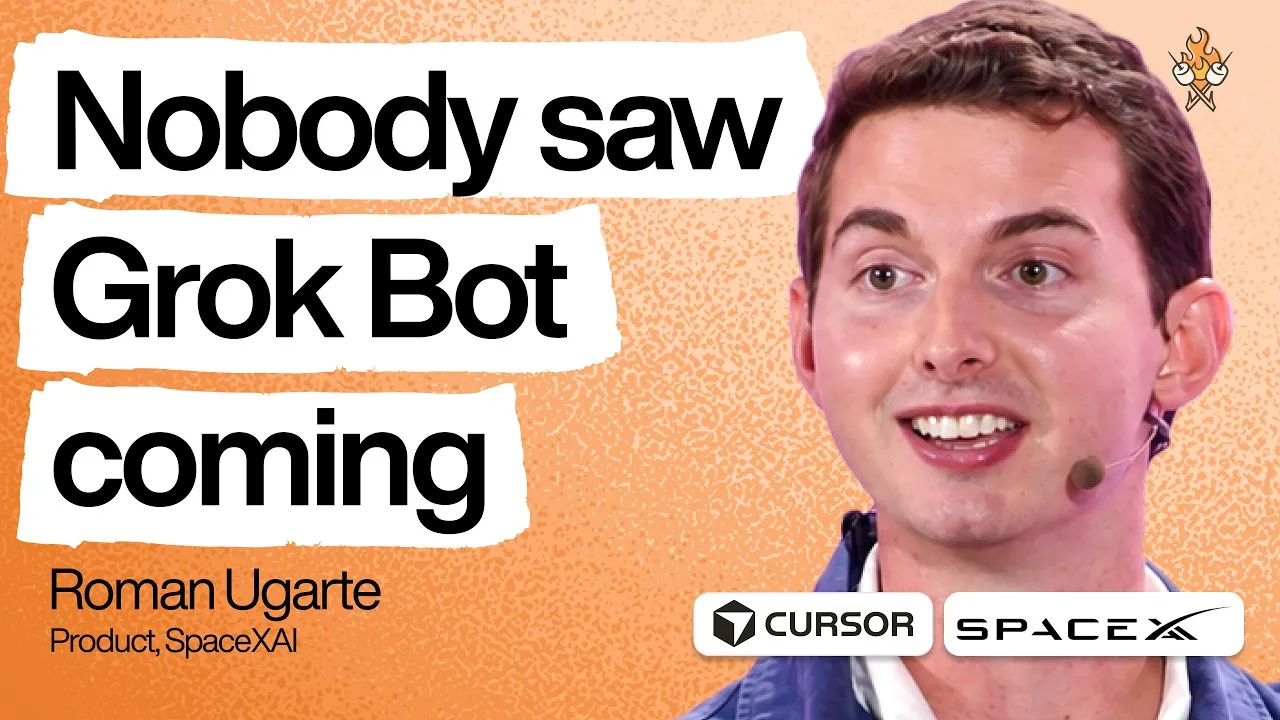
 Roman Ugarte thinks the dumbest thing about our current AI future is that we keep making the robot intern share our laptop. On Lenny’s Podcast, the Grok Bot product lead argued that AI assistants only start to feel like real coworkers when they live in the cloud and have their own computers.
This is a wonderfully practical kind of sci-fi claim. Not AGI. Not a chrome orb that knows your childhood trauma. A bot with a laptop, metaphorically speaking, so it can go click on the same miserable enterprise software you do.
It’s actually really important that these bots have their own computer and part of it is what I described earlier of there are a bunch of tasks that don’t have wellsupported MCPS and APIs.
Ugarte’s case is simple: humans don’t do work through pristine APIs. We do it by logging into tabs, clicking too-small buttons, copying things from one place to another, and muttering threats at dashboards. So if an AI agent is supposed to do actual knowledge work, it can’t just be a chat thread with integrations duct-taped to the side. It needs the baseline machinery of office life.
We as humans don’t do our jobs via MCPS and APIs. Like we use a computer and we click on pixels and we kind of type things in input boxes.
The laptop test
The best metaphor in the episode is also the most damning one for the current AI assistant stack. Ugarte asks you to imagine onboarding a new teammate, then telling them they don’t get a laptop. They have to sit next to you and use yours forever. Congratulations, you’ve invented the world’s most expensive shoulder-surfer.
It’s your first day. I’m going to onboard you. Uh, you don’t have your own laptop. You’re going to sit next to me. we’re going to share this laptop forever and constantly trip over each other.
That line is funny because it is obviously absurd, and slightly irritating because a lot of today’s AI products do something close to it. They borrow your session, your attention, your local machine, your supervision. The sales pitch says delegation. The lived experience often says babysitting.
Ugarte is selling, of course. He leads product for the thing being praised. But his argument explains why Grok Bot seems to have landed with early users despite competing in the most crowded software category on Earth. The claim isn’t that its model is magically smarter. The claim is that the product wrapper lets the intelligence act more independently.
Built like a sprint, not a cathedral
The other searchable nugget here is speed. Roman Ugarte, who was employee number 15 at Cursor, says Grok Bot began as a small-team cave project, not a grand platform rewrite. That matters because the whole product argument is anti-bloat: fewer visible controls, fewer setup rituals, fewer places for enterprise software to cosplay as an airplane cockpit.
from the first line of code to when we released this prototype internally, it was only about a month.
Then came roughly three weeks of internal use before launch. The team manually onboarded a couple hundred people, including not just AI power users but a coffee shop owner running a small business. This is the part founders will underline: the glamorous product insight apparently came from watching people be confused on calls and deciding, with some urgency, that the same confusion could not happen tomorrow.
The anti-interface philosophy shows up everywhere. Ugarte says the team intentionally hid internal model mechanics from users, killed visible product junk, and pushed automations into plain English. His example is blessedly boring, which is why it works: you shouldn’t open a sidebar and configure a workflow just to make software remind you at breakfast.
You should just define automations in natural language. You should tell your bot, remind me that at 8 a.m. every day, please. And then it should just do it.
A coworker, or a very confident metaphor?
The risk is obvious. Calling software a teammate can turn into a fog machine. A teammate has judgment, accountability, taste, social context, and the ability to understand when the vibes in the meeting have gone bad. A bot that can click Salesforce is not that.
But Ugarte’s strongest point is narrower and more believable: 90 percent completion is not 90 percent relief. If you still have to watch, correct, merge, retry, and remember the task, you’re still carrying it. A bot that finishes the job, from another machine, while you go do something else, crosses a real psychological line.
That is the fight Grok Bot is trying to pick with the rest of the AI assistant market. Not who has the prettiest prompt box. Who gets the laptop.
- What does Roman Ugarte think makes Grok Bot different from other AI tools?
- Ugarte's answer is not a shinier chat box. He says the key choices were making Grok Bot cloud-first and giving bots their own computers, so they can act more like persistent coworkers than temporary chats.
- Did Grok Bot really get built that fast?
- According to Ugarte, the first useful internal prototype took about a month from the first line of code, then the team spent roughly three more weeks preparing it for public launch. That speed is central to his larger point about small teams making lots of product decisions quickly.
- Is the 'AI coworker' framing convincing?
- It is partly product theater, because every AI company wants its assistant to sound like a hire instead of software. But Ugarte's version has teeth: a bot that can log into tools, click through clunky dashboards, remember a workstream, and keep running after you close your laptop really is a different animal from a prompt window.
Anish Acharya says most AI companion users are women in their 40s and 50s
The a16z consumer investor punctured the AI girlfriend cliché and argued that consumer AI's real prize is not productivity, it is emotional need.
Ian Silber says AI is already an incredible product designer
OpenAI’s head of product design makes the case that designers aren’t doomed by AI, they’re late to the most useful tool in the room.
Adam Ward says asking 'who's the best product engineer you know?' is the worst recruiting question
The Cursor head of talent argues that most companies hire from a 'funnel of doom' and end up with whoever was available, not whoever was best.
Elizabeth Stone says Netflix needs fewer narrow specialists and more systems thinkers in the AI era
Netflix’s CPTO argues that AI makes cross-functional judgment more valuable than one-lane expertise, though she’s not ready to throw engineering, design, or data science craft into the volcano.
The circuit, read weekly. No noise.