Don Lincoln says he worked roughly 105-hour weeks at Fermilab as a graduate student
The Fermilab physicist turns a brutal grad-school schedule into a test of vocation, not a productivity hack.
Listen on YouTube · Spotify · Apple Podcasts
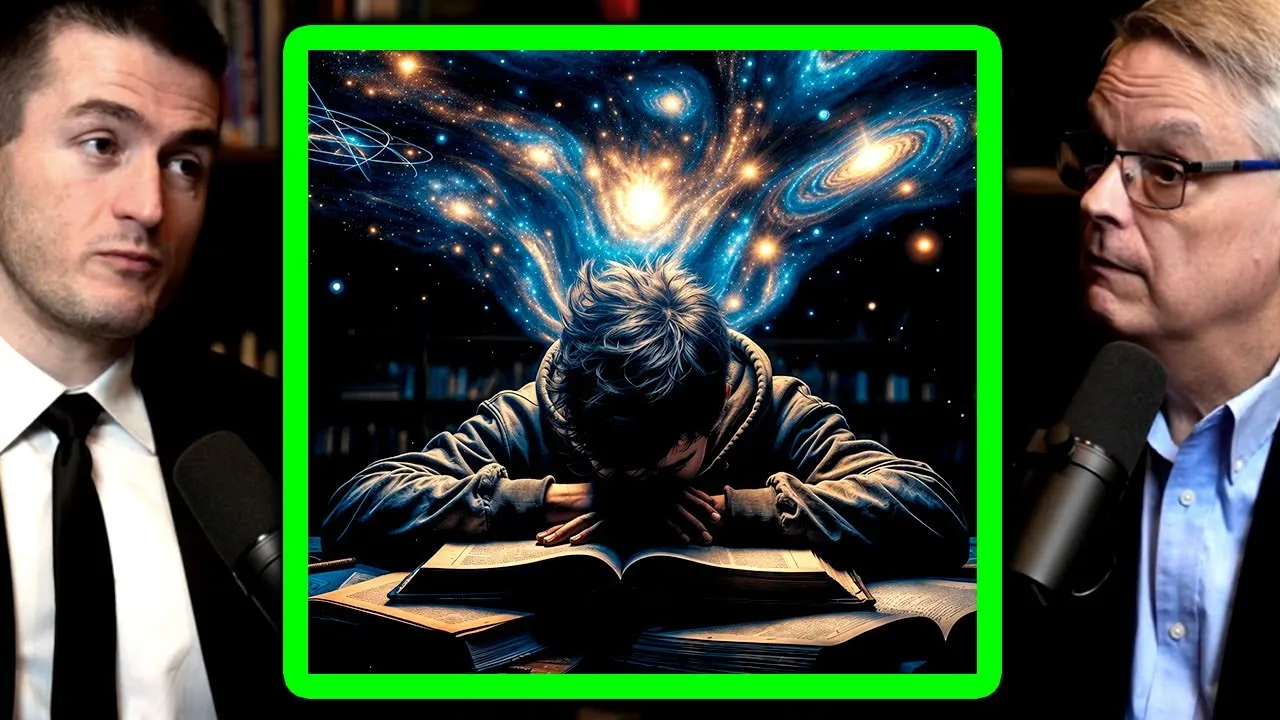 WATCH NOW↓
Don Lincoln told the Lex Fridman Podcast that as a graduate student at Fermilab, he worked voluntarily from 8 a.m. to midnight Monday through Saturday, then 8 a.m. to about 5 p.m. on Sunday, a schedule that adds up to roughly 105 hours a week. Lincoln said he did it because he loved making measurements and couldn’t stand not knowing the answer.
That is not a work-life balance tip. That is a lab coat with a sleep disorder. The interesting thing is that Lincoln doesn’t sell the schedule as grindset cosplay, the TED-adjacent fantasy where exhaustion proves moral superiority. He talks about it like a person describing a fever he enjoyed having.
as a graduate student, and this isn’t for everybody, but I worked outrageously. I would from Monday through Saturday, I would be at the lab voluntarily because I wanted to be from 8:00 a.m. to midnight.
The useful part is the word voluntarily
Lincoln’s story lands because he isn’t a podcast bro reverse-engineering nobility from caffeine intake. He is a working physicist describing the early-career phase when desire and ambition became indistinguishable. He had no family obligations, no kids, no inherited academic map, and apparently no interest in whatever passed for fun outside the lab.
The verdict: believable, but dangerous if copied without the obsession underneath. Lincoln’s schedule makes sense as autobiography. It becomes nonsense as advice. A young scientist hearing “105 hours” and missing “because I wanted to be” has learned exactly the wrong lesson.
And on Sunday, I would work from 8 until about 5:00. And that’s because from 5 to midnight I had to wash clothes and buy groceries and things like that. And I loved it, you know.
This is where Lincoln’s claim becomes more than a big-number anecdote. He draws a line between being smart and becoming, in his phrase, a “no kidding” scientist. Plenty of smart people can solve assigned problems. The scientist he admires gets personally offended when nature refuses to cooperate.
trying to measure something and having it not work just kind of ticks me off and I am not going to let the universe in my lab or whatever beat me.
A poor kid in the boondocks finds the accelerator
The origin story matters here. Lincoln describes growing up poor, with supportive parents who couldn’t guide him academically, then finding science through fiction and popular science writers like Isaac Asimov, Carl Sagan, and George Gamow. He was interested in the huge old questions, the ones religion and philosophy had chewed on for centuries: where the universe came from, why its laws are what they are, how it might end.
Then came the practical fork. He considered cosmology or astrophysics, but in the mid-1980s he saw too much theorizing and not enough measuring. Particle physics had experiments. Data. Machinery. A way to stop musing and start cornering reality.
That also explains his commitment to science communication. Lincoln says he writes books and makes videos for the kid in Iowa, Kansas, or Montana who has curiosity but not access. It is a sweet reason, and a revealing one. The 105-hour week is not just a macho credential. It is part of a larger self-portrait: a person who got pulled into physics by accessible explanations, then tried to become one of those explanations for somebody else.
because I figure that there has to be some other kid out there in Iowa, Kansas, Montana, somewhere out in some little town without a lot of access to the kinds of thing that people, you know, who have highly educated parents do.
The catch is obvious. Science cannot run on everyone doing 105-hour weeks, and it shouldn’t pretend that burnout is a rite of purification. Lincoln knows this, mostly. He says the schedule was crazy, says it isn’t for everybody, and admits he can’t do it anymore. But he also makes a harder claim that will annoy some people because it has teeth: if the work itself doesn’t pull you back after failure, the title may not be enough.
That is the part a young listener should keep. Not the hours. The irritation. The weird joy of being beaten by a problem and coming back, not because a mentor posted a motivational quote, but because the unanswered thing is sitting there, smirking.
- Did Don Lincoln work 105-hour weeks at Fermilab?
- Yes, by his account. Don Lincoln told Lex Fridman he voluntarily worked from 8 a.m. to midnight Monday through Saturday, then 8 a.m. to about 5 p.m. on Sunday as a graduate student. That adds up to roughly 105 hours a week, which Lincoln framed not as discipline for its own sake but as obsession with getting measurements to work.
- Was Don Lincoln telling young scientists to work that much?
- Not exactly. Lincoln repeatedly says the schedule was not for everybody and that he could only do it because he was young, unencumbered, and in love with the work. His real advice is harsher than a time-management tip: if the process doesn't bring joy, being a working scientist may not fit you.
- Why did Don Lincoln choose particle physics over cosmology?
- Lincoln says the choice came down to measurement. In the mid-1980s, he felt cosmology had too much thinking and not enough data, while particle physics offered experiments that could actually answer questions. For him, the appeal was not just wondering about the universe, but making it cough up evidence.
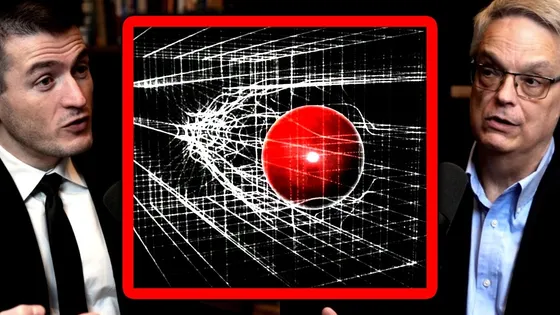
Don Lincoln says the Higgs field turned on 10^-12 seconds after the Big Bang and gave particles mass
The Fermilab physicist gives the cleanest possible version of a very weird idea: mass, at least for elementary particles, arrived when the early universe cooled enough for the Higgs field to switch on.
Don Lincoln says Fermilab was two or three years from discovering the Higgs boson before CERN got there
The Fermilab physicist frames the Higgs discovery as a near miss, not a clean victory lap for CERN, and he has the machine numbers to make that sting.
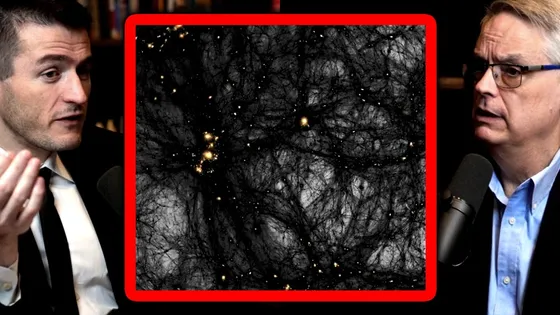
Don Lincoln says galaxies with no dark matter are strong evidence dark matter is real
The physicist’s best pro dark matter argument is wonderfully backward: the missing stuff looks more real when you can find places where it’s missing.
Don Lincoln says quantum field theory predicts dark energy 10^120 times too large
The Fermilab physicist puts a number on the vacuum catastrophe, and the number is so stupidly large it makes ordinary scientific failure look dainty.
The circuit, read weekly. No noise.