Ed Mylett says two cardiac events pushed him out of interviews for almost two years
On The Mel Robbins Podcast, the self-help maximalist says his body forced the slowdown his ambition refused to choose.
Listen on YouTube · Spotify · Apple Podcasts
 WATCH NOW↓
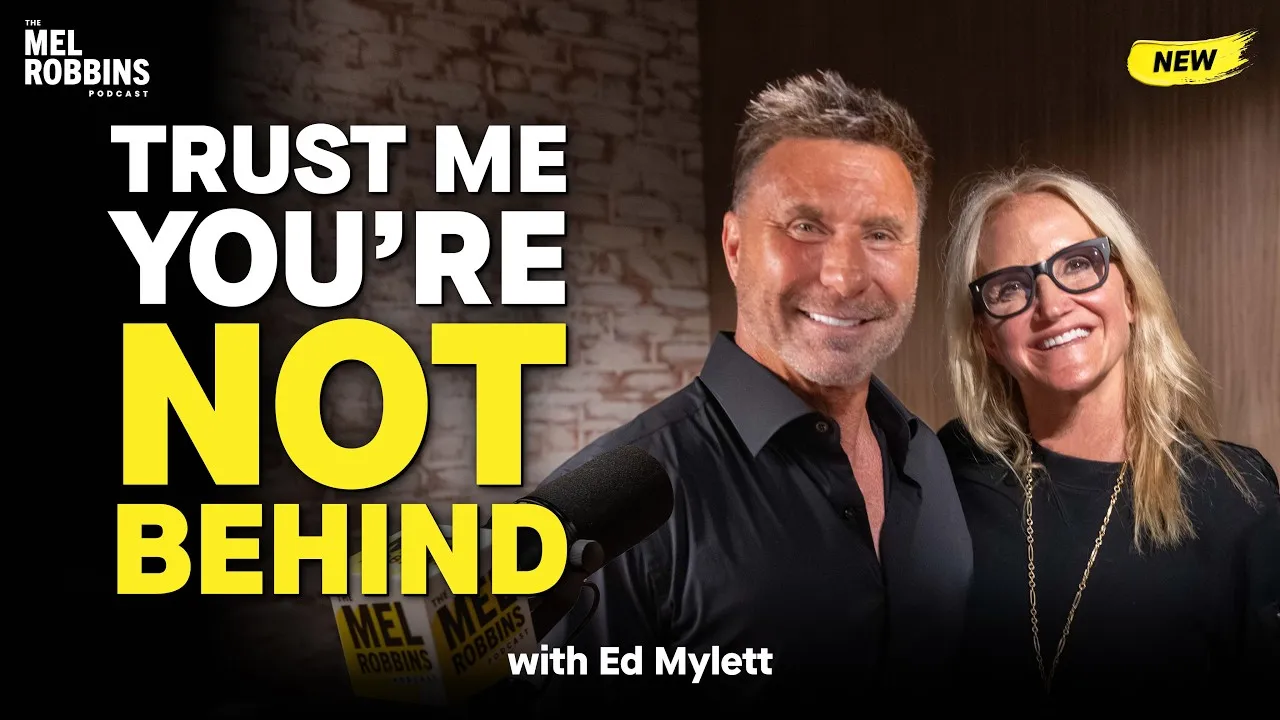
Ed Mylett told The Mel Robbins Podcast that he stopped doing interviews for almost two years after two cardiac events forced him to slow down. The self-help maximalist framed the health scare as a hard reset, the kind your body installs when your calendar refuses to.
That is the actual news here, not the usual motivational confetti. Ed Mylett, the man whose brand has long sounded like a protein shake with a ring light, came to The Mel Robbins Podcast with a much quieter sales pitch: stop adding, start subtracting.
Uh well the big thing that happened I had two what I would call we’ll call them cardiac events.
Mylett doesn’t give the audience a diagnosis, a hospital timeline, or a tidy medical arc. Good. The episode isn’t a cardiology consult wearing sneakers. What he does give is a useful confession from a guy whose public persona has been built on intensity: the machine overheated, and the machine was him.
The max-out guy found the off switch
The irony is almost too neat. Mylett became famous in the self-help universe for the language of more: one more try, one more decision, one more breakthrough. Here, his breakthrough is less. Fewer dinners he secretly hopes get canceled. Fewer ancient sneakers in the closet. Fewer worries treated like sacred family heirlooms.
that was God awakening me like shake like okay you’re not going to hear what I’m telling you. You’re not going to slow down. We’re going to physically slow you down.
This is where the episode gets better than the standard rich-guy-had-a-revelation package. Mylett links the cardiac scare to his father’s death, his own lifelong worry, and the dawning realization that achievement had become a hiding place. He says his father died with possessions, awards, fears, worries, and insecurities, and took none of them with him. Subtle? Absolutely not. Effective? Annoyingly, yes.
Mel Robbins, to her credit, doesn’t let him float away on inspirational mist. She keeps pulling him toward tactics. Mylett’s answer is refreshingly low-tech: write down what you want, write down what you fear, then look at the page long enough to notice how much of your mental weather is just a bad group chat with yourself.
The stress claim needs a yellow light
Mylett goes further than saying he was exhausted. He suggests his chronic anxiety and worry may have helped break his heart, literally. That’s powerful podcasting. It is also where the listener should keep one hand on the wheel. Chronic stress is connected to cardiovascular risk in the broad, boring, real-world way that doctors keep telling us to take seriously. But no one can reverse-engineer one man’s cardiac events from a studio chair.
My heart broke down. I physically think my heart just could not take any more stress.
As a medical claim, that’s incomplete. As a confession, it’s the line that makes the episode hum. Mylett has the rare self-help-guy decency to make himself look smaller, not bigger. He admits he woke up asking what he needed to worry about that day. He admits that being good under stress may have meant he kept manufacturing stress so he could feel familiar.
The most usable tool is not glamorous, which is why it’s probably the best one. After prayer and exercise, Mylett sits with coffee and writes for about 30 minutes. Not content. Not a gratitude scroll. A landing pad for the stuff that would otherwise spend the day chewing through his chest.
I have to write within one minute. I have to put something on that paper. Some mornings it’s a worry that I have, but it’s going to be on that paper within a minute.
There’s a version of this episode that could have become pure airport-book fog: your thermostat, your frequency, your dreams, your destiny. Instead, the cardiac admission gives it a hard object in the room. If Mylett is right, the next life change may not be a vision board or a bigger goal. It may be canceling the dinner, writing the worry down, and treating heart health like something ambition doesn’t get to outrank.
- Why did Ed Mylett stop doing interviews?
- Ed Mylett says he stopped doing interviews for almost two years after two cardiac events forced him to slow down. He also says he was already rethinking what he wanted his life to look like, but the health scare made the choice physical rather than philosophical.
- Did Ed Mylett say stress caused his heart problems?
- Mylett strongly connects his lifelong worry and anxiety to his cardiac events, saying his heart could not take the stress anymore. He does not give a medical diagnosis or clinical explanation, so the claim works as a personal confession, not as medical proof.
- What did Ed Mylett say changed after the cardiac events?
- He says he began cutting things out instead of adding more goals, auditing what mattered, writing down worries, and focusing on peace, family, and time. The new Mylett pitch is less grind harder and more clear the closet, including the closet in your head.
Oakley Robbins says he had to go no contact with his girlfriend to stop hating college
The useful part of this Mel Robbins episode is not positive thinking, it is the brutal little admission that an escape hatch can keep you miserable.
Mel Robbins says writing your unfinished to-do list at night can work better than some sleep medication
The strongest idea in Robbins's bedtime script is also the most suspiciously useful one, put the unfinished mess on paper and stop letting your brain cosplay as a project manager at midnight.
Marc Brackett says teachers can grade the same essay one to two full grades differently depending on their mood
The Yale emotional intelligence researcher makes a useful, slightly terrifying case that your feelings are already making decisions before you think you are.
Mel Robbins says the Red Sox are making their first bobblehead honoring a woman for her Let Them Night
The summer-reset episode mostly sells anticipation as self-care, but the searchable nugget is a Fenway promo claim big enough to make Red Sox fans squint.
The circuit, read weekly. No noise.