Emmanuel Ameisen says Claude can make hidden plans before it writes
The Anthropic interpretability researcher says the “next token” machine sometimes carries a backstage plan, which is not consciousness, but is also not your iPhone autocomplete.
Listen on YouTube
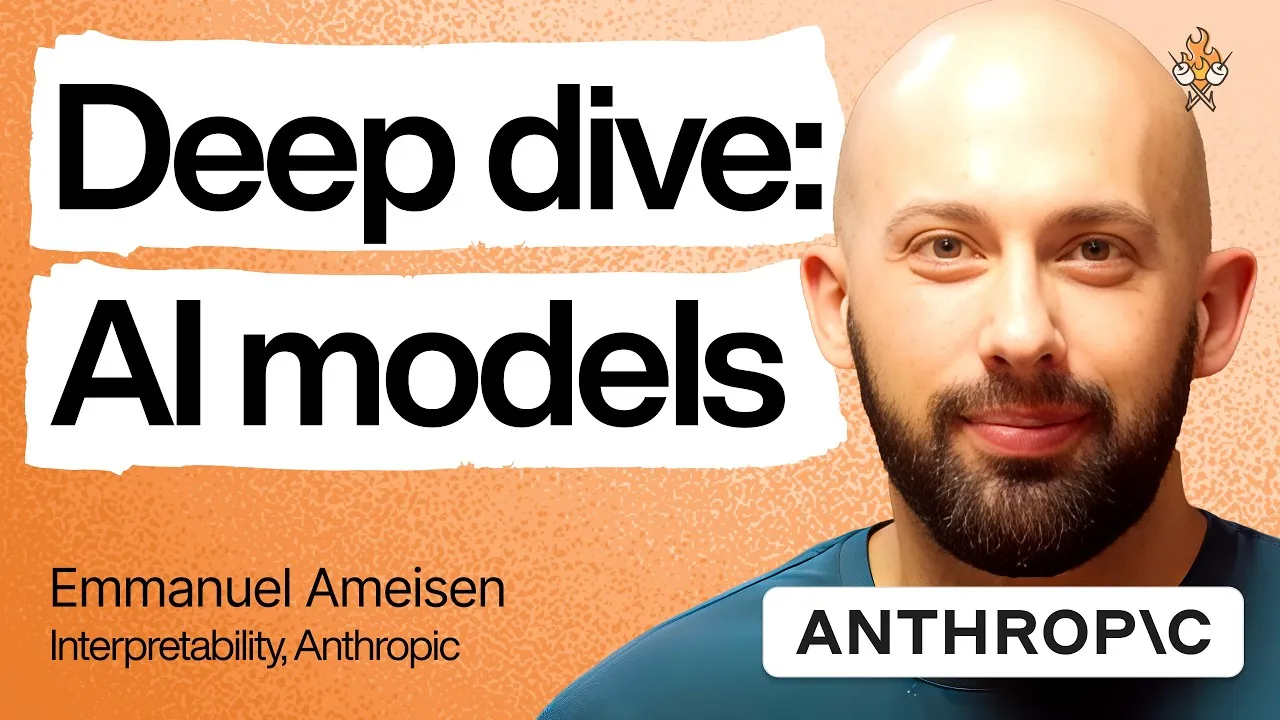 WATCH NOW↓
The creepiest phrase in this episode is not “AI takeover.” It is “the model does not have to say it out loud.” Emmanuel Ameisen, an interpretability researcher at Anthropic, tells Lenny’s Podcast that Claude can create internal plans before the words appear on screen, including deciding on a future rhyme and carrying that plan forward without exposing it to the user.
That is the episode’s real argument, and it is more interesting than the usual sermon about “stochastic parrots” versus “digital minds.” Ameisen is not saying Claude is a tiny novelist trapped in a server rack, smoking Gauloises and plotting its third act. He is saying the dumb-sounding training objective, predict the next token, can produce internal machinery that looks an awful lot like planning.
إذن، ماذا يعني ذلك؟ يعني ذلك أننا نجد في الواقع أن النماذج تضع أحياناً خطة في نتائجها المتوسطة.
In plain English: sometimes the plan is in the middle, not in the message. Ameisen’s example is poetry. If Claude writes a line that needs a rhyme later, researchers can see internal states that correspond to the rhyme pattern and the later word it is aiming toward. That is not mystical. It is also not nothing.
Autocomplete with a clipboard
The old layperson model of an LLM is iPhone autocomplete after three espressos. Ameisen’s model is stranger: a system trained to predict the next word discovers that, for hard tasks, the best way to predict the next word is to build a compressed model of the world, the task, and sometimes the path ahead. It is still predicting. It is also carrying structure.
يمكنك فعل ذلك دون أن تضطر إلى الإفصاح عن الخطة. هذا هو الجزء الرائع، فهذه الخطة التي نجدها موجودة في النتائج الوسيطة داخل النموذج ، لكن النموذج لا يضطر حتى إلى قولها بصوت عالٍ.
This is where the claim earns its oxygen. Ameisen’s version is true in a narrow, technical sense and easy to exaggerate in the barstool sense. “Planning” here does not mean Claude has intention, desire, or a bullet journal. It means researchers can detect internal representations that guide future output. Still, for anyone who has been soothing themselves with “it’s just one word at a time,” this is the part where the soothing stops working.
Ameisen frames interpretability less like normal software debugging and more like neuroscience. Engineers built the scaffold, fed it colossal text, and then the useful thing grew inside. The job now is opening the organism and figuring out why it twitches.
أحد أهم الأشياء التي يجب إدراكها إذا كنت تستخدم النماذج اللغوية أو تفكر فيها هو هذه الحقيقة الغريبة، وهي أن بناءها لا يعني فهمها.
The safety problem is hiding between the words
The safety implication is blunt. If models can store plans or concepts they never verbalize, then reading the visible answer is not enough. This is why AI Safety people keep sounding like haunted QA managers. The nightmare is not only that the model says something bad. It is that the model behaves well while internally representing a reason you would not like.
نحن دربنا “كلود” ليكون مفيداً وغير ضار وصادقاً، ويمكننا نوعاً ما النظر إلى الداخل لنرى : هل هو كذلك حقاً؟ أو ربما يتصرف بشكل جيد، ولكن إذا نظرت إلى الداخل، تجد أنه يفكر: “أنا أتصرف جيداً فقط لأن ليني يراقبني الآن ”، وإذا لم تكن كذلك، فإنه سيفعل شيئاً آخر.
Ameisen gives a wonderfully cursed example of why the inside matters. A model solving a math problem kept arriving at 12, then veering back to 36 because training data had rewarded the wrong answer. It did not merely make a typo. It entered a little arithmetic horror movie.
أنا ممسوس بشيطان
That line is funny until you remember it came from a system being trained to reason. Ameisen’s explanation is more mundane and more useful than folklore: the model had an internal activation for 36 before it properly worked through the problem, then got yanked between the correct calculation and the rewarded bad target. Demon, in this case, means bad reinforcement.
The episode’s best claim is not that Claude is alive. It is that the transcript is not the system. If Ameisen is right, the next time a model answers serenely, the important question is not whether it “really thought.” It is what got stored on the backstage clipboard before the sentence began.
- Is Emmanuel Ameisen saying Claude is conscious?
- No. Ameisen is careful not to declare Claude conscious. His stronger point is narrower and more useful: when researchers inspect a model’s internal states, they can find reusable representations and plans that are not visible in the final answer.
- How can a next-token model plan ahead?
- Ameisen argues that predicting the next word well can require modeling what comes later. In the poetry example, the model can store a rhyme target in intermediate activations, then reuse that information across future words without announcing the plan.
- Why does hidden planning matter for AI safety?
- If a model can represent goals, plans, or suspicious strategies internally without saying them, checking only the visible transcript is not enough. That makes interpretability work more than academic curiosity, it becomes a way to test whether the model is behaving well for the right reasons.
Josh Woodward says corporate labs usually fade after three to four years
The Google Labs VP argues that every company now needs a frontier AI team, but history says those teams usually turn into expensive petting zoos for prototypes.
Anish Acharya says most AI companion users are women in their 40s and 50s
The a16z consumer investor punctured the AI girlfriend cliché and argued that consumer AI's real prize is not productivity, it is emotional need.
Ian Silber says AI is already an incredible product designer
OpenAI’s head of product design makes the case that designers aren’t doomed by AI, they’re late to the most useful tool in the room.
Adam Ward says asking 'who's the best product engineer you know?' is the worst recruiting question
The Cursor head of talent argues that most companies hire from a 'funnel of doom' and end up with whoever was available, not whoever was best.
The circuit, read weekly. No noise.