Seth Godin says one 40 million view TikTok sold only four books
Godin’s bleak little TikTok anecdote is really a warning about mistaking attention for demand.
Listen on YouTube · Spotify · Apple Podcasts
 WATCH NOW↓
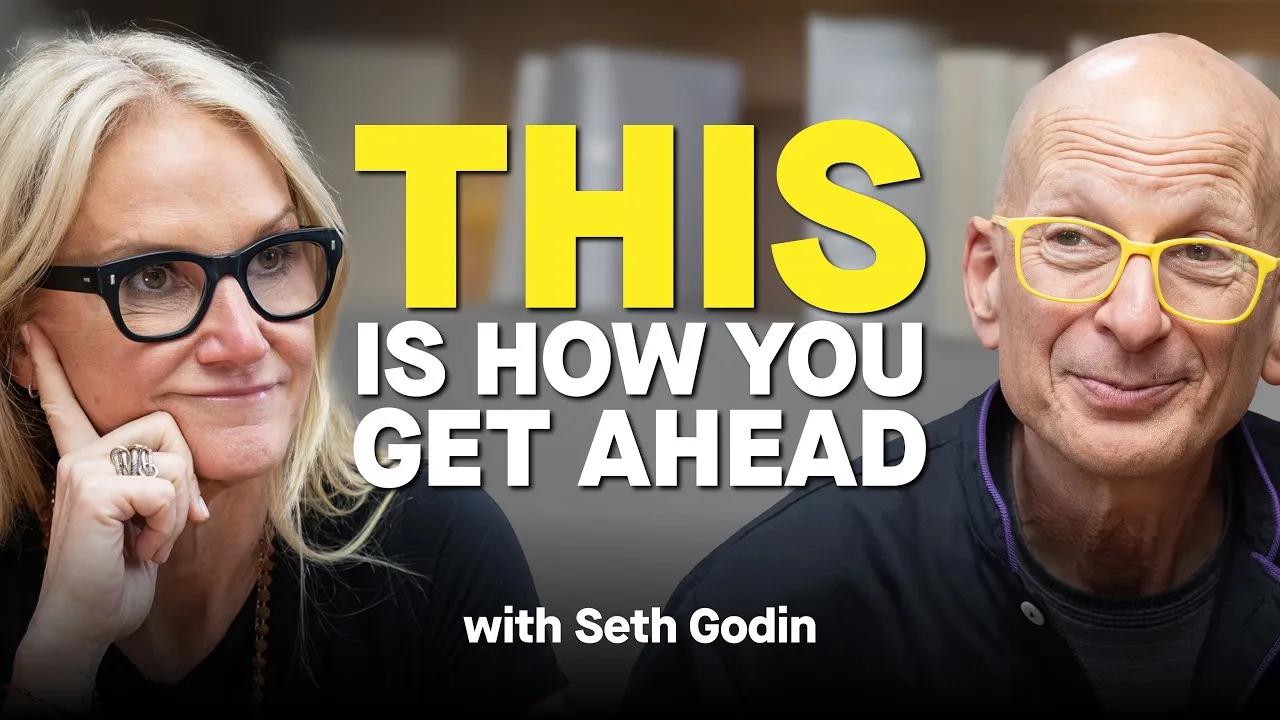
Seth Godin told The Mel Robbins Podcast that one person got 40 million views on a TikTok video and sold only four copies of his book. Godin used the anecdote to argue that social media attention is not the same thing as marketing.
The number is so rude it feels like a typo: 40 million people, four purchases, one author presumably refreshing sales data like a haunted raccoon. It is also the cleanest little bonfire in this whole conversation, because it burns down the fantasy that the algorithm is a cash register with better lighting.
Seth Godin, the longtime marketing oracle behind Permission Marketing and Purple Cow, has been warning people for decades not to confuse interruption with trust. Here he updates the sermon for the For You Page era. The old bad idea was buying a billboard and calling it strategy. The new bad idea is getting a million strangers to half-watch you while eating cereal and calling it a business.
Marketing is not about getting the word out. Marketing is not showing up in social media or in other places, becoming familiar, and then people just give up and buy from you.
This is Godin at his most useful and his most Godin-y: simple enough to fit on a mug, annoying enough to ruin your content calendar. His claim is not that attention has no value. His claim is that attention without tension, promise, need, and fit is just weather. It passes over you. Maybe someone screenshots it. Maybe no one buys the book.
One person told me he got 40 million views to a video he did on TikTok and sold four copies of his book. No surprise.
Views are not customers
Godin’s best move here is separating performance from service. A TikTok can entertain. A book has to solve a problem someone believes they have. Those are not cousins. They are two people trapped in the same airport lounge.
That’s why the anecdote lands as more than boomer scolding. Plenty of creators have learned the hard way that virality is not the same as demand. A funny clip can travel because it asks nothing. A purchase asks for money, trust, and identity. Those are heavier objects.
The people who like you online don’t like you. The people who friend you online are not your friends. The people who follow you online are not your followers. They’re just clicking buttons cuz the algorithm wants them to.
That line is brutal, and yes, a little too clean. People do form real relationships online. Audiences can become communities. A TikTok account can absolutely move product when the offer, audience, and moment line up. But Godin is right about the default setting. The platform is not designed to make your candle business meaningful. It is designed to keep thumbs alive.
The granola warning
The TikTok story fits with Godin’s larger advice to small business dreamers, especially the people who think their love of making granola means they should be in the granola business. His answer is deliciously unpleasant: a business is usually not the thing you enjoy making. It is the system around that thing.
Business is almost never about what you make right now.
This is where the episode becomes a useful cold shower for anyone building a side hustle in public. Godin keeps returning to two questions: who is it for, and what is it for? Not in the misty LinkedIn way. In the curly hairdresser way. He gives the example of a stylist near him who only works with women who have curly hair. Bald? No. Man? No. Straight hair? No. Cheap haircut? Also no. That is not exclusion as attitude. It is a business model.
The same logic applies to social media. If a post is for everyone, it may belong to no one. If a video is built to be watched by 40 million bored strangers, it may not be built to make 4,000 specific readers feel, finally, this was made for me.
The useful insult
There is a self-serving flavor to Godin’s argument, of course. The man has spent his career selling a more principled, less hacky version of marketing, and every collapsed growth hack makes his older gospel look better. But that does not make him wrong. If anything, the last decade of creator economy whiplash has made him look irritatingly early.
His advice is not to delete TikTok and retreat to a monastery with a Mailchimp account. It is to stop using views as a sedative. If the work is a hobby, protect the joy. If it is a business, serve the customer. If it is entrepreneurship, build something that can live without your face taped to the front of it.
Before posting again, the useful question is not, will this get reach? It is uglier and better: after the scroll, after the laugh, after the little heart button, what exactly have you given someone a reason to do?
- What did Seth Godin say about TikTok views?
- Seth Godin told The Mel Robbins Podcast that one person got 40 million views on a TikTok video and sold only four copies of his book. His point was not that TikTok is useless, but that visibility by itself is not marketing. A platform can make you familiar without making anyone trust you, need you, or buy from you.
- Does Seth Godin think social media marketing does not work?
- Godin argues that posting constantly and becoming familiar is not the same as creating demand. He thinks marketing has to create a story, tension, and a clear reason for the right customer to act. Social media can help, but only if it connects to a real problem and a real audience.
- What should small business owners measure instead of views?
- Godin pushes people to measure whether they helped the right people and whether those people came back, paid, referred others, or changed because of the work. Views, likes, friends, and followers can distract a business from the harder question: who is this for, and what is it for?

Gary Vaynerchuk says live shopping is exactly where social media was in 2014
On Mel Robbins, Gary Vee turned a motivational sermon into a very Gary Vee market call: if you think TikTok Shop already passed you by, he says you're mistaking the starting gun for the finish line.
Dr. Eric Thomas says Super Mom should retire and drop the ball at home
The motivational speaker turns boundary setting into a household labor strike, with a useful warning for anyone addicted to being indispensable.
Eric Thomas says his 52-day challenge helped him go from 242 pounds to 219
On The Mel Robbins Podcast, the motivational speaker turns a biblical number into a very modern reset plan, complete with a scale, a suit, and a little public shame.
Mel Robbins says never being single from age 13 delayed her healing by 15 years
On a daughter-led relationship episode, Robbins turns her own romantic history into a warning against using love as emotional anesthesia.
The circuit, read weekly. No noise.