Nicholas Epley says the 'social battery' idea doesn't show up in the data
The University of Chicago psychologist argues that introverts and extroverts enjoy social interaction more similarly than the internet wants to admit.
Listen on YouTube · Spotify · Apple Podcasts
 WATCH NOW↓
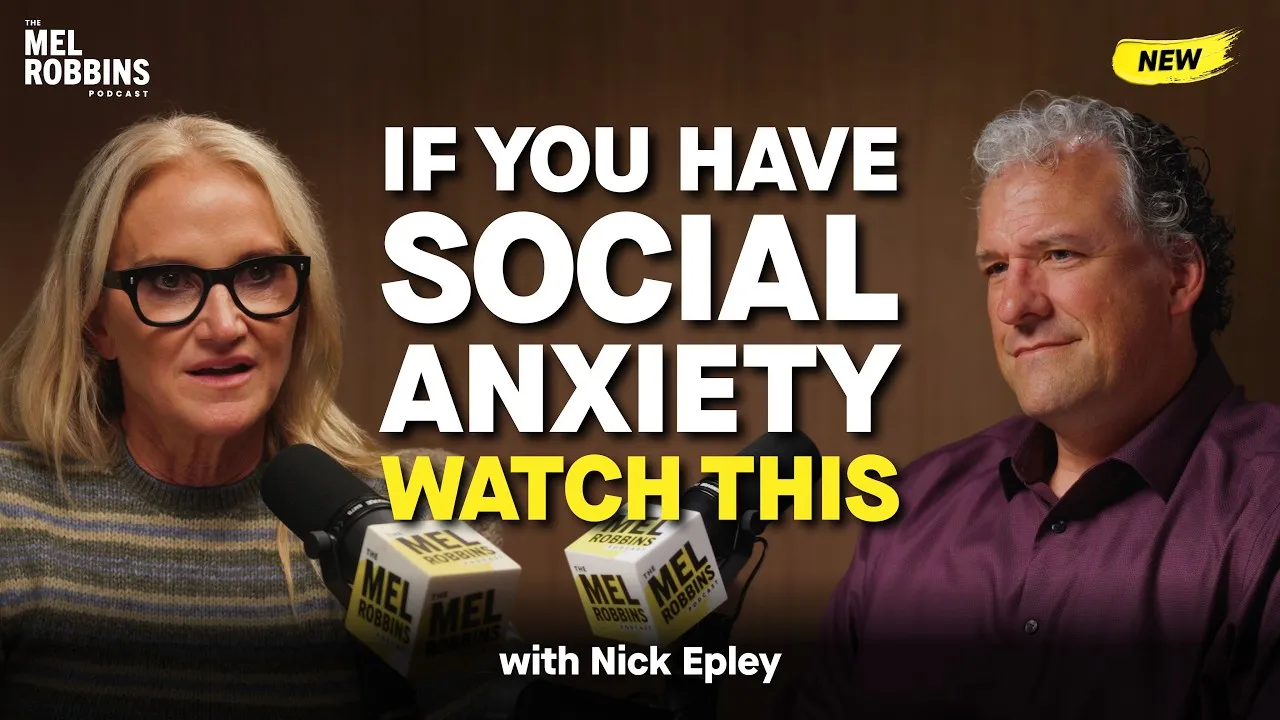
Nicholas Epley told The Mel Robbins Podcast that he doesn’t see much evidence for the popular “social battery” idea in the data, and that introverts and extroverts enjoy social interaction roughly similarly once they’re actually in conversation. That is the kind of sentence designed to make a group chat full of self-identified indoor cats hiss.
The claim is useful because it takes a very online phrase, “my social battery is drained,” and treats it less like a sacred diagnosis and more like a testable folk theory. Epley, a University of Chicago behavioral scientist who studies how badly humans misread one another, isn’t saying you should go from zero to karaoke-host overnight. He is saying that a lot of the exhaustion story may start before the interaction, in the prediction machine, where dread dresses itself up as self-knowledge.
the social battery concept is is one of them. So it’s a little hard to nail down, but my understanding is that the concept of a social battery is that social interaction is tiring and I only have so much capacity for it.
The internet’s favorite excuse meets a graph
Epley’s best moment here is not the inspirational stuff, though there is plenty of that. Mel Robbins and Nicholas Epley spend much of the hour in the sunny register of waves, smiles, grocery-store hellos, and strangers who might become your future spouse if you stop staring at your phone like it’s life support. Fine. Nice. Put it on a mug.
The sharper argument is aimed at the identity label underneath all that avoidance. People don’t just say, “I don’t feel like talking.” They say, “I am an introvert,” as if the Myers-Briggs fairy personally issued a doctor’s note. Epley pushes back. In his telling, personality predicts what people expect from social interaction better than it predicts what they actually feel during it.
Um the only problem with that is I don’t see a lot of evidence for that in the data. There’s a lot of evidence for that in people’s intuitions and people’s beliefs, right?
That is a clean, annoying little bomb. Annoying because it doesn’t let anyone keep their favorite escape hatch untouched. Clean because Epley isn’t pretending extroverts and introverts are identical. He says extroverts are more optimistic about interaction. Introverts are more pessimistic. But when the thing actually happens, the gap narrows.
So extroverts tend to be a little more optimistic about a conversation compared to introverts, but when they’re actually in conversation, they both like it on average roughly similarly.
This is persuasive, with one important brake pedal
Epley’s claim is believable as a correction to the way “introvert” has become a velvet rope around ordinary avoidance. It is less convincing if stretched into a universal rule that nobody is depleted by people, ever. Anyone who has survived a three-hour work dinner with one guy explaining crypto custody knows that social fatigue is not a myth. It has a LinkedIn profile.
But Epley isn’t defending forced mingling. His target is miscalibration, the gap between how badly we think connection will go and how it tends to go. Earlier, he describes experiments where people dread deeper conversations with strangers, then overwhelmingly report that those conversations were enjoyable. That same logic powers his take on social anxiety: avoidance protects the fear from new evidence.
This is where the episode earns its optimism. The fix isn’t “become an extrovert.” It is smaller and more irritatingly doable: smile, say hello, ask about the socks, compliment the bracelet, write down someone’s name. Epley likes the 10 5 rule from hospitality, smile at 10 feet, say hello at 5. It sounds corny until you remember half of adult life is people silently waiting for someone else to make the first non-weird move.
believing that you are introverted doesn’t mean that you don’t like social interaction or that you can’t try it or that you don’t get energy from those.
The best version of Epley’s argument isn’t anti-introvert. It is anti-fatalism. You may still need quiet. You may still hate networking events, which remain humanity’s punishment for inventing name tags. But if loneliness has been hiding behind the phrase “social battery,” Epley is basically saying: check the meter yourself. Don’t let the meme read it for you.
If he’s right, the next person in line at the coffee shop is not a threat to your energy reserves. They’re a data point. Smile at 10 feet, hello at 5, then see what comes back.
- What did Nicholas Epley say about social batteries?
- Nicholas Epley told Mel Robbins that the 'social battery' concept is popular in everyday psychology, but he doesn't see much support for it in the data. His argument is not that nobody gets tired after a stressful party. It's that people often predict social interaction will drain them, especially if they see themselves as introverted, and then enjoy it more than expected once they actually engage.
- Does Nicholas Epley think introverts like socializing as much as extroverts?
- Epley says extroverts tend to be more optimistic beforehand, while introverts tend to underestimate how much they'll enjoy connection. Once people are actually in conversation, he says the average enjoyment looks much more similar than the stereotypes suggest.
- What does Epley recommend instead of avoiding people?
- His practical advice is to test your assumptions in small, low-risk ways. He recommends the 10 5 rule, smiling when someone is 10 feet away and saying hello at 5 feet, plus 'compliment walks' where you look for sincere things to notice about other people.
Seth Godin says one 40 million view TikTok sold only four books
Godin’s bleak little TikTok anecdote is really a warning about mistaking attention for demand.
Dr. Eric Thomas says Super Mom should retire and drop the ball at home
The motivational speaker turns boundary setting into a household labor strike, with a useful warning for anyone addicted to being indispensable.

Eric Thomas says his 52-day challenge helped him go from 242 pounds to 219
On The Mel Robbins Podcast, the motivational speaker turns a biblical number into a very modern reset plan, complete with a scale, a suit, and a little public shame.

Mel Robbins says never being single from age 13 delayed her healing by 15 years
On a daughter-led relationship episode, Robbins turns her own romantic history into a warning against using love as emotional anesthesia.
The circuit, read weekly. No noise.