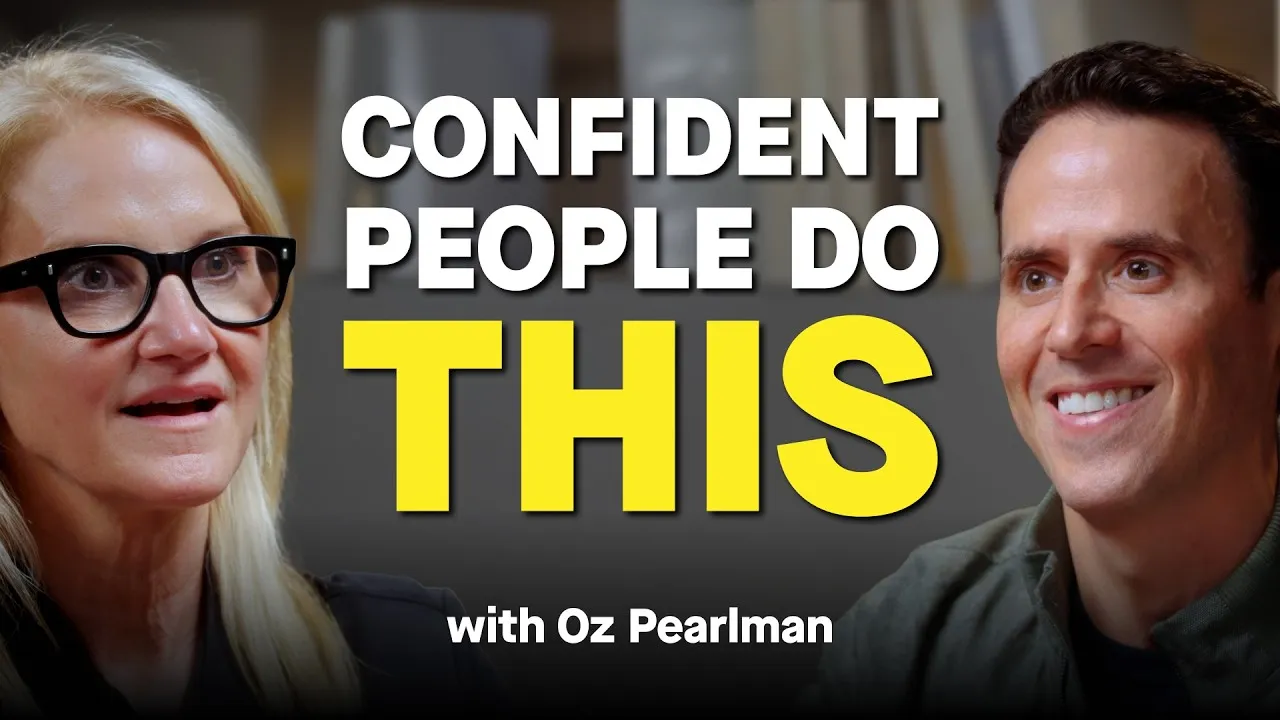
Oz Pearlman says you should approach people at an angle because head-on feels like danger
The mentalist turns a restaurant-magician survival tactic into a surprisingly practical rule for the first 10 seconds of any conversation.
Listen on YouTube · Spotify · Apple Podcasts
 WATCH NOW↓
 Oz Pearlman has a rule for winning the first 10 seconds: don’t walk straight at people. The mentalist says a head-on approach reads as danger, while coming in at an angle, adding a time limit, and making the moment about the other person drops the tension fast.
That sounds like body language advice that escaped from an airport bookstore, until you remember Pearlman’s workplace. He learned this not in a seminar, but as a teenage close-up magician walking up to restaurant tables where adults were fully prepared to reject him, tip him awkwardly, or wonder why a kid with cards was interrupting dinner. A hostile table is a tiny courtroom. Pearlman had to win the room before the first trick.
If you approach someone head-on, we are hardwired to feel danger when someone comes directly at you.
The word “hardwired” is doing some Vegas-magician lifting here. Pearlman is not giving a lab lecture, and nobody should start walking sideways through life like a crab with a LinkedIn account. But as fieldcraft, the point is sharp: before anyone decides whether you’re interesting, they decide whether you’re a problem.
The mind reader is selling nuisance reduction
Pearlman is careful to say the quiet part first. He isn’t psychic. He isn’t communing with Uncle Steve from beyond the veil. He is creating a controlled social experience where attention goes where he wants it to go.
I am not psychic. I do not have supernatural powers. I cannot talk to the dead.
That honesty makes his advice on The Mel Robbins Podcast more useful, not less. The trick isn’t the point. The trick is the receipt. Pearlman says the real transferable skill is figuring out what a person is worried about and checking those boxes quickly: Who is this? How long will this take? Are they asking me for money? Am I trapped?
His restaurant script is almost comically engineered. He approached from the side. He gave a time constraint. He invoked the owner, which answered the silent question of whether he belonged there. He didn’t ask, “Do you want to see a trick?” because that gives the table a big red eject button. He framed the whole thing as a treat already in motion. Manipulative? A little. Also known as hosting.
Stop leading with your need
Pearlman’s best advice is brutally simple: stop entering conversations as the main character. If you’re approaching a gate agent after a canceled flight, a boss in the hallway, a doctor you want to pitch, or a stranger at a party, your first sentence should prove you understand their weather system.
What a rough day, huh? All these people coming up to you. I know this isn’t your fault. I know you wish things were going smooth. If you could help me out, is there any chance
That quote cuts off because he keeps building the example, but the move is clear. Empathy first, request second. It is not sainthood. It is strategy. The person behind the counter has been treated like a vending machine with trauma. Pearlman’s pitch is: treat them like a person and watch how much more human the system becomes.
He applies the same logic to networking small talk. Don’t ask the three dead-fish questions everyone asks. Where are you from? What do you do? How’s the shrimp? Instead, notice something specific and turn it into a question. Compliment the glasses, then ask why they chose them. Compliment the socks, then ask the story. It is less about being charming than giving the other person a door they actually want to open.
The name trick is less magic than manners
Pearlman also has a name-memory method that belongs in every wedding, office, and cursed school fundraiser. He says people blame memory when the real failure happened earlier: they were busy rehearsing their own next line while the other person was saying their name.
the main culprit in forgetting people’s names has nothing to do with your memory. It’s that you never even knew the name to begin with.
His fix is “listen, repeat, reply.” Listen to the name, repeat it immediately, then reply with something that hooks it in your mind: a compliment, a spelling question, or a connection to someone you already know. It is aggressively unsexy advice, which is usually how you can tell a tip might survive contact with Tuesday.
The through line is communication as threat management. Pearlman isn’t saying you can mentalist your way into a perfect life. He is saying most of us lose people before we start because we arrive too directly, talk too much, ask lazy questions, and forget names we never bothered to hear. If he’s right, the next awkward room doesn’t require a new personality. It requires a 30-degree angle, a better first sentence, and the discipline to shut up before you step on your own applause.
- Why does Oz Pearlman say not to approach someone head-on?
- Pearlman says a direct, head-on approach can register as danger before the other person has even processed what you want. His fix is to come in at an angle, reduce the sense of threat, and quickly explain that you won't take much time. The neuroscience phrasing is a little grand, but the social tactic is solid.
- What should you say in the first 10 seconds of a conversation?
- Pearlman recommends removing tension immediately: add a time limit, lead with empathy, and frame what you're saying around the other person's life, not your own need. His airport example is basically, acknowledge their bad day first, then ask for help.
- What is Oz Pearlman's trick for remembering names?
- He says most people don't forget names, they fail to hear them in the first place. His method is listen, repeat, reply: hear the name, say it back at least twice, then attach it to a compliment, spelling question, or someone you already know.
Dr. Lara Boyd says your brain changes most when you succeed only 50 to 60 percent of the time
The neuroscientist turns the usual self-help command to “do hard things” into something more precise, and more annoying, your brain likes the zone where you’re barely making it.
Oakley Robbins says he had to go no contact with his girlfriend to stop hating college
The useful part of this Mel Robbins episode is not positive thinking, it is the brutal little admission that an escape hatch can keep you miserable.
Rahul Jandial says acting out your dreams can warn of Parkinson's 15 years early
The neurosurgeon’s strongest claim is not that dreams are mysterious, it is that some dream behavior belongs in a sleep clinic, not a dream dictionary.
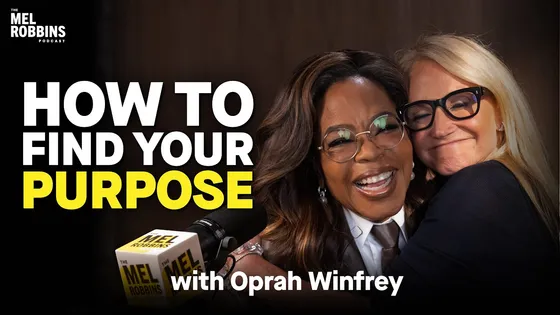
Oprah Winfrey says agreeing to launch OWN was one of the biggest mistakes of her life because she ignored her instincts
On Mel Robbins, Oprah reframed OWN's painful early years not as a business misfire, but as a people-pleasing failure.
The circuit, read weekly. No noise.