Dr. Lara Boyd says your brain changes most when you succeed only 50 to 60 percent of the time
The neuroscientist turns the usual self-help command to “do hard things” into something more precise, and more annoying, your brain likes the zone where you’re barely making it.
Listen on YouTube · Spotify · Apple Podcasts
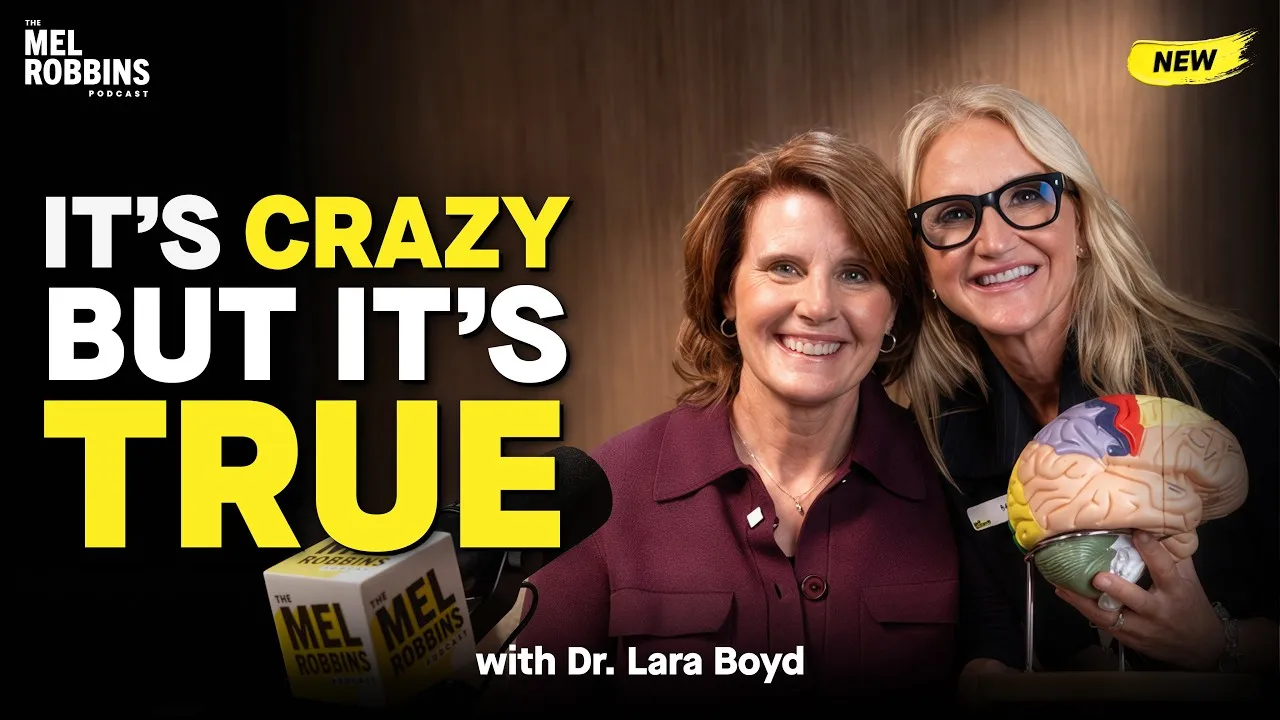 WATCH NOW↓
 Dr. Lara Boyd says your brain changes most when you’re succeeding only about 50 to 60 percent of the time. Not when you’re crushing it. Not when you’re doom-scrolling Duolingo in a shame spiral. The brain, apparently, is a petty little CrossFit coach that wants you right at the edge of failure.
That is the useful claim inside this episode of The Mel Robbins Podcast, a show whose title promises that your brain “will not be the same,” which is technically true in the way walking past a bakery also changes your brain. The difference is that Lara Boyd brings receipts. She studies neuroplasticity, especially after stroke and brain injury, and her best point is not the usual wellness chant that hard things are good. It’s more specific, and therefore more irritating. If you want your brain to reorganize, the task can’t merely be hard. It has to be hard in the right way.
The useful amount of failure
Boyd describes a rehab game her lab created for people recovering from stroke. The patient’s affected hand becomes, in the logic of the game, a spaceship trying to stop an asteroid from obliterating Earth. Already better than most physical therapy branding. Researchers can make the game easier or harder, then watch what changes in the brain.
success rate is right around 50 60%. So it’s hard. This is when we’re seeing the most neuroplastic change
The claim is clean enough to survive the podcast motivational haze, your brain doesn’t need to remodel itself for things you can already do. Chopsticks on piano forever is not a personality, it’s maintenance. But a task that is too hard gets you nowhere too, because you quit, or freeze, or spend the whole session inventing reasons the Spanish language is personally hostile to you.
you want to live here. You want to live where something is hard, where you’re sometimes failing, but often you’re succeeding and you’re struggling with that activity. And that’s where actually we can map and show this is where you’re changing brain.
The verdict, with a raised eyebrow: the 50 to 60 percent number is compelling, but don’t tattoo it on your forearm as the sacred ratio of human improvement. Boyd is describing a lab task, not a law of the universe. Still, the broader point is strong. Growth-mindset culture often turns struggle into a moral costume. Boyd makes it biological. Difficulty is not proof you’re failing. At the right dose, it’s the stimulus.
The catch is sleep, because of course it is
Boyd’s less Instagrammable point is that practice alone doesn’t cash the check. The brain changes chemically first, which is the short-term memory part. Structural change takes longer, and she says it critically requires sleep. This is where every heroic all-nighter gets dragged out back.
certainly we are very clear that if you don’t sleep, you don’t learn.
This is the unsexy triangle Boyd keeps returning to: struggle, repetition, recovery. She also adds exercise and stress reduction, arguing that exercise releases brain-derived neurotrophic factor, which helps neurons reorganize, while cortisol gets in the way. That’s a very neuroscientist way of saying the brain prefers not to learn while your nervous system is reenacting the final act of Uncut Gems.
Her stroke work gives the whole thing stakes beyond productivity cosplay. Boyd says the brain is especially plastic in the 30 to 60 days after a stroke, but that recovery can continue if therapy and effort continue. The grim part is access, therapy is expensive, and people often go home before they’re fully recovered. The hopeful part is that stroke recovery is not simply a countdown clock expiring in the hospital hallway.
Manifesting gets a cautious lab coat
There is also a passage where Boyd gives manifesting the most respectable possible translation: mental rehearsal, dopamine, and priming. She doesn’t say the universe is your intern. She says imagining a future action may prepare the brain for the real one, especially if you visualize from inside your own body rather than watching yourself like a drone shot in a pharmaceutical ad.
That distinction matters because it keeps the episode from floating away. Boyd is not selling magic. She is selling agency with invoices attached. Pick the experience, make it hard enough, repeat it, sleep on it, reduce the stress that blocks learning, and accept that your brain is changing whether you supervise the renovation or not.
your brain is shaped by the experiences around you. And it’s up to you to choose wisely what those experiences are.
If Boyd is right, the next time something feels just hard enough to make you want to negotiate with God, don’t immediately downgrade the task. Check the score. If you’re winning a little more than half the time, your brain may be exactly where it needs to be.
- What does Lara Boyd mean by the brain’s sweet spot for learning?
- Boyd is talking about a level of difficulty where the task is neither automatic nor impossible. In her lab example, people showed the strongest brain changes when they were succeeding around 50 to 60 percent of the time. That means the useful zone is frustrating by design, not because you’re bad at the task.
- Is the 50 to 60 percent rule proven for everything people learn?
- No. Boyd’s clearest example comes from a stroke-rehab game studied in her lab, where difficulty could be adjusted and brain changes could be mapped. The broader principle fits learning science, challenge matters, but the exact percentage should not be treated like a universal gym setting for the soul.
- What does Boyd say helps the brain rewire besides practice?
- She names sleep, exercise, and lowering stress as the three big supports. Sleep helps short-term chemical changes become longer-term structural changes, exercise appears to make the brain more plastic, and high cortisol can interfere with the growth factors that support learning.

Mel Robbins says writing your unfinished to-do list at night can work better than some sleep medication
The strongest idea in Robbins's bedtime script is also the most suspiciously useful one, put the unfinished mess on paper and stop letting your brain cosplay as a project manager at midnight.
Oz Pearlman says you should approach people at an angle because head-on feels like danger
The mentalist turns a restaurant-magician survival tactic into a surprisingly practical rule for the first 10 seconds of any conversation.

Oakley Robbins says he had to go no contact with his girlfriend to stop hating college
The useful part of this Mel Robbins episode is not positive thinking, it is the brutal little admission that an escape hatch can keep you miserable.

Rahul Jandial says acting out your dreams can warn of Parkinson's 15 years early
The neurosurgeon’s strongest claim is not that dreams are mysterious, it is that some dream behavior belongs in a sleep clinic, not a dream dictionary.
The circuit, read weekly. No noise.