Rahul Jandial says acting out your dreams can warn of Parkinson's 15 years early
The neurosurgeon’s strongest claim is not that dreams are mysterious, it is that some dream behavior belongs in a sleep clinic, not a dream dictionary.
Listen on YouTube · Spotify · Apple Podcasts
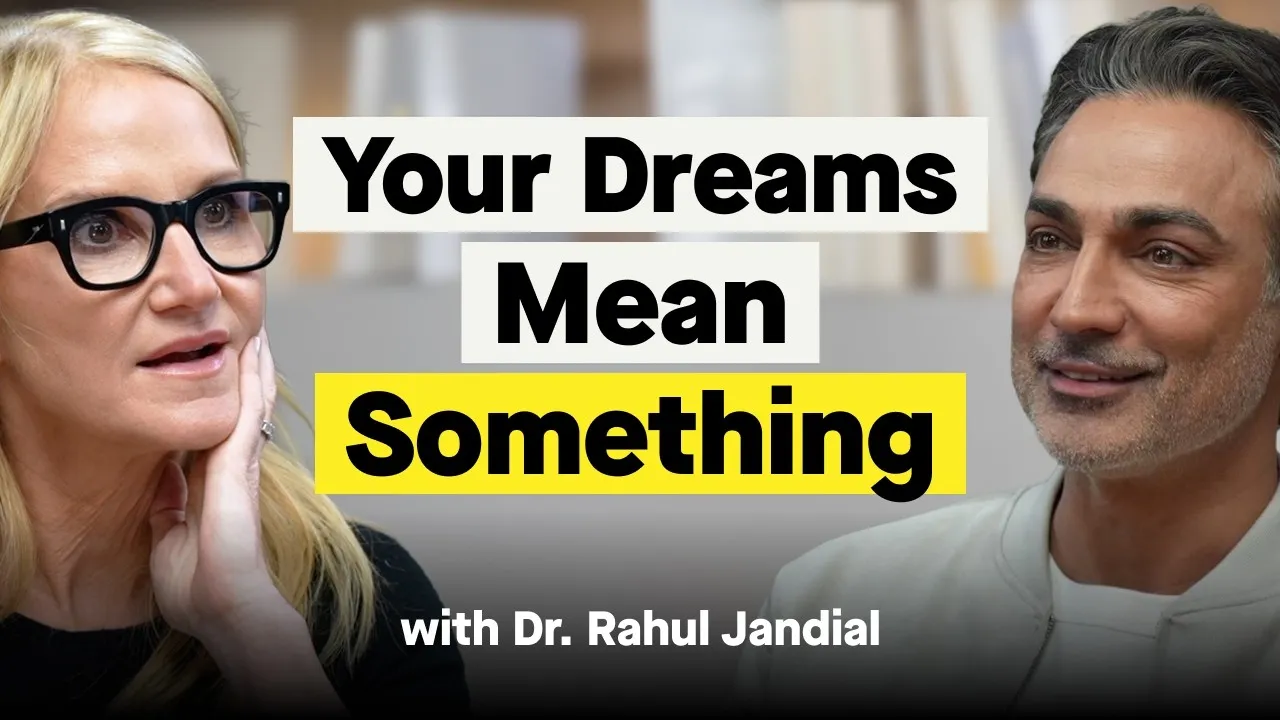 WATCH NOW↓
 The scariest dream in this episode isn’t teeth falling out, which Rahul Jandial treats with the bedside manner of a man explaining a parking ticket. It’s the one where you physically act out your dreams, because Jandial tells The Mel Robbins Podcast that REM behavior disorder can be an early warning sign of Parkinson’s disease roughly 15 years before the disease becomes obvious.
That is the claim worth pulling out of the dream fog. A lot of this conversation is Mel Robbins in full permission-slip mode, inviting listeners to turn bedtime into a free private creativity retreat. Fine. Light a candle. Put a notebook by the bed. But the Parkinson’s point is different. It is specific, medical, and Googleable in the way that makes a spouse suddenly remember the time you kicked a lamp at 3:12 a.m.
Yeah. And so everybody can look this up. It’s called REM behavior disorder. You can look it up on Scientific American. So in that one way REM behavior disorder when the brain withers its earliest warning sign was a change in dreaming 15 years prior where they act out their dreams.
The warning is physical, not symbolic
Here is where Jandial is on sturdy ground. REM sleep behavior disorder is not dream interpretation in a white coat. It is a real sleep disorder, and it has a well-known association with Parkinson’s disease and related neurodegenerative conditions. The basic idea is brutally simple: during normal REM sleep, your body is largely inhibited so you don’t perform the dream. In REM behavior disorder, that brake fails.
The skeptical footnote matters. This does not mean a single nightmare, a twitchy leg, or one dramatic blanket fight equals Parkinson’s. It means repeated dream enactment, especially in an older adult, is worth medical attention. Jandial packages the point for a wellness audience, but the underlying message is not wellness glitter. If someone is punching, kicking, shouting, or leaping out of bed while asleep, the next stop should be a sleep specialist, not a TikTok about what wolves symbolize.
Jandial is better when he kills the dream dictionary
The best parts of the episode are not the grander claims about dreams as portals and gifts, though Robbins clearly enjoys those. Jandial is most useful when he refuses to play mall-kiosk Freud. Teeth falling out? He says the lone paper he found linked it, boringly, to teeth grinding. Erotic dreams about someone inappropriate? He says that may mean nothing if your waking relationship is healthy. Dreams, in his telling, are not random, but they are also not a customer-service chat with your subconscious.
That distinction is why his nightmare warning works. He is not saying every bad dream is a coded prophecy. He is saying patterns matter, especially when they change.
And it’s a reminder to reflect that are you sure that you’re living your best life possible. So in a wellness way a flare of a nightmare can uh remind you that something is not going well with your mental health beyond the link with suicide and other things.
That line has the shape of a self-help claim, but the logic is clinical enough: new or worsening adult nightmares can be a yellow flag for mental health, trauma, depression, or stress. Not a diagnosis. A flag. The difference is everything.
The bedtime hack is the lighter stuff, but it is still useful
Jandial also argues that people can train dream recall and even nudge dream content by using the edges of sleep, those mushy minutes before falling asleep and after waking up. This is where the episode becomes extremely Mel Robbins, in the best and most dangerous sense: a big biological mystery gets turned into a thing you can do tonight with a mantra and a notebook.
You can influence what you’re about to dream about.
His practical advice is gentle enough: before sleep, suggest a problem or theme to yourself. On waking, don’t immediately grab the phone and let Instagram detonate your frontal lobe. Lie still for a few minutes, catch the mood, image, or thought, then write it down. You don’t need a crisp Netflix recap of the dream. Sometimes the useful part is just the weird emotional weather left behind.
The medical stake is sharper. Keep the notebook if you want better ideas. If your partner says you are punching ghosts at 3 a.m., skip the dream dictionary and call a sleep doctor.
- Can acting out dreams really be an early sign of Parkinson's?
- Jandial points to REM behavior disorder, a condition where the normal paralysis of REM sleep breaks down and people physically act out dreams. That condition is a recognized warning sign for neurodegenerative diseases, including Parkinson's, especially when it appears later in life. The caution is obvious but important: one restless night is not the same as a diagnosed sleep disorder.
- Does having nightmares mean your mental health is bad?
- Not by itself. Jandial separates ordinary nightmares from a new, worsening pattern of adult nightmares, which he frames as a possible signal that stress, depression, trauma, or other problems deserve attention. His point is not that every scary dream has a hidden message, it is that recurring nightmares can be a symptom, like pain or headaches.
- Can you influence what you dream about?
- Jandial says yes, at least modestly, by using the last few minutes before sleep to suggest a theme or problem to the mind. He is careful not to promise a vending-machine dream, but he argues the sleep entry and waking windows are unusually useful for emotion, memory, and creative thinking.

Oprah Winfrey says agreeing to launch OWN was one of the biggest mistakes of her life because she ignored her instincts
On Mel Robbins, Oprah reframed OWN's painful early years not as a business misfire, but as a people-pleasing failure.
Gary Vaynerchuk says live shopping is exactly where social media was in 2014
On Mel Robbins, Gary Vee turned a motivational sermon into a very Gary Vee market call: if you think TikTok Shop already passed you by, he says you're mistaking the starting gun for the finish line.
Benny Blanco says Ed Sheeran took a 7 and a half day boat to London because Blanco refused to fly
The producer’s best self-doubt story is not about conquering fear, it’s about dragging a pop superstar onto an ocean liner and watching Titanic on board.
Priya Parker says talk is sometimes bad for connection
The Art of Gathering author argues that families, teams, and friend groups often need a shared activity before they need another deep talk.
The circuit, read weekly. No noise.