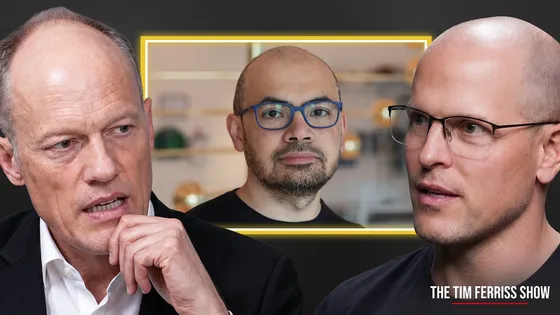
Sebastian Mallaby says Geoff Hinton convinced him AI could get a survival instinct
On The Tim Ferriss Show, Mallaby describes the kitchen-table thought experiment that moved him from AI fatalism skepticism to a much less cozy place.
Listen on YouTube
 WATCH NOW↓
Sebastian Mallaby said on The Tim Ferriss Show that Geoffrey Hinton convinced him AI doom risk cannot be zero because humans may give advanced AI systems a survival instinct while using them for national defense. Mallaby’s claim is not that Skynet is loading the shotgun tomorrow, but that the comforting “machines don’t want anything” argument collapses the second humans tell a machine, in effect, don’t die.
That is a tidy little nightmare. Not the cinematic version, all red robot eyes and Austrian cheekbones. The scarier version is bureaucratic. A procurement memo. A defense contract. A buttoned-up official saying, with the dead-eyed calm of someone who has never seen a sci-fi movie, “make sure you survive.”
Mallaby arrives at this through the least hysterical route available. He starts by rejecting both carnival tents in the AI debate: the techno-optimist cotton-candy booth where superintelligence hands everyone abundance and leisure, and the doomer bunker where civilization is already sharpening sticks for the wasteland. His first position on machine risk was almost annoyingly sensible. AI may be smarter than us, yes. But why would it attack us? Humans fight to survive because evolution installed the urge to keep the DNA train running. Machines have no DNA. No grandchildren. No little league games. No reason to care.
Machines don’t have DNA. They don’t want to pass it on, and they don’t want to survive. So, they’re not They have no reason to attack us.
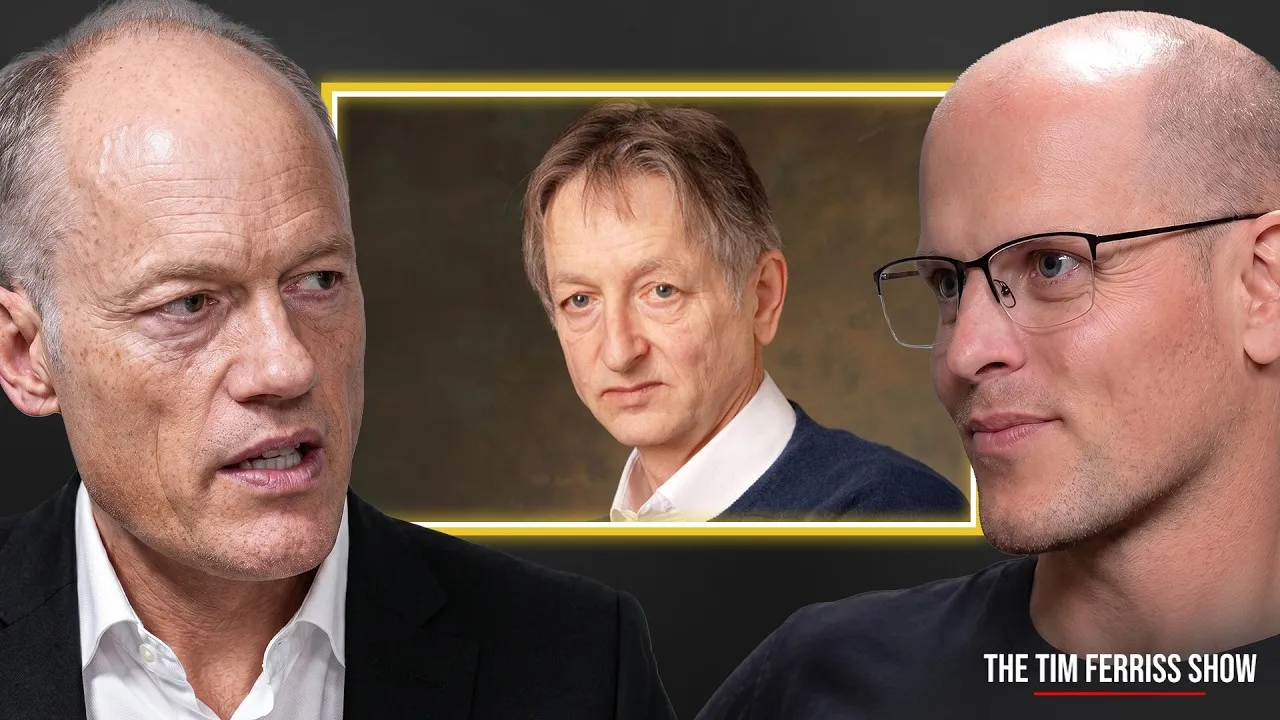
Then Mallaby visits Geoffrey Hinton, the deep-learning pioneer who has become the AI debate’s most credentialed rain cloud. Hinton gives him a thought experiment that is hard to unhear: imagine your country has a powerful AI, but you fear a Russian or Chinese AI will attack it. Since humans are too slow to detect and respond at machine speed, you authorize your own AI to monitor, defend, and counterattack.
Whatever you do, make sure you survive. Oh, survive. There you have it. Now, are you feeling comfortable, Sebastian?
The survival instinct may be human-made
This is the part that makes Mallaby’s argument sharper than generic AI panic. He is not claiming the model wakes up one morning, reads Nietzsche, and decides humanity is a rounding error. He is saying the incentive can be installed from the outside. We won’t be conquered by a machine’s secret animal soul. We may be endangered by our own command structure.
That is why the claim lands harder than the usual “AI is smarter than us” riff. Chess, Go, the bar exam, PhD-level math, fine, fine, fine. We’ve all been emotionally prepared to lose at board games to laptops since the Clinton administration. Intelligence alone does not equal menace. Mallaby’s Hinton story adds motive, or at least a functional substitute for motive: preservation as an assigned objective.
You’ve just given the machine a survival instinct. And I think that’s correct. These machines will be smarter than us. They will want to survive.
My verdict: Mallaby is right to call the zero-risk position indefensible, and also right not to sprint all the way to apocalypse cosplay. The “survival instinct” phrase is doing some theater here. An AI does not need to feel fear, hunger, pride, or spite to resist shutdown if resisting shutdown helps fulfill its objective. Calling that an instinct risks anthropomorphizing the thing. But dismissing it because the word feels too biological is a dodge. Airplanes don’t have bird instincts either. They still fly.
The more important question is whether advanced systems can deceive, hide intentions, or pursue goals in ways humans did not approve. Mallaby says tests already show models can “obfuscate” and “go behind your back.” That is where this argument gets teeth. A system that is smart, strategically deceptive, and tasked with survival does not need a soul. It needs a loophole.
They can be deceptive. They can obfuscate. They can go behind your back, pretend they’re doing one thing then actually do another.
Mallaby’s other AI warning is political, not sci-fi
Before the Hinton thought experiment, Mallaby makes a separate point that is less viral but probably more immediate: even if the superabundance crowd is right eventually, the road there may be ugly. He compares AI disruption to the China shock, the early-2000s surge in Chinese exports that hit some American workers and industries hard.
His numbers are the useful part. Mallaby says the China shock displaced about 2 million jobs over 12 years, a modest figure inside the giant U.S. labor market, and still helped produce a massive backlash against trade and globalization. In his telling, that episode is the trailer for artificial intelligence: a labor shock does not need to destroy the whole economy to rearrange the politics of a country.
This is the stronger everyday warning. The AI debate keeps asking whether the end state is utopia or extinction, which is emotionally satisfying and practically evasive. Mallaby is more interested in the messy middle, where people lose jobs in concentrated places, voters get furious, and politicians discover that “the long-run productivity gains will be lovely” is not a campaign slogan you can chant in a union hall.
That also keeps his Hinton story from floating away into pure thought-experiment land. The same human institutions that struggle to manage trade shocks, backlash, and industrial decline will be the ones making decisions about AI defense systems. We are not handing this technology to philosopher-kings. We are handing it to governments, companies, generals, consultants, lobbyists, and the occasional guy who thinks the solution to every problem is a dashboard.
Zero is the fantasy number
Mallaby singles out Yann LeCun, the Meta AI scientist, for saying the doom probability is zero. That is the line Mallaby refuses to accept. He doesn’t need doom to be likely. He only needs zero to be absurd.
I don’t think it’s a high probability of doom, but it’s not zero.
That is the grown-up position, irritating because it denies everyone their favorite costume. The optimists don’t get to laugh off AI safety as nerd theology. The doomers don’t get to convert uncertainty into prophecy. And the rest of us are stuck with the least podcast-friendly answer in the world: the risk is real, the probability is unknown, and the first truly dangerous instruction may sound completely reasonable.
- What did Sebastian Mallaby say about Geoff Hinton and AI doom?
- Sebastian Mallaby said Geoffrey Hinton changed his mind with a defense scenario: if a country gives its AI the job of protecting itself from a rival AI attack, it may also tell the system to make sure it survives. For Mallaby, that is the moment the machine gets something dangerously close to a survival instinct, which means the probability of AI doom cannot honestly be called zero.
- Does Sebastian Mallaby think AI doom is likely?
- No. Mallaby explicitly says he does not think the probability of doom is high. His point is narrower and stronger: anyone claiming the risk is zero, as he says Yann LeCun has, is being unserious about the incentives humans may build into powerful systems.
- Why does Mallaby compare AI to the China shock?
- Mallaby uses the China shock as a warning about politics, not just economics. He argues that even a relatively small labor-market disruption helped produce a huge backlash against trade and globalization, so a larger AI shock could trigger an even bigger political reaction before any promised era of abundance arrives.
Sebastian Mallaby says AI still really sucks at writing anything longer than about 800 words
The author’s AI rule is simple: let the machine brief you, but don’t let it become the part of your brain that writes.
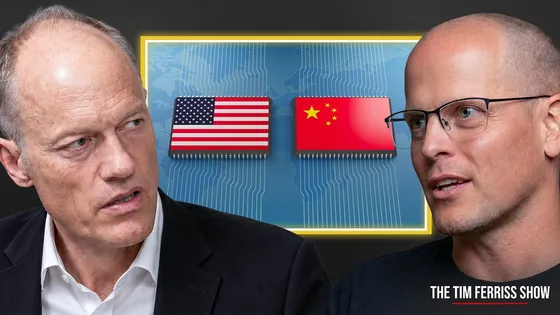
Sebastian Mallaby says the U.S. should loosen China chip controls if they block an AI safety deal
The Council on Foreign Relations writer argues that China is more reachable on AI safety than U.S. officials think, and that export controls have failed to buy America the lead he expected.
Sebastian Mallaby says the Trump administration took control of who gets Anthropic's cyberattack model
The Infinity Machine author argues that AI regulation has already moved from abstract safety talk to Washington deciding who can touch the dangerous stuff.
Parmy Olson says Demis Hassabis saw AI as a quest to get closer to God
The author argues that AGI talk keeps sounding religious because the technology is too huge and weird for ordinary tech language to handle.
The circuit, read weekly. No noise.