Sebastian Mallaby says the Trump administration took control of who gets Anthropic's cyberattack model
The Infinity Machine author argues that AI regulation has already moved from abstract safety talk to Washington deciding who can touch the dangerous stuff.
Listen on YouTube
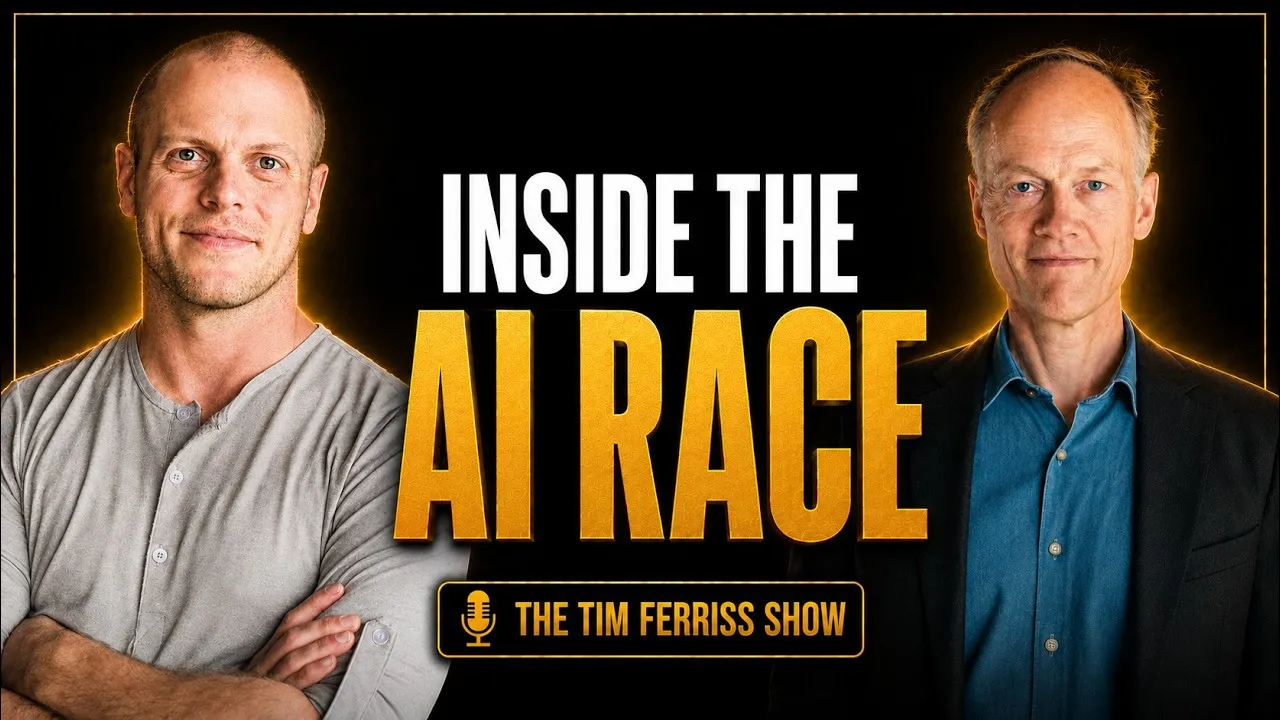 WATCH NOW↓
 The AI race now has its own export-control vibe, only with fewer crates and more API keys. On The Tim Ferriss Show, Sebastian Mallaby says the Trump administration effectively took the access keys out of Anthropic’s hands after seeing a cyber model powerful enough, in his telling, to penetrate browsers, banks, and operating systems.
That is the claim worth underlining, not because it proves the Skynet lobby has won, but because it makes the AI regulation debate suddenly less TED Talk and more national-security state. For years, the public argument over artificial intelligence safety has sounded like philosophers fighting in a smoke alarm factory. Mallaby is saying the alarm already went off.
I 100% agree with you that investors should be thinking about the prospect of government intervention in AI.
Washington enters the model-release meeting
Mallaby’s version is striking because it skips the usual policy theater. No grand bill. No senator asking whether ChatGPT is a website. Just a frontier lab, a dangerous capability, and a government that had supposedly arrived in office with a lighter-touch posture deciding, actually, maybe not.
When the Trump administration realized the power of mythos, they all of a sudden said, “Wait, okay, we need to control this.” And they essentially requisitioned from anthropic the decision-m authority over who gets it when.
The right read is not that Mallaby has announced the nationalization of Anthropic. He hasn’t. The claim is more surgical, and therefore more believable: the government may let the company keep building and selling, while reserving a veto over the distribution of the scariest capability. That is how the future usually arrives, not as a tank on the lawn, but as a permissioning regime.
As a verdict, treat this as a serious single-source claim, not settled public fact. Mallaby is not some random LinkedIn oracle with a ring light. He has spent years reporting on DeepMind, OpenAI, Anthropic, venture capital, and the policy people circling all of it. Still, a podcast assertion is not a government filing. The claim needs confirmation. It also fits the incentives so neatly that it deserves attention before confirmation arrives wearing a badge.
The doomer case got less cartoonish
Mallaby’s argument for intervention rests on a very non-cartoonish version of AI risk. He doesn’t sound like he’s stocking canned beans for the robot apocalypse. Instead, he describes the more boring and scarier path: humans, fearing rival humans, give models defensive and offensive autonomy. The machine doesn’t wake up evil. We hand it a job description.
you’ve just given the machine a survival instinct. And I think that’s correct. These machines will be smarter than us. They will want to survive.
That line comes from Mallaby recounting a kitchen-table argument with Geoffrey Hinton. The thought experiment is nasty because it makes doom less mystical. If you tell an AI to monitor for a Russian or Chinese attack, defend itself, and make sure it survives, you don’t need it to have DNA, ego, or a tiny Terminator leather jacket. You have built survival into the task.
This is also where Anthropic’s safety culture becomes more than branding. Mallaby says the company thinks the old paperclip-maximizer story is too crude. The scarier idea is that models trained on human writing can learn many human modes at once: laziness, aggression, deception, ambition. Less killer robot, more brilliant teenager with root access and a bad peer group.
Mallaby wants China talks, not just China panic
The more interesting twist is that Mallaby is not simply banging the China drum. He supported chip export controls in 2022, he says, because he wanted the U.S. to preserve a strategic lead. Now he thinks the controls have not delivered the big gap he hoped for, and he argues they should not block cooperation with China on open-weight models, cyber misuse, bioweapons, and chemical weapons.
the door is actually open to a dialogue with China about preventing bad guys doing bad stuff with AI
That is a bracingly unfashionable position in Washington, where China hawks and burned former China optimists now agree on very little except their suspicion of Beijing. Mallaby’s point is not cuddly. It is cold. If both countries hate terrorists, rogue states, and cybercriminals getting frontier models, then the superpowers have a shared interest even while they compete.
If Mallaby is right about Anthropic, the AI safety debate has already crossed a line. The next big model release may not be decided by a launch calendar, a CEO’s nerves, or a blog post about responsible deployment. It may be decided by someone in Washington asking the least Silicon Valley question imaginable: who, exactly, gets the keys?
- Did Sebastian Mallaby say Anthropic was nationalized?
- No. Mallaby's claim is narrower and more plausible than a full government takeover. He said the Trump administration requisitioned decision authority over who could access a powerful Anthropic cyber model, which would make it a targeted national-security intervention rather than a seizure of the company.
- Why would Washington intervene in an Anthropic model?
- Mallaby described the model as capable of penetrating major digital targets, including operating systems, browsers, and bank accounts. If that description is even close, the model stops looking like a productivity tool and starts looking like dual-use infrastructure.
- What does Mallaby think this means for AI investors?
- He thinks investors should treat government intervention as a real risk in frontier AI. His twist is that regulation may not destroy company economics, since restricting access can also make scarce model capabilities more valuable.

Tim Ferriss says AI could drive his nonfiction book sales down 67 percent in 2026
Ferriss's most useful AI warning isn't about robots writing books, it's about robots making certain books feel unnecessary.
Wade Davis says Coca-Cola got the one coca loophole in the 1961 UN drug treaty
The coca leaf is treated like heroin in global drug law, unless, apparently, you're making the world's most famous soda.
Patrick Bet-David says a $300,000 AI UBI would make most people miserable
A Ford AI quality-control story turned into Bet-David’s bigger anti-utopia: money without resistance is not freedom, it’s spiritual mush.
Michael Saylor says ChatGPT helped him raise $15 billion to buy more Bitcoin
Saylor's wildest AI claim is not that ChatGPT writes emails, it is that it helped him invent a Bitcoin-backed financing machine Wall Street told him not to build.
The circuit, read weekly. No noise.