Leanne ten Brinke says a 'douche smile' can reveal psychopathic traits in 5 seconds
The forensic psychologist's best warning sign is not a dead-eyed stare, it's the creepy mismatch between cruelty and charm.
Listen on YouTube · Spotify · Apple Podcasts
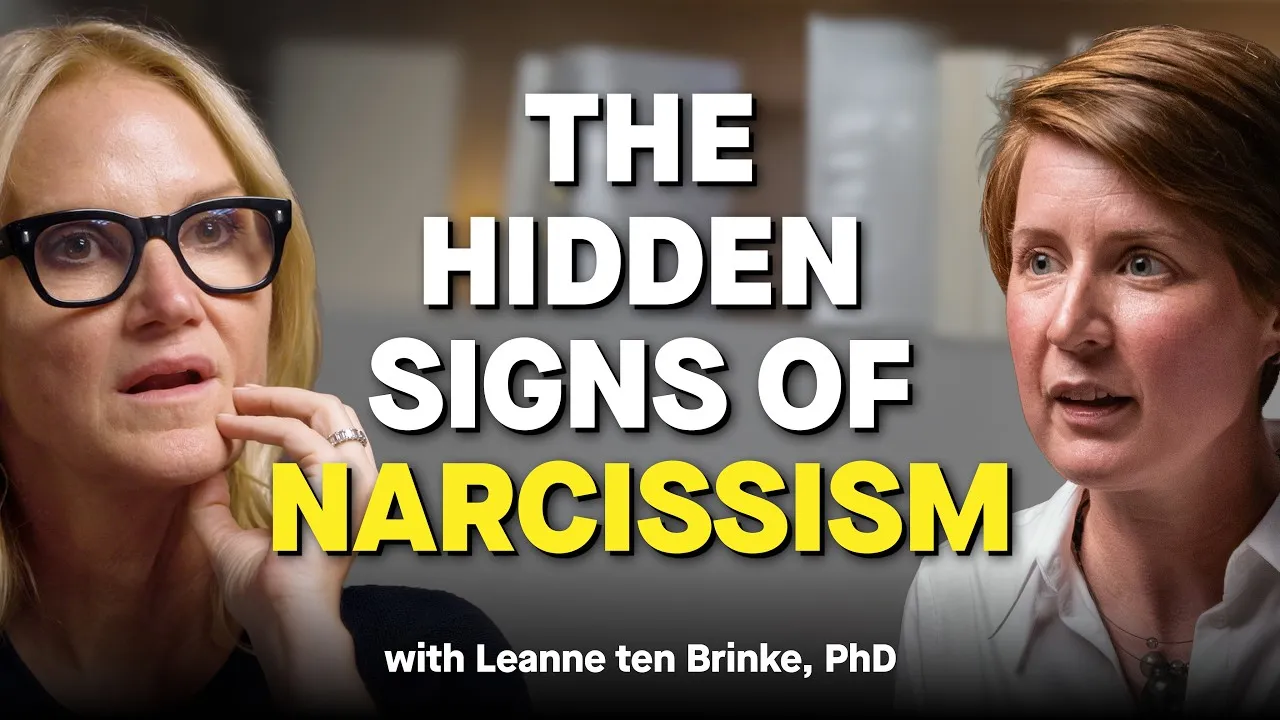 WATCH NOW↓
 The useful thing about the psychopath detector in this Mel Robbins Podcast episode is not that it turns you into Clarice Starling with AirPods. Leanne ten Brinke says people with almost no training can detect psychopathic personality traits after just five seconds, and the tell is deliciously specific: someone says hostile things while smiling like they just got upgraded to first class.
That is the kind of claim that makes pop psychology dangerous and irresistible. Five seconds? A smile? The words ‘psychopathic personality traits’? You can practically hear TikTok reaching for its ring light. But ten Brinke, a forensic psychologist at the University of British Columbia, is more careful than the headline version of her own finding. She is not handing out a license to diagnose your boss, your ex, or the PTA mom with the terrifying clipboard. She is talking about a small, real signal in a larger pattern.
people with very little training can detect with some kernel of truth the extent to which someone has psychopathic personality traits or not but just like 5 seconds
The tell is not the smile. It’s the mismatch.
The research ten Brinke cites comes from work by Scott Lilienfeld and colleagues using short video clips of incarcerated men being interviewed as part of a psychopathy assessment. Trained psychologists had longer interviews and case-file material. Ordinary people got a basic definition of psychopathy and a few seconds of footage. Their ratings were, in ten Brinke’s word, reasonably correlated with the experts’.
The cue her team noticed was not the Hollywood psychopath stare. It was discordance. A person saying something cruel while grinning broadly. The face says brunch. The words say lawsuit.
the people with high levels of psychopathy were saying really hostile things and smiling broadly.
Ten Brinke calls it a ‘douche smile,’ which is both funny and more scientifically useful than it sounds. A normal smile fits the moment. A nervous smile can be awkward. A polite smile can be social grease. But hostility plus delight is a different animal. It is the office bully telling a cruel story with crow’s feet.
Her best move is that she immediately takes away the toy she just gave everyone. The five-second read is not a superpower. It is not a diagnostic shortcut. It is one puzzle piece, and half the internet already thinks one puzzle piece is a whole Netflix documentary.
none of these are a Pinocchio’s nose, right? They’re not um there’s no one behavior that’s always going to be like all people with high levels of psychopathy do this all of the time.
The better test is how they treat people who aren’t useful
Robbins keeps pulling the conversation toward the listener’s problem person, which is exactly what this kind of episode invites. The manipulative sister-in-law. The boss who takes credit. The new boyfriend who seems perfect to your friend and radioactive to everyone else. Ten Brinke’s answer, over and over, is less sexy than a five-second test and far more useful: look for consistency across contexts.
if they seem to be a different person around you than everyone else, I think that’s a big red flag that you’re not seeing who they are.
That line is the episode’s real adult supervision. Love bombing works because you are temporarily the exception. The barista is not. The Uber driver is not. The coworker with nothing to offer is not. If the warmth is reserved for the person being recruited, flattered, or used, the charm is not character. It is equipment.
This is also where ten Brinke separates herself from the sloppy internet habit of turning every unpleasant person into a clinical label. She talks about the dark tetrad, psychopathy, narcissism, Machiavellianism, and sadism, but keeps returning to behavior: callousness, manipulation, hostility, entitlement, exploitation. Even on gaslighting, she narrows the term instead of letting it become a synonym for ‘someone disagreed with me in a tone I disliked.‘
The cure is boring, which is why it might work
Robbins wants the one action. Ten Brinke gives her the least viral answer imaginable: slow down. Take time before committing to a relationship, a workplace alliance, a family role, a shared lease, a custody-war texting pattern, whatever trap has velvet on the door. Compare notes with people you trust. Let the pattern reveal itself.
I think it’s to slow down because personality is a pattern.
That is the practical stake here. If the five-second ‘douche smile’ claim is true, it should not make you faster to accuse people. It should make you faster to pause. Notice the mismatch. Watch how they treat the person who cannot help them. Ask whether the charm travels. Then, before you start rewriting your whole life around one person’s potential, remember ten Brinke’s cold little gift: your hope that they will change is not evidence that they will.
- Can people really spot psychopathic traits in five seconds?
- Ten Brinke says research using short clips of incarcerated men found that untrained people, given a basic definition of psychopathy, made ratings that were reasonably correlated with trained psychologists' assessments. That is not a diagnosis. It is more like a smoke alarm, useful enough to notice, not enough to convict.
- What is the 'douche smile' she talks about?
- Ten Brinke uses the phrase for a specific mismatch: someone says hostile things while smiling broadly. The warning sign is not smiling by itself. It is the emotional dissonance, cruelty delivered with the facial packaging of friendliness.
- What should you do if you think someone is manipulating you?
- Her advice is to slow down and look for patterns across time and context. If the person treats you like the exception but is cruel to the Uber driver, the barista, coworkers, or family members, assume the pattern may eventually include you. She also stresses comparing notes with trusted people instead of trying to decode the person alone.

Gary Vaynerchuk says live shopping is exactly where social media was in 2014
On Mel Robbins, Gary Vee turned a motivational sermon into a very Gary Vee market call: if you think TikTok Shop already passed you by, he says you're mistaking the starting gun for the finish line.
Benny Blanco says Ed Sheeran took a 7 and a half day boat to London because Blanco refused to fly
The producer’s best self-doubt story is not about conquering fear, it’s about dragging a pop superstar onto an ocean liner and watching Titanic on board.
Priya Parker says talk is sometimes bad for connection
The Art of Gathering author argues that families, teams, and friend groups often need a shared activity before they need another deep talk.
Kier Gaines says the world is designed for your productivity and attention, not your peace
The therapist's best point on The Mel Robbins Podcast is also his bleakest: your stress isn't just a personal failure, it's a business model.
The circuit, read weekly. No noise.