Rhonda Patrick says 1 minute of breathless exercise beats 53 minutes of walking around your house
The researcher behind the FoundMyFitness newsletter just made your gym membership guilt optional and your stair climb mandatory.
Listen on YouTube · Spotify · Apple Podcasts
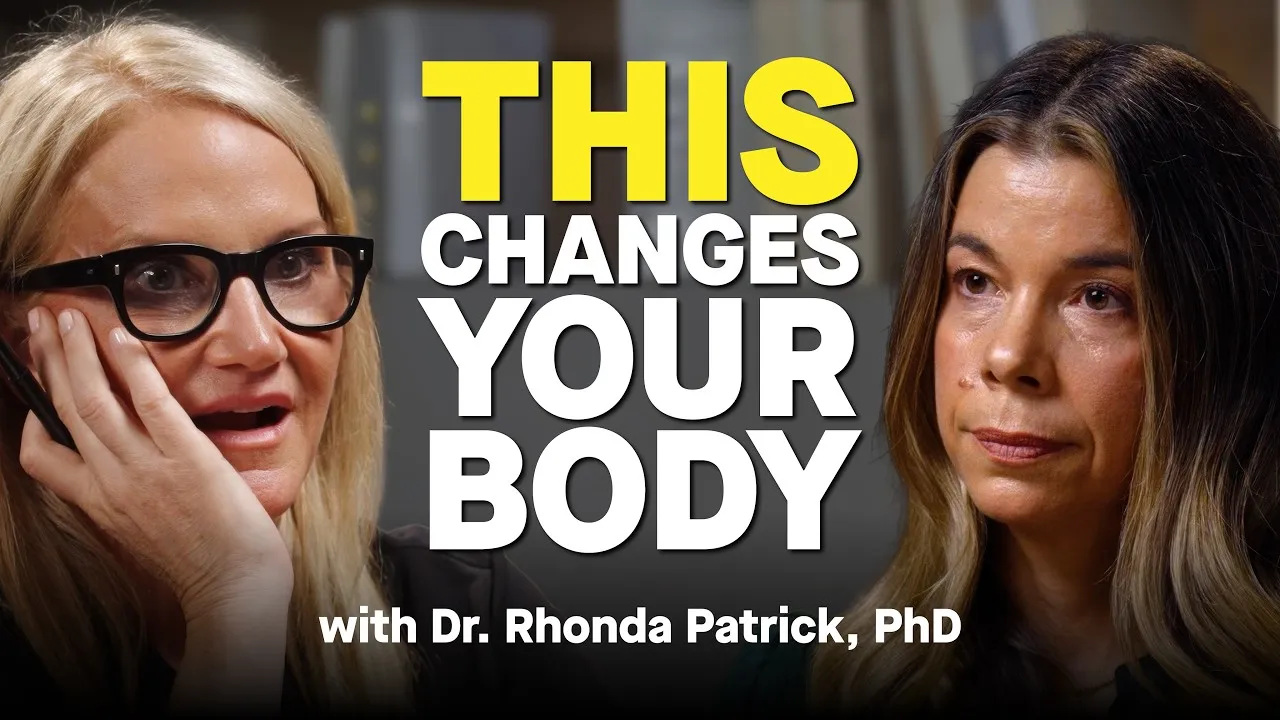 WATCH NOW↓
 One minute of walking up a hill while you gasp for air is worth 53 minutes of puttering around your kitchen. That is not a motivational poster. That is what Rhonda Patrick, biomedical scientist and the internet’s most cited explainer of longevity research, told Mel Robbins on a recent episode, citing accelerometer-based studies tracking real movement in real bodies. If you have been coasting on 10,000 steps and feeling virtuous, she has news.
The 10,000 steps benchmark, Patrick points out, did not come from a clinical trial or a cardiologist. It came from a Japanese pedometer company in the 1960s trying to sell a product. The number is catchy and round and essentially made up. The actual research, she argues, points somewhere far more useful: intensity is what the body responds to, and the gap between a light stroll and a breathless effort is not incremental. It is exponential.
For every 1 minute of vigorous exercise, you have to do 53 minutes of light walking, gentle walking around, to get the same drop in all-cause mortality.
Three Minutes, Three Times, Done
Patrick’s practical prescription collapses the whole sweaty ordeal into what she calls exercise snacks: three minutes of breathless effort, three times a day. Squats in the kitchen. Stairs taken fast. Playing tag with a kid until your lungs protest. Studies tracking people who did exactly this, without ever identifying as someone who exercises, showed a 40 percent reduction in cancer-related mortality, a 40 percent reduction in all-cause mortality, and a 50 percent reduction in cardiovascular mortality. Those numbers are not for elite athletes. They are for people who sprint to the fourth floor because the elevator felt lazy.
To prove the point, Patrick dragged Robbins and her entire office staff into the hallway to do one minute of bodyweight squats in their work clothes. Patrick did hers in heeled boots. Robbins, to her credit, could not talk by the 30-second mark, which is exactly the point. Breathless is the metric. Not heart rate zones, not a Garmin pace, not a gym membership. If you can still sing, you are not there yet.
These moments count. They add up. They’re cumulative, and we have the research to show that.
The neurochemistry explanation is where Patrick gets genuinely interesting. She describes dynorphin, an endogenous opioid the brain produces specifically during uncomfortable physical effort, as the mechanism behind why hard exercise makes the rest of your day feel easier. When you push through the discomfort instead of stopping, your brain upregulates mu opioid receptors and becomes more sensitive to endorphins, meaning small pleasant moments register more intensely afterward. The uncomfortable thing is not a tax you pay for fitness. It is the actual mechanism of feeling better. That is a real claim with real research behind it, and it lands differently than the usual “exercise releases endorphins” shorthand most people have already tuned out.
The Banana Is Sabotaging Your Smoothie
The episode’s other specific, searchable, genuinely surprising claim arrives in the kitchen segment, where Patrick builds her daily smoothie on camera and announces that bananas destroy the polyphenols in blueberries. The enzyme polyphenol oxidase in bananas breaks down the anthocyanins you just paid organic prices for. Every smoothie bar in America puts bananas in their blueberry smoothies. Patrick has replaced hers with half an avocado, which provides the creamy texture and also increases the bioavailability of lutein and other carotenoids from the kale by fourfold. The avocado is doing more work than the banana ever was, in every direction.
If you add bananas to blueberries, you’re not getting as many polyphenols. In fact, it’s quite a bit lower.
On supplements, Patrick recommends five: omega-3s at 2 grams daily, a multivitamin, vitamin D at 4,000 IUs, magnesium at around 300 to 350 milligrams, and creatine at 10 grams per day split into two doses, with the second dose specifically targeting cognitive benefits rather than muscle. The creatine-for-brain claim is the most provocative of the five and the most likely to age interestingly as research continues, but Patrick is clear that 5 grams is absorbed by muscle first and the brain only sees benefit past that threshold. She goes up to 25 grams when sleep deprived, citing studies on cognitive performance under stress.
The Harvard study she cites, showing five lifestyle factors added 12 to 14 years of life expectancy for people who adopted them starting at age 50, gives the whole episode its stakes. Patrick is not selling optimization theater. The specific claim that vigorous intermittent lifestyle activity delivers the same mortality reduction as formal gym exercise is the kind of thing that should, if true, change public health messaging. Whether it will is a separate question. For now, take the stairs fast and skip the banana.
Dr. Brennan Spiegel says a thumb that touches your forearm may help explain IBS
The Cedars-Sinai gastroenterologist gives Mel Robbins a sticky new theory of gut trouble, posture, balance, grip strength, and the indignity of being a human sack of potatoes on Earth.

Daniel Pink Has 26,000 Regrets to Show You, and That's the Good News
The author of 'The Power of Regret' joins Mel Robbins to make the case that the emotion you've been running from is actually the most useful one you have.
Oakley Robbins says he had to go no contact with his girlfriend to stop hating college
The useful part of this Mel Robbins episode is not positive thinking, it is the brutal little admission that an escape hatch can keep you miserable.

Rahul Jandial says acting out your dreams can warn of Parkinson's 15 years early
The neurosurgeon’s strongest claim is not that dreams are mysterious, it is that some dream behavior belongs in a sleep clinic, not a dream dictionary.
The circuit, read weekly. No noise.