Rob Snyder says design partners almost never help startups find product-market fit
The Power of Pull author argues that the beloved startup design partner is often a false positive with a calendar invite.
Listen on YouTube
 WATCH NOW↓
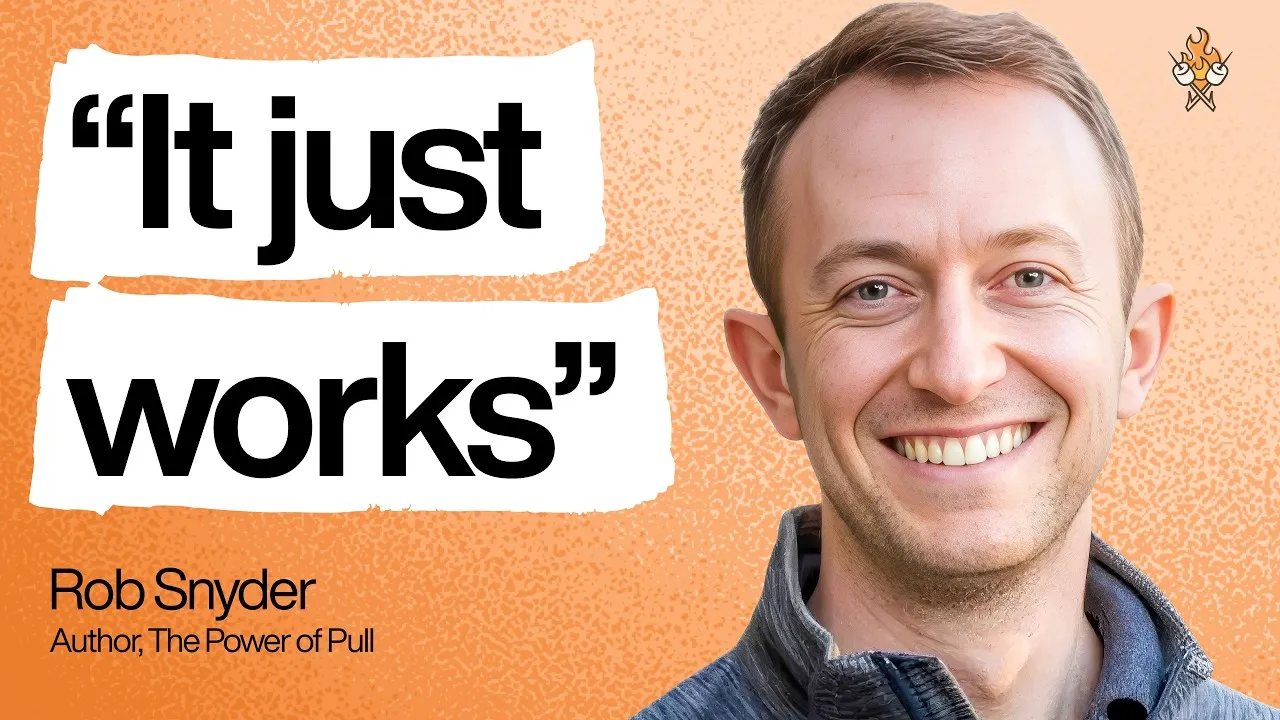
Rob Snyder said on Lenny’s Podcast that design partners almost never help startups find product-market fit, because real buyers want their problem solved now, not a role helping you build your product. Snyder’s claim is that a design partner is often a fake customer wearing a Patagonia vest.
This is the kind of startup heresy that sounds obvious only after someone says it cleanly. The default founder move is to take uncertainty, wrap it in a Miro board, and call it a partnership. Snyder, author of The Power of Pull and writer of The Physics of Startups, wants founders to stop mistaking polite collaboration for demand. His whole framework is built around one brutal question: is this person trying to buy, or are they just being nice?
One of the main mistakes people make is thinking that pull is a thing that a company has. It’s a thing a person has.
That line is the skeleton key for the episode. Snyder is not saying SpaceX has desire, or the enterprise has pain, or the market is ready. He is saying a named human has a project on her to-do list, urgency around it, bad alternatives, and a reason to act. No urgency, no pull. No person, no sale. Just vibes in a sales deck.
The design partner trap
The useful sting here is that Snyder is attacking one of the most respectable evasions in early startup life. A design partner sounds disciplined. It sounds customer-led. It sounds like what an adult founder does after reading enough SaaS threads on LinkedIn. But Snyder’s view is that, in practice, the label can turn a buying conversation into community theater.
I have yet to see it help be helpful. What I’ve seen in basically every single time I’ve seen somebody with a design partner is that you recruit a design partner who quote unquote buys into your vision for the product and they give a bunch of feedback and never buy from you.
That is harsh. It is also the part founders should tattoo somewhere tasteful, like the inside of their eyelids. Feedback is cheap when the other person isn’t paying the opportunity cost. People love being asked what the future should look like. It costs nothing to cosplay procurement.
They never buy and you realize that all of their feedback was just like them playing Steve Jobs and there’s like I’m going to help this startup versus I have something I’m actually trying to get done.
The verdict: Snyder is right about the failure mode, and a little absolutist about the category. In enterprise sales, there are real procurement processes where pilots and phased rollouts aren’t theater, they’re the door you have to walk through. Snyder even allows for that later, saying if the buyer says the company buys through pilots, fine. His point is sharper than “never pilot.” It is “do not offer a pilot as a substitute for discovering whether anyone wants to buy.”
Enthusiasm is not evidence
Snyder’s better diagnostic is what he calls pull. The buyer should behave like the product is weird not to buy. Not impressed. Not intrigued. Not “circle back in Q4.” Pull looks like impatience. It looks like the buyer trying to remove friction from the transaction.
The thing that really really matters is that they actually try to buy.
That is the cleanest dividing line in the episode. Snyder’s founder is not a courtroom lawyer persuading the jury. He is holding up a magnet and seeing whether metal moves. If the buyer has a project, urgency, inadequate options, and a limitation that your product unblocks, the conversation changes. They ask price. They ask timeline. They ask what has to happen next. They do not volunteer to help with your roadmap like a retired product manager at a coffee shop.
This is why Rob Snyder tells founders to sell before building too much, ask the uncomfortable questions, and look for repeated buying behavior rather than lovingly annotated feedback. His advice will annoy anyone who has been hiding inside a “customer advisory board” while runway quietly evaporates. Good. Annoyance is cheaper than two years of building for people who never intended to pay.
The concrete stake is simple: if Snyder is right, the next time a founder proudly says they have five design partners, the correct follow-up is not “Who are they?” It is “How many have tried to pay you?”
Why shoot yourself in the foot?
- What did Rob Snyder say about design partners?
- Rob Snyder said design partners are usually a bad signal for startups searching for product-market fit. His argument is that people with urgent pull don't want to join your product-development club, they want the thing solved. A design partner may give thoughtful feedback and still never buy, which makes the whole exercise feel productive while hiding the actual sales truth.
- What does Rob Snyder mean by pull?
- Snyder defines pull as a specific person being stuck on an urgent project and lacking good existing options. In that state, the buyer doesn't need to be persuaded into caring. They lean forward, ask how to start, and try to buy before the founder has finished the pitch.
- Does Rob Snyder think startups should run pilots?
- Snyder's advice is not to lead with pilots, proofs of concept, or free design partnerships. If a real buyer says their company requires a pilot as part of procurement, fine. His objection is to offering a pilot before anyone has shown the urgency to buy.

Josh Woodward says most big-company labs fizzle out after 3 to 4 years
The Google Labs VP argues that AI has made frontier teams mandatory, but most companies build them in exactly the way that kills them.
Emmanuel Ameisen says Claude plans ahead without saying the plan
Anthropic’s interpretability researcher makes the strongest case yet for why “just a next word predictor” is a dangerously lazy way to talk about modern AI.
Peter Sellis says the best product teams should be designed like terrorist organizations
The former Snapchat and Discord product chief has a radioactive metaphor for startup org design, but the idea underneath it is less insane than the phrasing.
Roman Ugarte says AI bots need their own cloud computers, not yours
The Cursor veteran's big bet is that the future of AI assistants looks less like a chat window and more like hiring a weirdly tireless coworker with a laptop.
The circuit, read weekly. No noise.